

Kiwi Ears Aether Review: Is this the Planar IEM that Finally Gets It Right?
Today we are reviewing the Kiwi Ears Aether which features a massive 15.3mm planar driver. How does it perform compared to other planar In-Ear Monitors?


Kiwi Ears Aether
Pros
- Huge 15.3mm planar driver that creates great bass
- Wide, full-feeling soundstage
- Smooth, musical sound
- Realistic timbre
Cons
- Stock cable doesn't match the quality of the IEM, and no balanced termination
- Shells are quite large
Pros:
- Massive 15.3mm planar driver delivers headphone-like bass authority
- Exceptionally wide and deep soundstage for the price
- Smooth, refined tuning — free from the harsh "planar sheen" that plagues many competitors
- Excellent timbre that sounds surprisingly natural for a planar driver
- Comfortable for long listening sessions despite its larger-than-average shell
- Striking, premium-looking design well above its price class
Cons:
- Larger shell may not fit smaller ears — try before you buy if possible
- No modular cable termination (stuck with 3.5mm SE only)
- Lower mids can sound slightly scooped or thin on certain tracks
- A treble peak around 7–9kHz can get sharp depending on tip choice and insertion depth
- Accessories feel underwhelming for a ~$170 IEM — the case and cable are nothing special
- Isolation is average due to multiple vents — not ideal for noisy commutes
What Is the Kiwi Ears Aether?
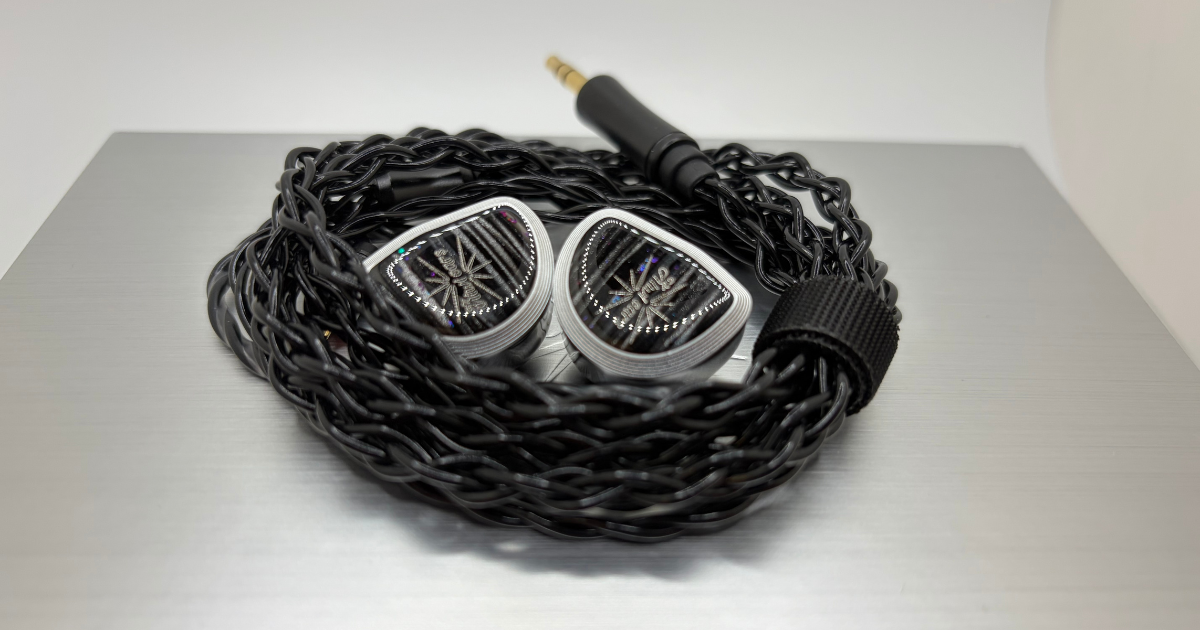
The Kiwi Ears Aether is a single planar magnetic driver in-ear monitor priced at $169.99 USD. Its headline feature is a 15.3mm planar driver—the largest ever put into an IEM at the time of its release, beating out the 14.5mm and 14.8mm drivers used by competitors like 7Hz and Hidizs.
On paper, bigger planar diaphragms should mean better bass authority and less distortion. The Aether was designed around a larger acoustic chamber and an improved ventilation system, both aimed at recreating the spaciousness you'd normally associate with open-back headphones, not earphones. It's a bold claim. Let's see how it holds up.
Unboxing

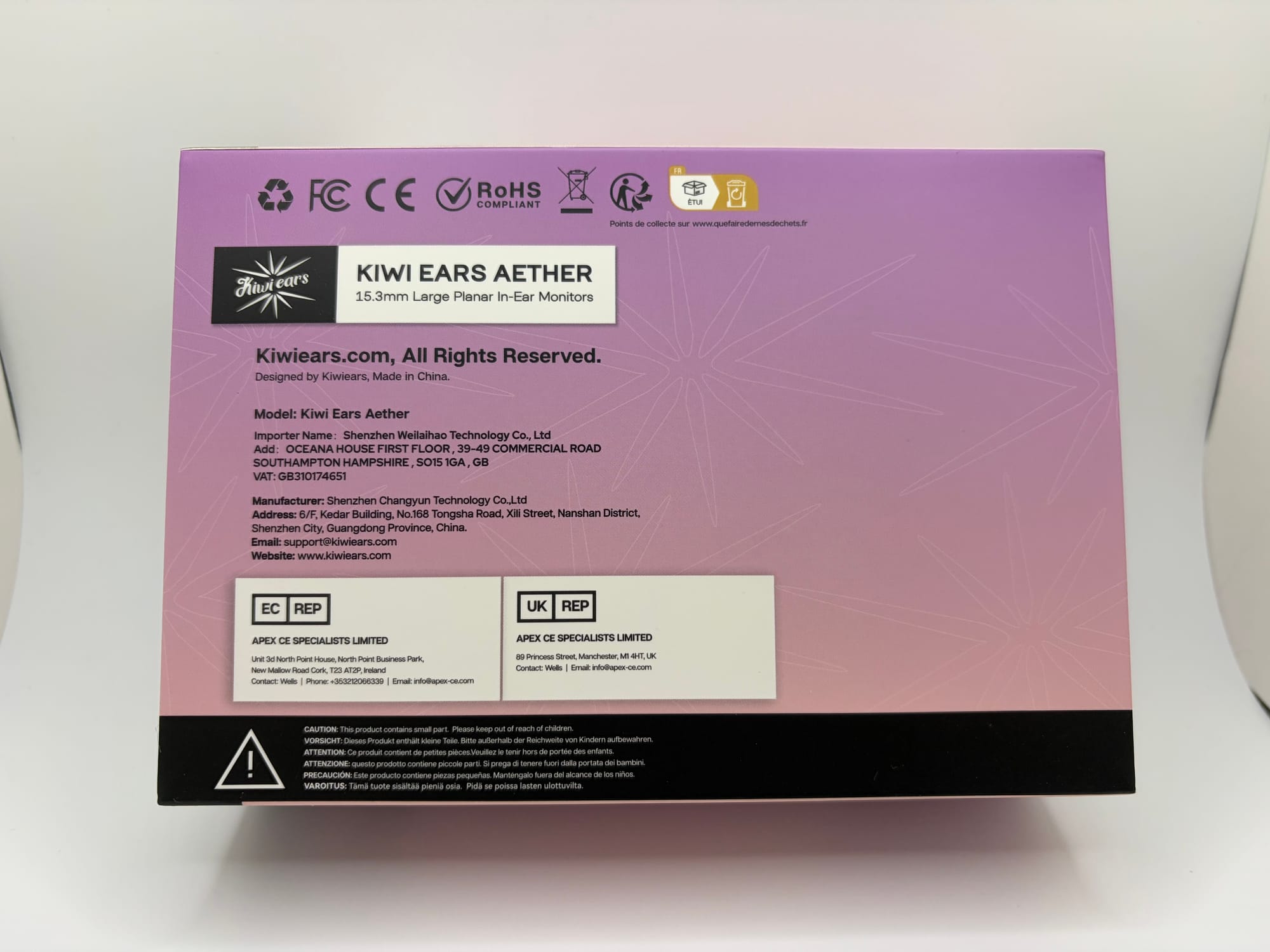
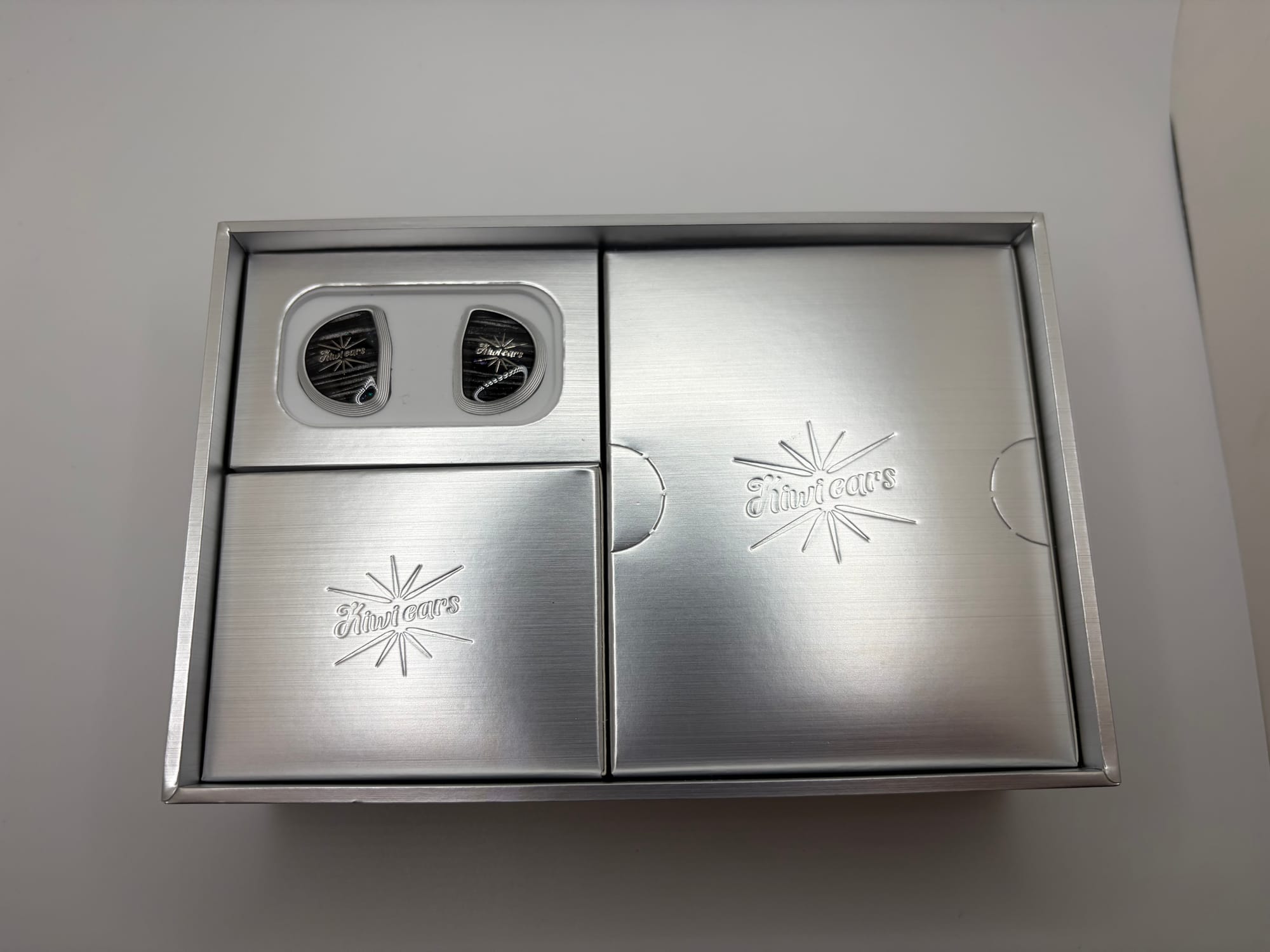
What's in the Box?
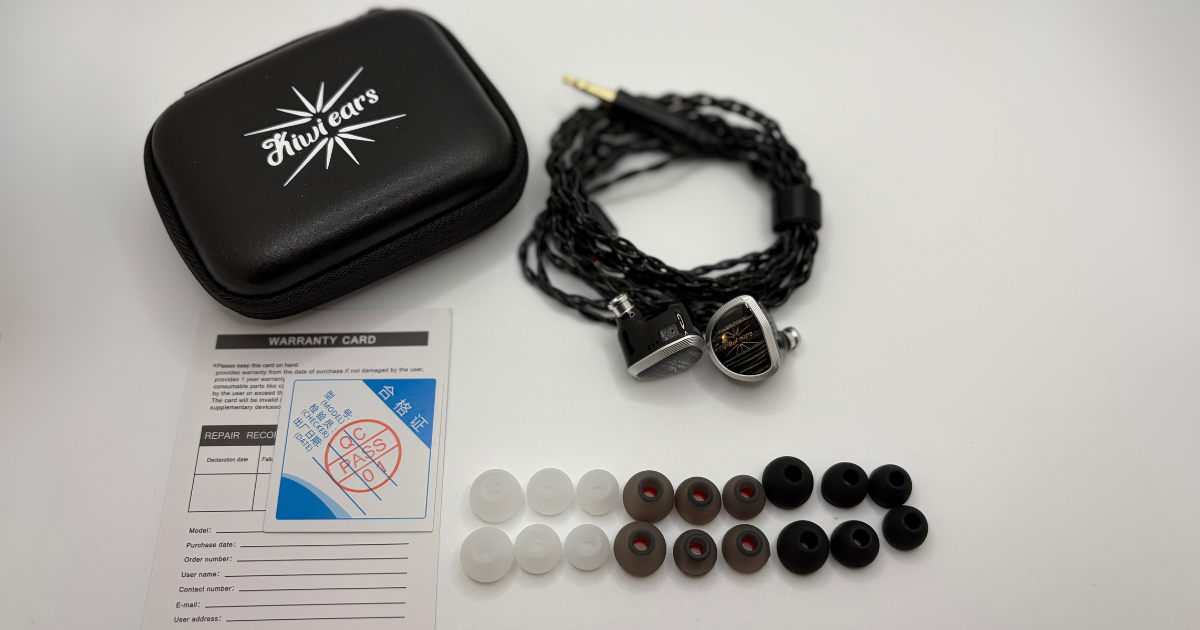
- Kiwi Ears Aether
- 1 x 4-core copper cable
- 9 x pairs of ear tips (3S/3M/3L)
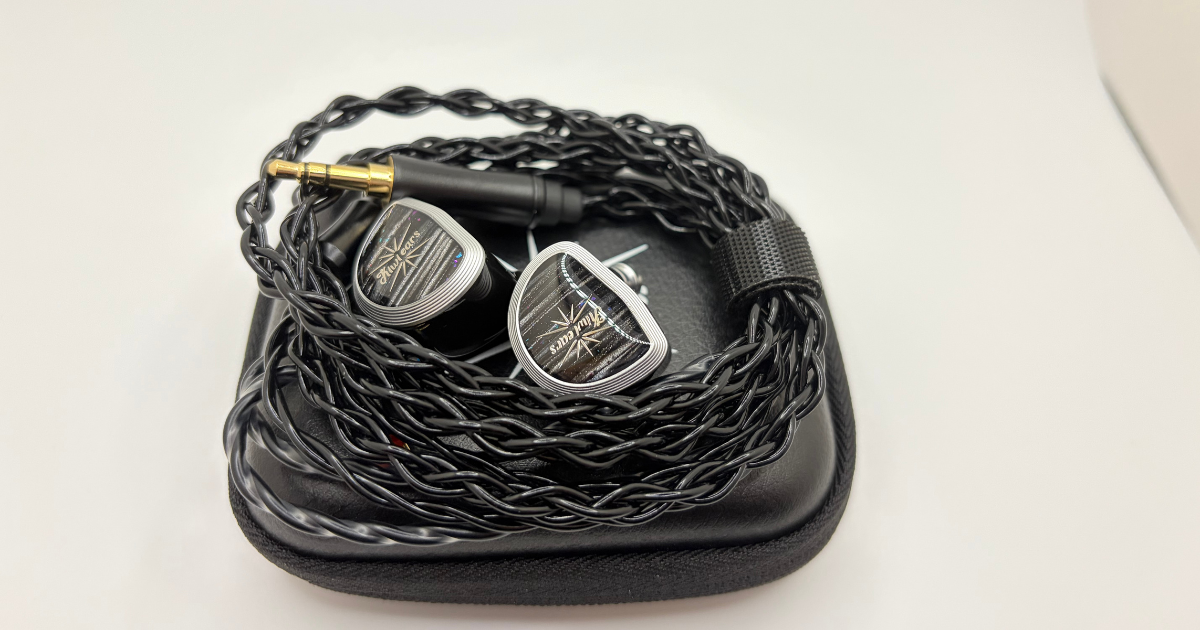
- 1 x Leather Carrying Case
Build Quality & Design
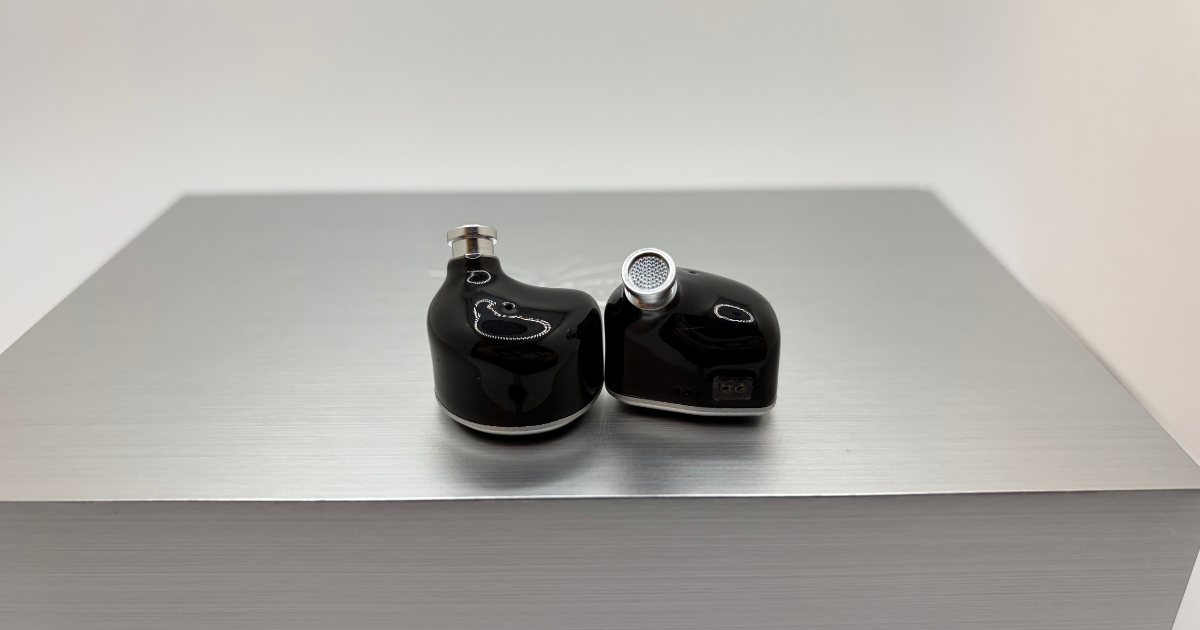
Pull the Aether out of its box, and your first reaction is probably going to be: "These look more expensive than $170."
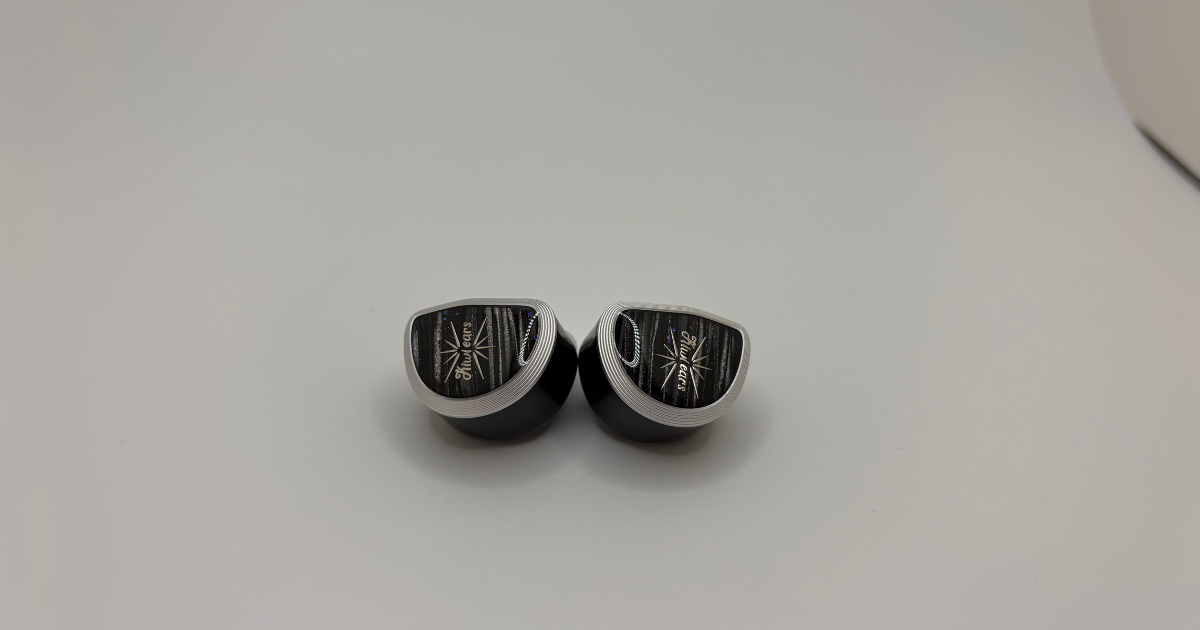
The shell is made from medical-grade resin. It's smooth, lightweight, and completely free of sharp corners or uncomfortable seams. The faceplate is where the Aether really struts its stuff. It has a dark, fractured obsidian look, with subtle rainbow shimmer and glitter catching the light at different angles. A silver ridged frame wraps the faceplate like a watch bezel, and a "Kiwi Ears" logo sits centered over a faint starburst pattern under a clear acrylic gloss coat.
The nozzle is metal with a proper retaining lip to keep your ear tips from going walkabout. The 2-pin 0.78mm connectors feel solid and snug, with no wobble. The included cable is a soft 4-core copper—it's tangle-resistant, has minimal microphonics, and handles well. With that being said, it is not as nice as the cables Kiwi Ears includes with their more recent models, like the Orchestra II, and I found it to be on the flimsier side. It's also not modular, which isn't a dealbreaker but may require an extra adapter. I'd say the cable is the weakest point of the build quality, with everything else being quite good.
There are three vents near the 2-pin connector and one near the nozzle. These vents help reduce driver flex and ear pressure on insertion, which is a real comfort win. The tradeoff, as we'll get to, is that isolation takes a slight hit.
Overall, the build quality is excellent. The shell feels tough, the design is distinctive, and despite the larger-than-usual size, the whole unit feels refined.
Sound Quality
Source Pairing
Before diving in, the Aether is a planar driver, and like most planars, it does appreciate a bit more power than your standard dynamic driver earphone. It'll run off a phone, but you'll miss out on sub-bass depth and textural nuance. A decent USB dongle DAC/amp will make a noticeable difference. It's not demanding, but it rewards a proper source.
Bass
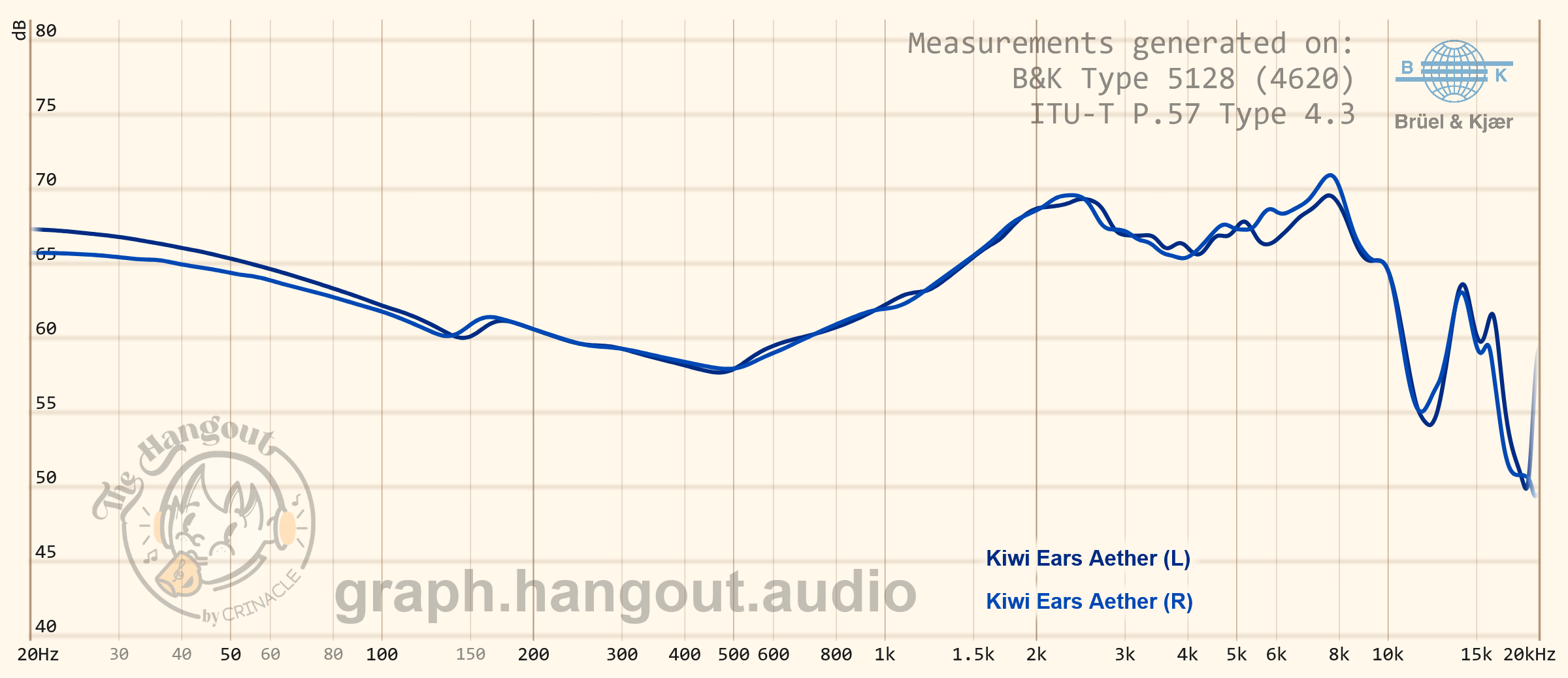
Sub-bass extension is far-reaching, mid-bass is punchy and textured without being bloated or boomy. For a planar driver, the bass is executed very well; there is a good sense of impact and texture to bassier tracks. 808s can be felt with a solid sense of rumble and punch.
The whole low-end presentation is quite good, but with that being said, this is a planar IEM, so it will be a little more tame than bassy v-shaped tunings with dynamic drivers.
Bass guitar and kick cut through the mix nicely, and deep synths have a sense of fullness. If you're a pure basshead who wants earth-shaking warmth and mid-bass bloom, the Aether isn't quite that—its bass is clean and controlled rather than meaty. But as far as planar IEMs go, the Aether is class-leading with its bass quality.
Midrange
The midrange is smooth, natural, and largely free of the forwardness or aggression that makes some planar IEMs exhausting to listen to. Vocals sit comfortably in the mix—present, clear, and unforced.
That said, there is a slight recession in the lower midrange that can make vocals on certain songs sound a touch thin. There is some planar timbre that can be noticed, though everything still sounds natural rather than metallic, as some other planar headphones can show.
The upper midrange is mostly well-behaved—female vocals come through with clarity and some forward presence without crossing into "shouty" territory. Overall, the mids on the Aether are very clean and smooth to listen to, making vocal-forward songs shine.
Treble
The treble is generally smooth and refined compared to the harsh, fatiguing highs that many budget planars struggle with. High-frequency extension is good, cymbals decay naturally, and there's a sense of air and sparkle in the top end.
Sibilance was not very noticeable, and these were mostly fatigue-free for me except for certain snare/cymbal hits on higher volumes. The Aether is much less sibilant than a lot of other planar configurations I've heard, and overall I think it captures a high-level of detail without crossing too far into sibilance.
Technical Performance
Let's talk about what makes the Aether special.
Timbre is one of the Aether's strongest arguments for existing. Most budget planar IEMs have what many people call "planar sheen"—a kind of metallic, slightly artificial edge to notes that makes instruments sound just a little off. The Aether largely avoids this. Notes sound grounded and organic, closer to how a dynamic driver represents instruments, while still retaining the speed and low-distortion character that makes planars appealing.
Soundstage is one of the Aether's standout features. It's wide—unusually wide— and it has real depth that creates a sense of front-to-back layering that most IEMs in this class simply don't pull off. You can feel music in 3D around your head when listening in a satisfying way. It's not perfectly holographic—height is less pronounced than width and depth—but the sheer sense of space is rare for $170.
Imaging is precise and accurate. Instruments are cleanly separated and well-placed within the stage. Layered arrangements like orchestras, complex metal mixes, and pop maintain clarity even when things get busy. Some very fine micro-positioning at the stage extremities is slightly less defined, but it's a minor critique in an otherwise strong technical package.
Comfort & Isolation
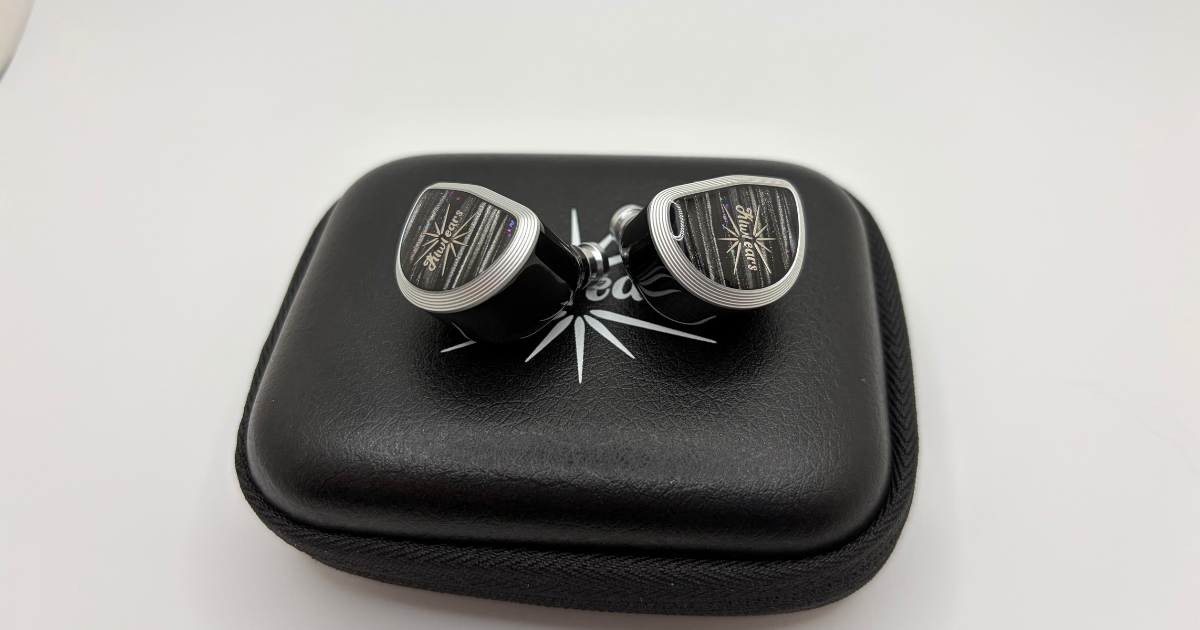
The Aether's shell is bigger than average. That's just the reality of housing a 15.3mm planar driver, and Kiwi Ears has done about as well as anyone could with the ergonomics. The smooth, rounded shape with no sharp edges means long listening sessions are comfortable for most ears. It never felt like it was weighing down my ears, despite its size, which is impressive.
The short nozzle aids in stability and fit, though the wider-than-average nozzle diameter (~6mm) can make achieving a deep seal a bit fiddly. If you have smaller ears, this is the IEM you really should try to demo before purchasing—it could be a great fit or a slightly awkward one depending on your ear anatomy.
Isolation is about average; the ventilation system that makes the Aether so comfortable to wear also lets outside noise in more than a sealed IEM would. Most listening is suitable, but in louder environments, you may notice the isolation.
Comparisons
Kiwi Ears Aether vs. 7Hz Timeless 2 (~$169)
The Timeless 2 is one of the most respected planar IEMs in this price class and comes with four swappable tuning nozzles for flexibility. In terms of detail retrieval and upper-range micro-detail, the Timeless 2 has a slight edge, and the Timeless 2 is also more neutral-leaning by default.
The Aether wins on soundstage width, bass authority and depth, and timbre naturalness. The Aether is also more comfortable for many people. If you want a more analytical, configurable IEM, the Timeless 2 is worth a serious look. If you want more immersion, warmer bass character, and an easier, more musical listen out of the box, the Aether is compelling.
Kiwi Ears Aether vs. Letshuoer S12 Pro (~$160)
The S12 Pro has been a community staple for a while now — full metal build, competitive detail, and a more V-shaped signature with extra treble sparkle. The Aether is smoother, more refined in the mids, and has a notably wider soundstage. The S12 Pro's harder, brighter character divides opinions; some love the excitement, others find it fatiguing. The Aether's build quality is arguably more premium-feeling in the hand despite the S12 Pro's metal shell.
For metal and high-energy genres where brightness and impact are desirable, the S12 Pro holds its own. For those prioritizing a smooth all-day listen with better soundstage performance, the Aether pulls ahead. The price difference is minimal — this one comes down almost entirely to tuning preference.
Kiwi Ears Aether vs. Hidizs MP145 (~$149–$169)
The MP145 is another big-driver planar contender, famous for its massive 14.5mm driver and wide soundstage. Like the Aether, it targets the open-back headphone experience in an IEM format. The MP145 is tunable via nozzles, which gives it flexibility the Aether doesn't have.
However, the MP145 has been criticized for a more aggressive, harsh V-shape that can be fatiguing. Its imaging and stage are impressive, but the tonality takes more work to tame. The Aether is simply smoother and more versatile out of the box, especially for genres outside of EDM and electronic music where that V-shape tends to work best.
Final Verdict
The Kiwi Ears Aether isn't a perfect IEM—nothing at $170 is. The slightly thinned lower mids and the lacking stock cable are worth noting before purchase.
But here's the thing: the Aether nails the what matters most in a planar IEM. It has exceptional bass for the technology, one of the widest soundstages in its price class, genuinely natural-sounding timbre, and a smooth, refined character that makes extended listening sessions a pleasure. It avoids most of the pitfalls that have held budget planars back for years.
If you've been burned by harsh or thin-sounding planars in the past, the Aether is the IEM that might actually change your mind about the format. And if you're just getting into the audiophile IEM game and want to try out a well executed planar earphone, these are a compelling option.
Technical Specifications
- Driver Type: Single 15.3mm Planar Magnetic Driver
- Magnet Type: Multi-layered N52 Neodymium
- Frequency Response: 20Hz – 20kHz
- Impedance: 14 Ohm (at 1kHz)
- Sensitivity: 105dB SPL/mW (at 1kHz)
- Connector: 0.78mm 2-Pin
- Cable Termination: 3.5mm Single-Ended (non-modular)
- Shell Material: Medical-grade resin
- Nozzle Material: Metal with retaining lip
- Nozzle Diameter: ~6mm
- Ventilation: 4 vents (3 rear, 1 front near nozzle)
- Warranty: 1 year on IEMs, 3 months on cable
- MSRP: $169.99 USD
- Available From: KiwiEars.com, Linsoul, Amazon
Thanks for reading! Check out more audio reviews and join our community of music enthusiasts.
- Read more of the latest rock/metal news here
- Subscribe to our Metal News Email list for weekly updates!
- Join our free 5-day music marketing email course!
- Support The Metalverse and go ad-free.
- Follow us on Social Media | Instagram | Facebook


