

How Metal Bands Can Build a Festival-Ready Stage Presence
Festival stages expose every weakness in a band's live show. Here's what separates metal acts that get rebooked from those that blend into the background.


Playing your first outdoor festival feels completely different from playing a larger club show. Unlike hometown gigs, most of the audience didn’t buy tickets specifically to see your band.
That shift demands more than tighter riffs or a louder mix. If your band wants to move from local support slots to serious festival consideration, developing a festival-ready stage presence is just as important as writing crushing songs.
Here’s what you need to know.
Understand the Festival Environment
Sound behaves differently in open air. There are no walls to reinforce the low end or reflect the mids toward the stage. Wind can carry vocals away from the crowd. Heat can affect tuning stability. Direct sunlight can make lighting rigs feel irrelevant during daytime slots.
There’s also the psychological shift. In a club, the audience is contained, but at a festival, attention is earned moment by moment. People drift between stages. Some are grabbing food while others are discovering you in passing.
That means your set must communicate immediately. Your intro can’t meander. Your opening song needs impact. Visual cues must be clear from a distance. You’re not just performing for fans; you’re converting strangers.
Upgrade Your Visual Identity for Big Stages
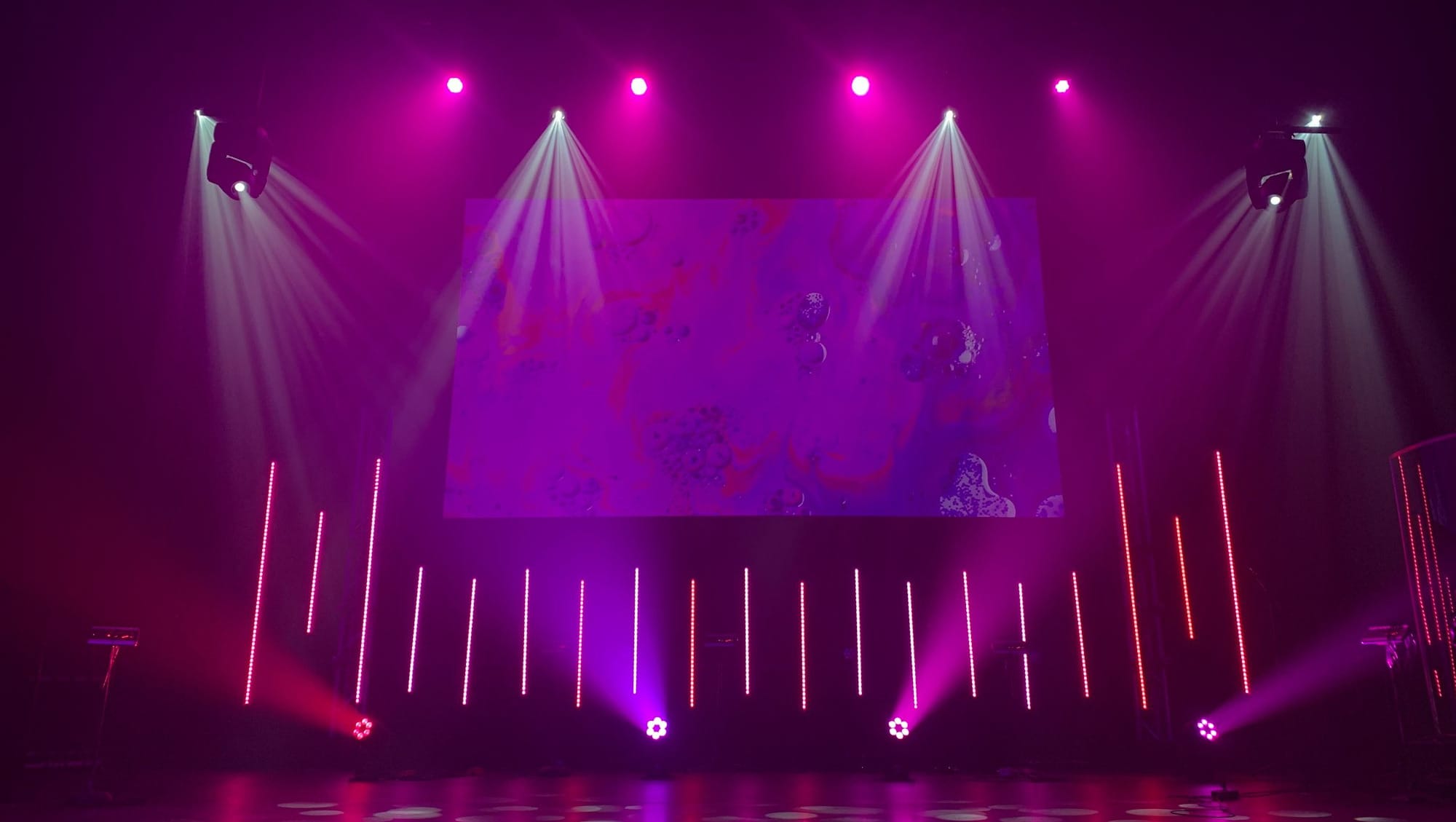
At an outdoor event, your backdrop is a visual anchor. It reinforces your identity for people standing 50 feet back. It appears in photos, livestreams, and social clips. It becomes part of how your set is remembered.
However, outdoor stages introduce practical challenges. Wind, glare, mounting systems, and material durability all affect how your visuals hold up. Understanding core outdoor banner durability and visibility considerations can help bands avoid common mistakes. This includes low-contrast logos, thin materials that warp in the wind, or designs that become unreadable in bright daylight.
Scale matters. A backdrop that looked bold in a rehearsal space can disappear against a 40-foot stage truss. Keep typography thick, avoid excessive detail, and prioritize contrast over complexity. Dark-on-dark designs may look atmospheric indoors, but they can wash out completely under midday sun.
Make Your Logo Legible at 50+ Feet
Metal logos are often intricate, but festival stages demand clarity. If your band name becomes illegible from mid-crowd, you’ve lost a major opportunity for recognition.
Test your logo at a distance. Shrink it on a screen and step back, or print a scaled-down mockup and tape it to a wall. If it blurs into abstraction, simplify the live version. High contrast color combinations outperform subtle gradients outdoors.
You don’t have to redesign your entire brand. Many established bands maintain a primary logo for album art and a simplified live version for large-scale visuals.
Tighten the Performance Itself

Festival stages offer more physical space that you can use intentionally. Map out movement during rehearsals. Who takes center during solos? When do members lock into a unified front line? When do you spread wide to command the entire platform?
Energy reads differently in open air. Subtle movements that feel intense in a club can look static on a festival stage. Movements need to be deliberate and confident to carry across a larger audience. Work on transitions between positions and avoid chaotic wandering.
Control Dead Space
Silence feels longer at festivals. Awkward tuning breaks, uncertain transitions, or inside jokes that don’t translate to a broad crowd can drain momentum fast.
Rehearse the set flow as seriously as you rehearse individual songs. Tighten transitions, decide who speaks between tracks, and keep banter purposeful. If you’re playing to a crowd that doesn’t yet know you, clarity beats rambling.
A true festival-ready stage presence feels continuous, not like a sequence of disconnected songs stitched together in real time.
Curate the Right Setlist for Discovery
Festival audiences are different from hometown headline crowds. This isn’t the moment for deep cuts or extended experimental interludes unless that’s central to your identity.
Lead with impact. Place your strongest, most immediate tracks early in the set. Think about pacing: alternating tempos, managing dynamics, and building toward a memorable closer.
If you have a song with a chant, call-and-response, or breakdown that naturally invites crowd engagement, use it strategically. Festival sets are shorter, so make every minute count.
This is about memorability. When someone walks away from your stage, they should remember at least one hook, one moment, or one visual that surprised them.
Merch Booth Presence

Festivals introduce your band to new listeners. Your merch booth is often the place where that initial interest turns into genuine support.
Clear signage is critical. Your band name should be visible above head level so people scanning the vendor area can identify you instantly. Price lists should be simple and readable from a few steps back. Avoid cluttered tables that overwhelm passersby.
Outdoor environments introduce practical concerns here as well. Wind can scatter flyers, and the sun can fade prints. Your tables need to be stable, and payment systems need backup plans in case connectivity drops.
Staffing matters too. Someone at the booth should be engaged and approachable, not scrolling on their phone. A brief conversation can convert curiosity into loyalty.
A polished merch setup reinforces professionalism. It signals that you’re operating at a higher level than a local opener hoping to get lucky.
Professionalism Is the Real Differentiator

Respect Set Times
Festival schedules are tight. Overplaying your slot or dragging through changeover affects everyone downstream. Be ready to load in efficiently. Have your gear organized, label cables, and know your input list without scrambling.
Make It Easy for Organizers to Work With You
Provide a clear stage plot, send your tech rider well in advance, communicate early about any special requirements, and respond to emails promptly so nothing gets lost in the shuffle.
Festival organizers juggle dozens of artists in compressed timeframes. If your band is easy to work with, you stand out for the right reasons. Talent gets you booked, but professionalism gets you invited back.
Study Bands Who Already Own the Stage
Watch footage from established metal acts playing festivals similar in scale to your goals. Observe how they use space. Notice banner size and placement. Pay attention to how they address crowds unfamiliar with their catalog.
You’ll see a pattern: clarity, confidence, cohesion. Nothing feels accidental.
Breaking into the festival circuit is about readiness. When your visuals scale properly, your set flows tightly, your merch area looks intentional, and your communication is professional, you signal that you belong on larger stages.
That’s how local metal bands grow into festival mainstays—and how a promising live act evolves into a force that commands any stage it steps onto.
Thanks for reading!
- Read more of the latest rock/metal news here
- Subscribe to our Metal News Email list for weekly updates!
- Support The Metalverse and go ad-free.
- Follow us on Social Media | Instagram | Facebook
- Listen to our metal Spotify Playlists!
- Join our free 5-day music marketing email course!


