


Fosi Audio Release Open-Back In-Ear Monitor IM4 and Magnetic DAC MD3: Review and Unboxing
Fosi Audio's first IEM and their boldest portable DAC yet—reviewed together. We tested the open-back IM4 and the magnetic MD3 to see if they are worth the money.

IM4
Pros
- Open-back design gives an unusually wide, airy soundstage for an IEM
- Generous kit: 9 ear tip sets + 2 swappable tuning nozzles
- Relaxed, fatigue-free tuning for long sessions
- Detachable 2-pin cable
Cons
- Low isolation (due to open-back design)—not suitable for noisy environments
- Brass nozzle can push upper mids into sibilance territory
- No 4.4mm balanced or modular cable in the base $99 package
- I found the fit to be slightly awkward
MD3
Pros
- Magnetic form factor solves dongle DAC ergonomics
- ESS ES9039Q2M chip with 116dB SNR and 0.00075% THD+N
- Both 3.5mm SE and 4.4mm balanced outputs
- Pass-through charging via dual USB-C
- Circular display with customizable images, animations, and mini-games
- Premium aluminum chassis with hand-stitched leather rear panel
Cons
- Not powerful enough for demanding full-size cans like the Sennheiser HD600
- At $149.99, not the cheapest option on the block
Fosi's New Chapter
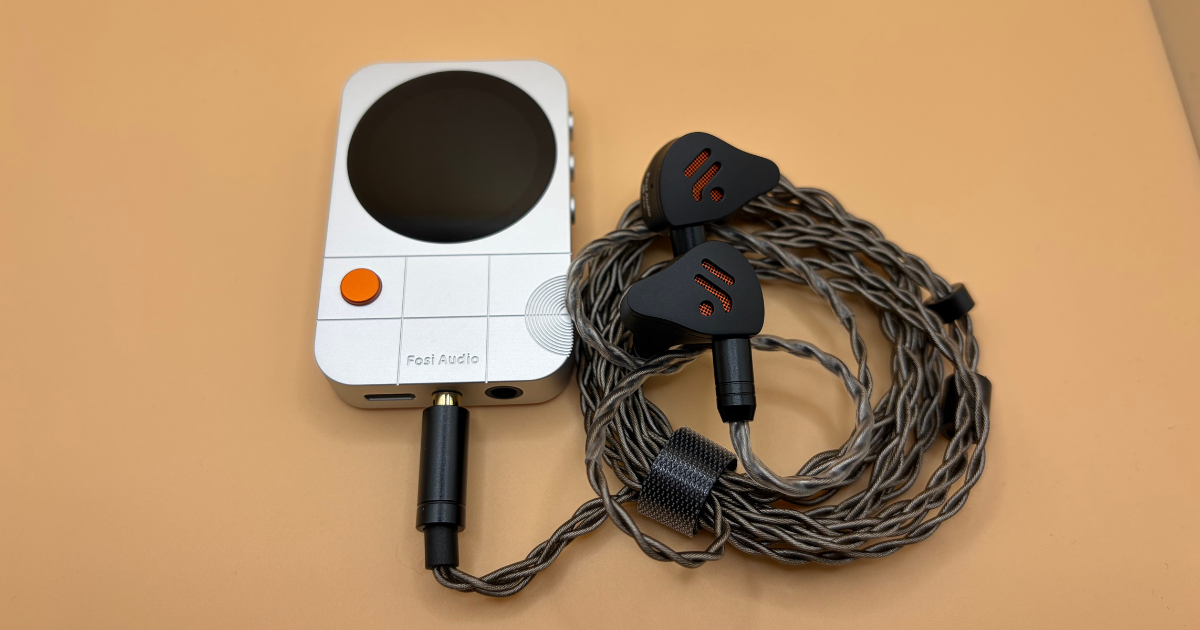
Fosi Audio built its reputation with compact desktop amps and DACs that perform higher than their price would suggest. Products like the ZH3, V3 Mono, and DS3 turned the budget audiophile community into quiet evangelists for the brand. So when Fosi announced they were moving into personal audio transducers and reimagining the portable DAC category at the same time, expectations were already high.
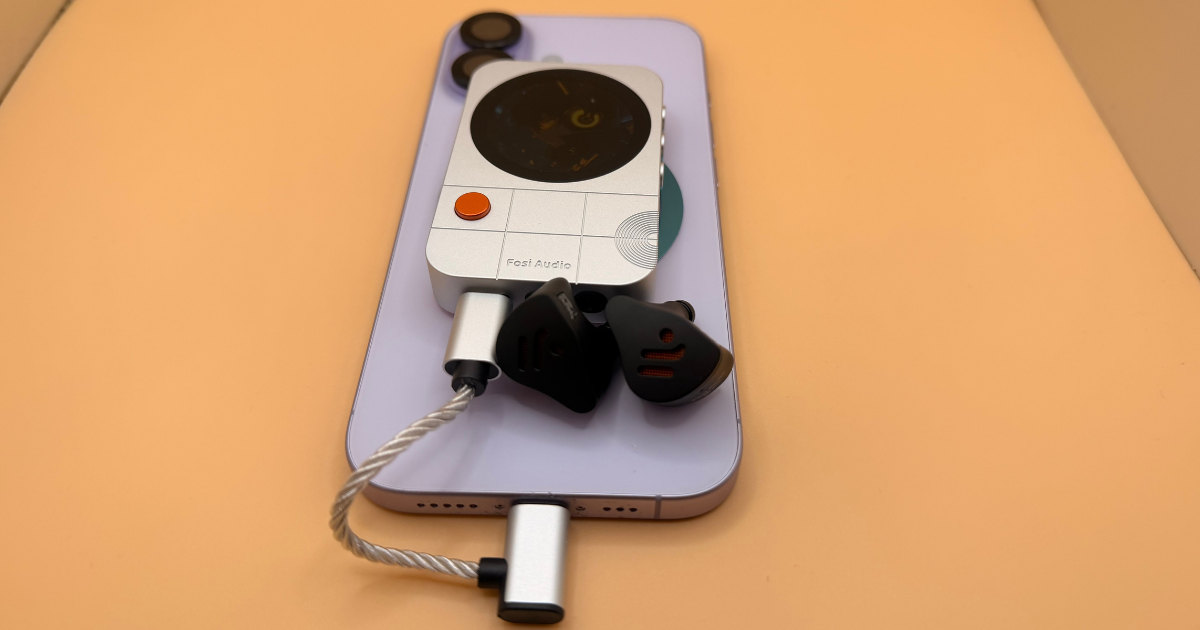
The IM4 is Fosi's first-ever in-ear monitor—an open-back, single dynamic driver IEM priced at $99. The MD3 is their most ambitious portable product to date: a magnetic DAC/amp that physically snaps to the back of your phone using 16 N52 neodymium magnets, priced at $149.99.
First Impressions
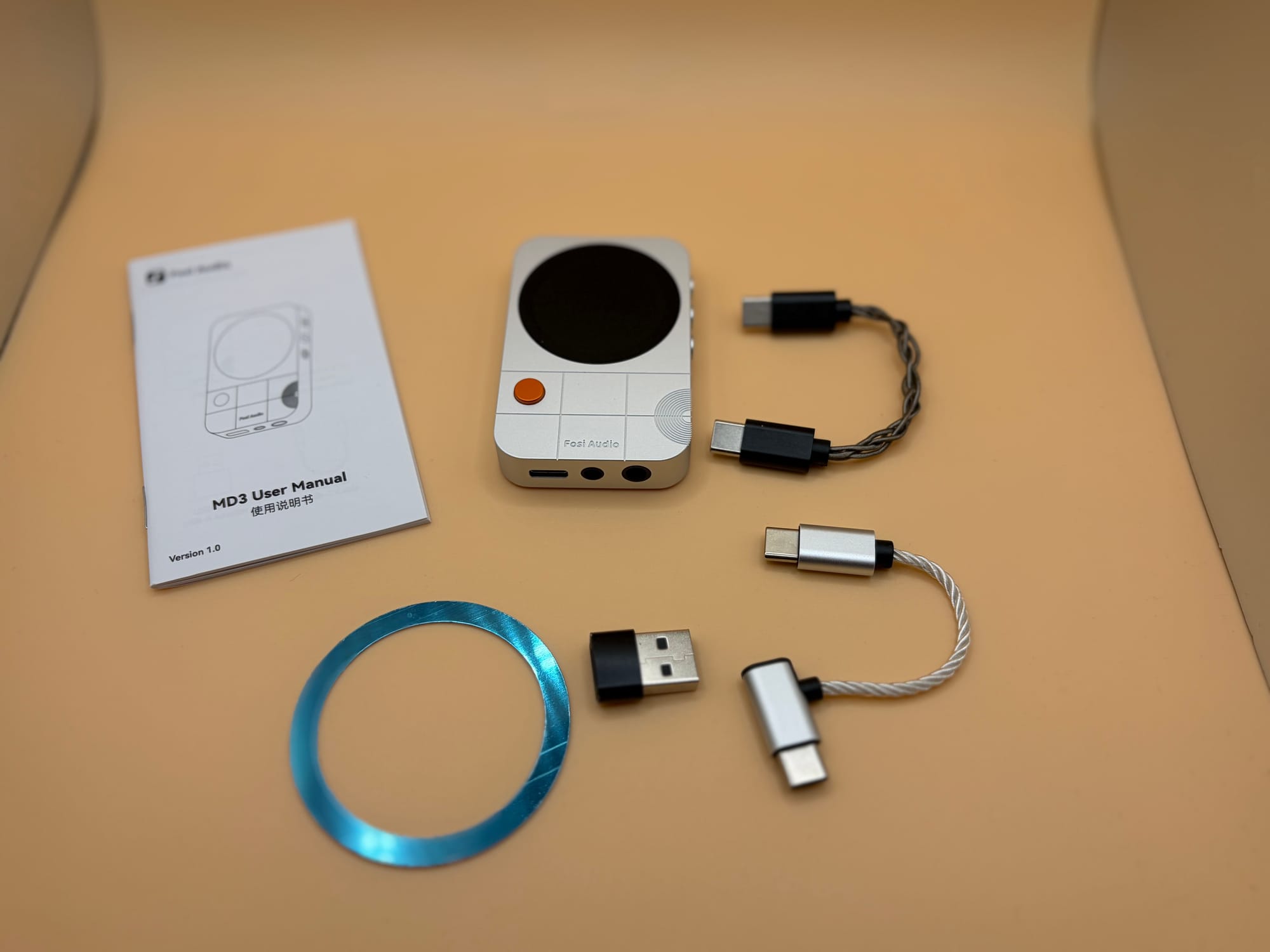
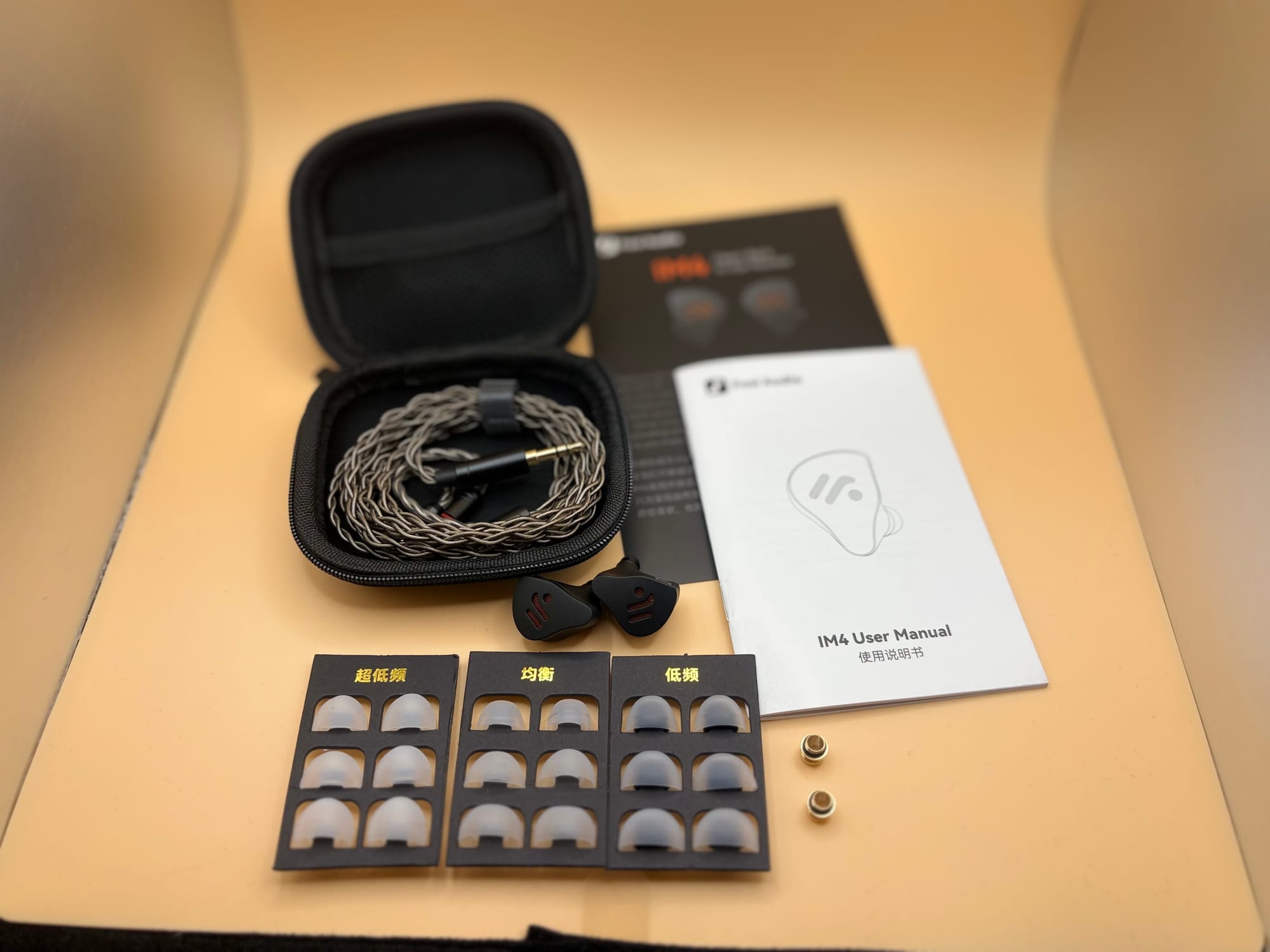
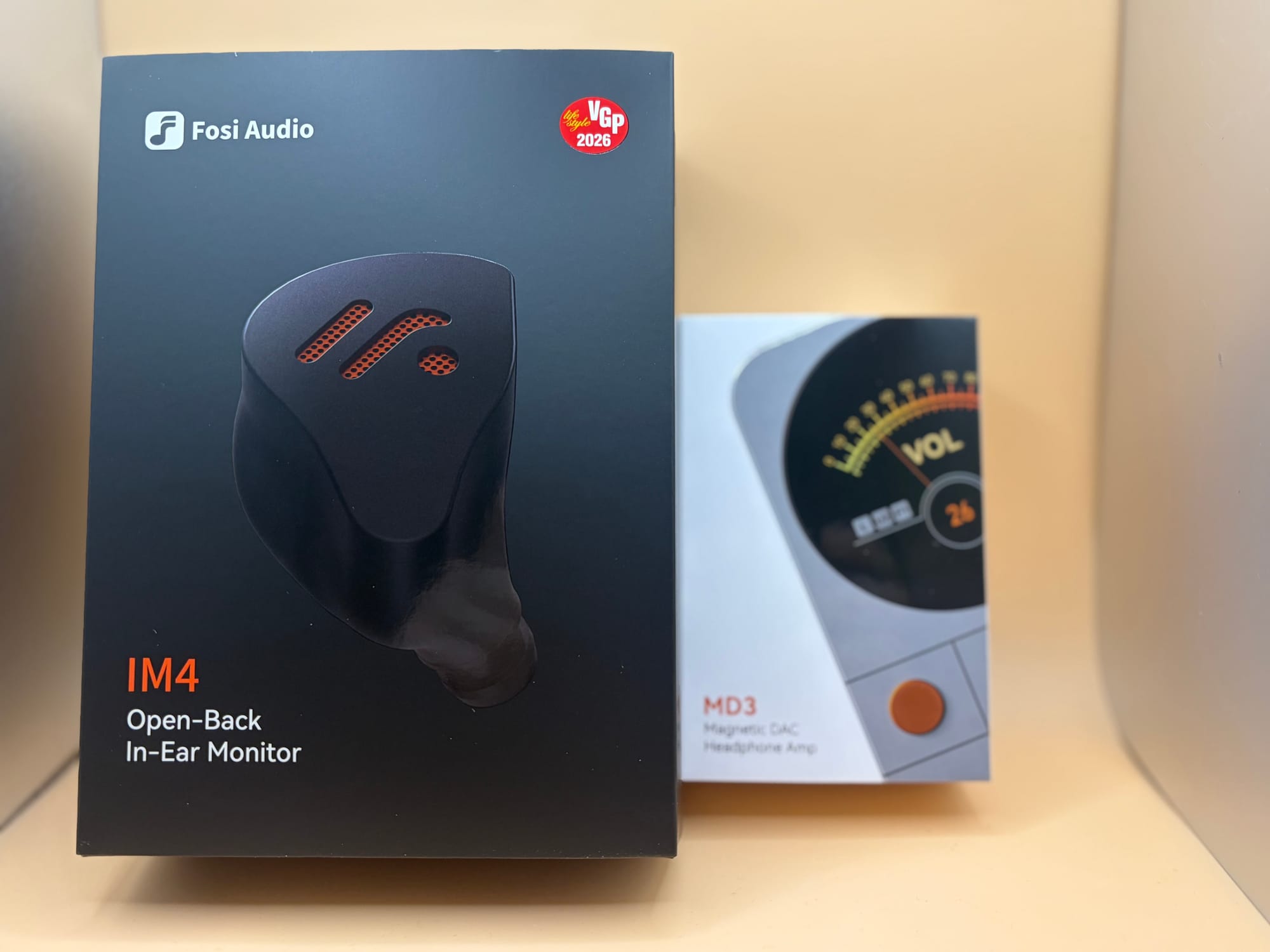
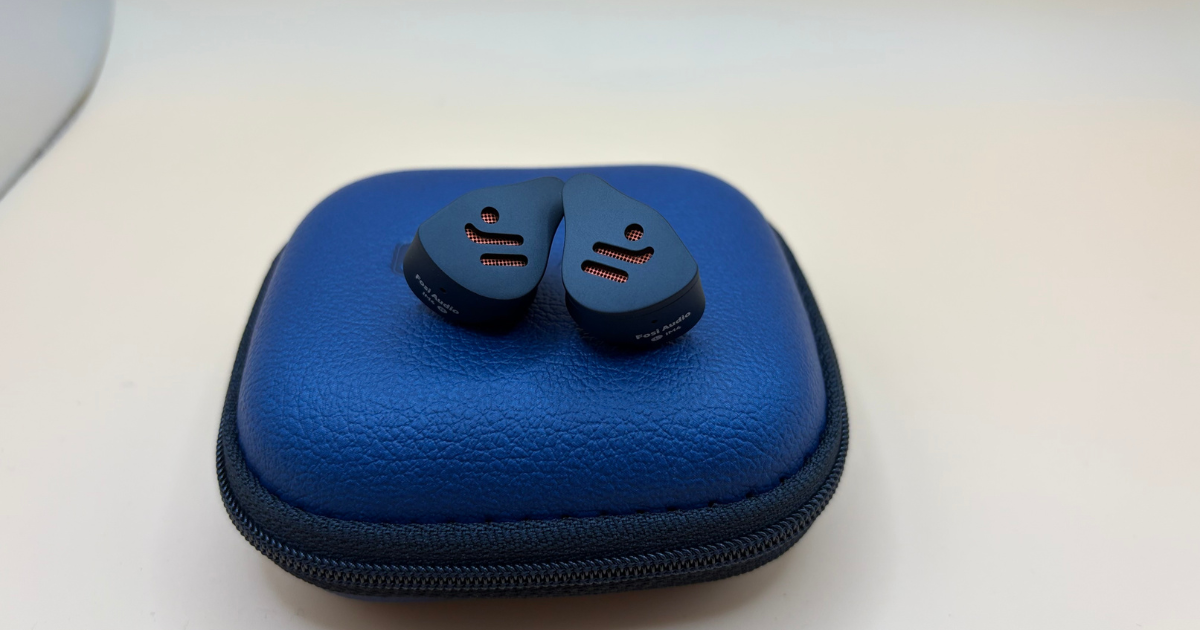
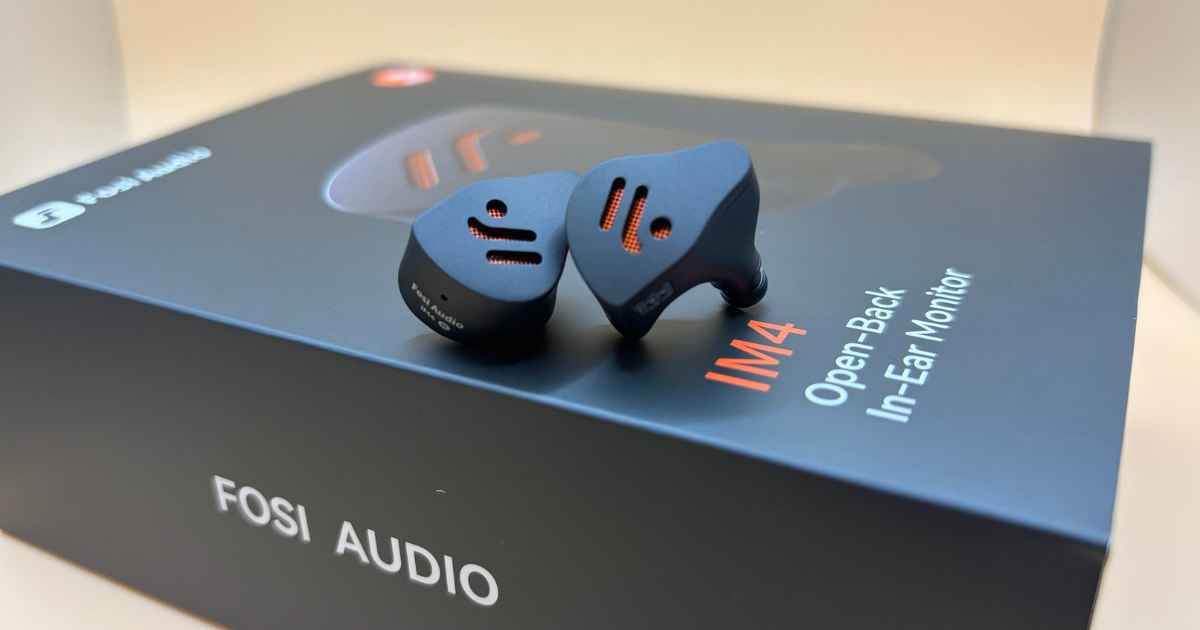
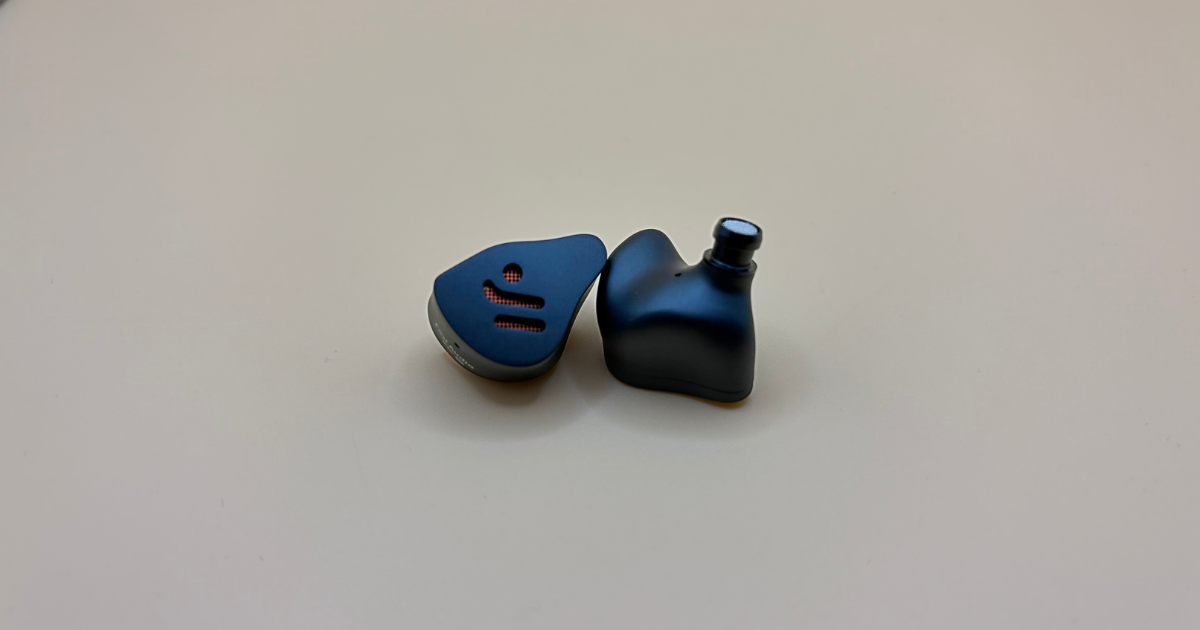
Pull either one out of the box, and it's immediately clear that Fosi isn't playing it safe with this launch. The IM4 arrives in a spacious zippered case alongside nine ear tip sets and two swappable tuning nozzles. This is an accessory package that is easily worth its price. The CNC-machined aluminum shell feels cool and solid in the hand, with orange vent grilles on the rear that signal the open-back design before you even put them in.
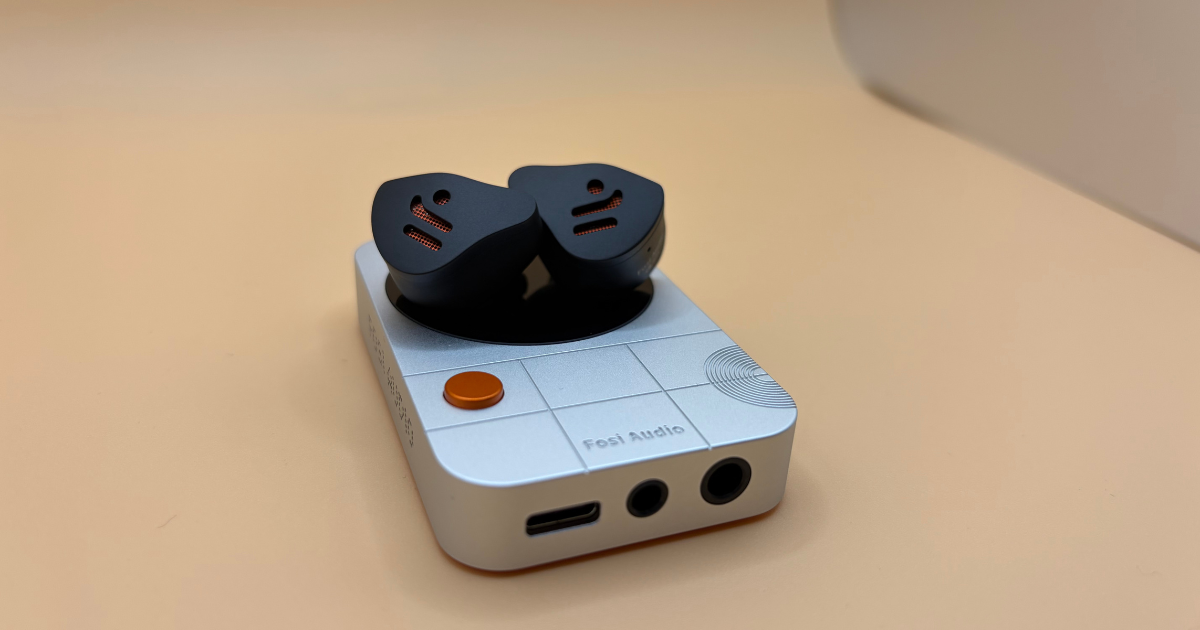
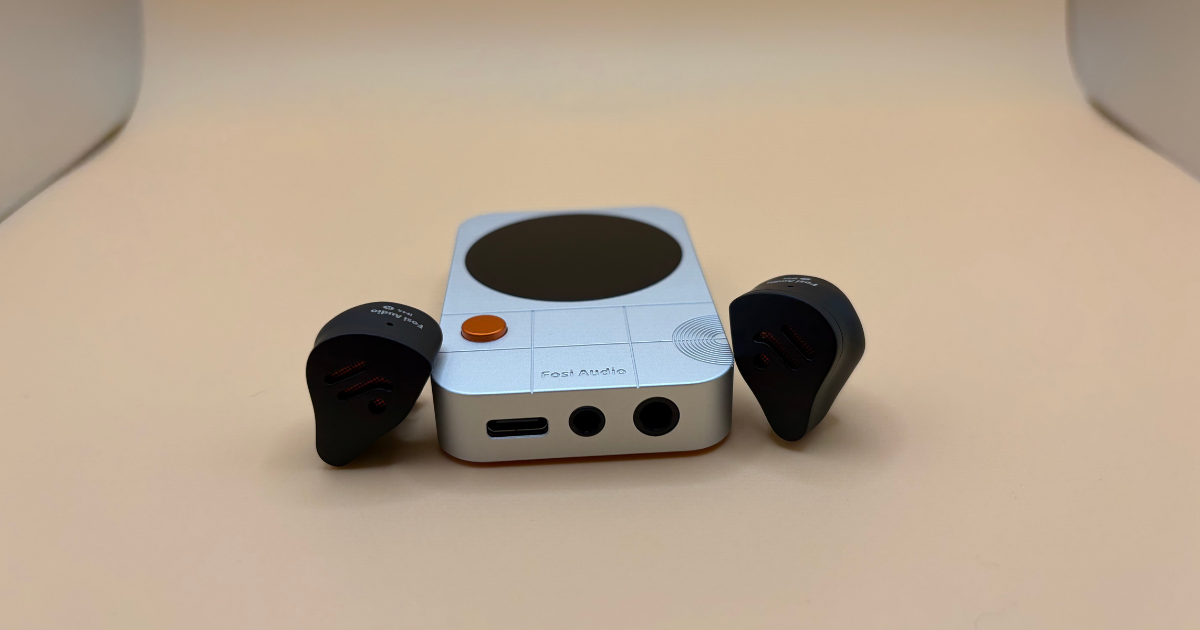
The MD3 makes an even stronger first impression. The contrast between the anodized aluminum chassis and the hand-stitched orange leather rear panel is genuinely striking; it doesn't look like any other portable DAC on the market. The 1.28-inch circular LCD display on the front face adds to that feeling. It's strange, playful, and intentional in a product category that usually lacks personality.
Both products are built from 6063 CNC aluminum alloy, and both feature the signature Fosi orange. Both products also feel like they cost more than they do. There's a clear aesthetic at work here, and together on a desk (or with the MD3 snapped to the back of your phone while the IM4 hangs from the 4.4mm balanced output), they look like a coherent system.
Build Quality
The IM4's Shell and Accessories
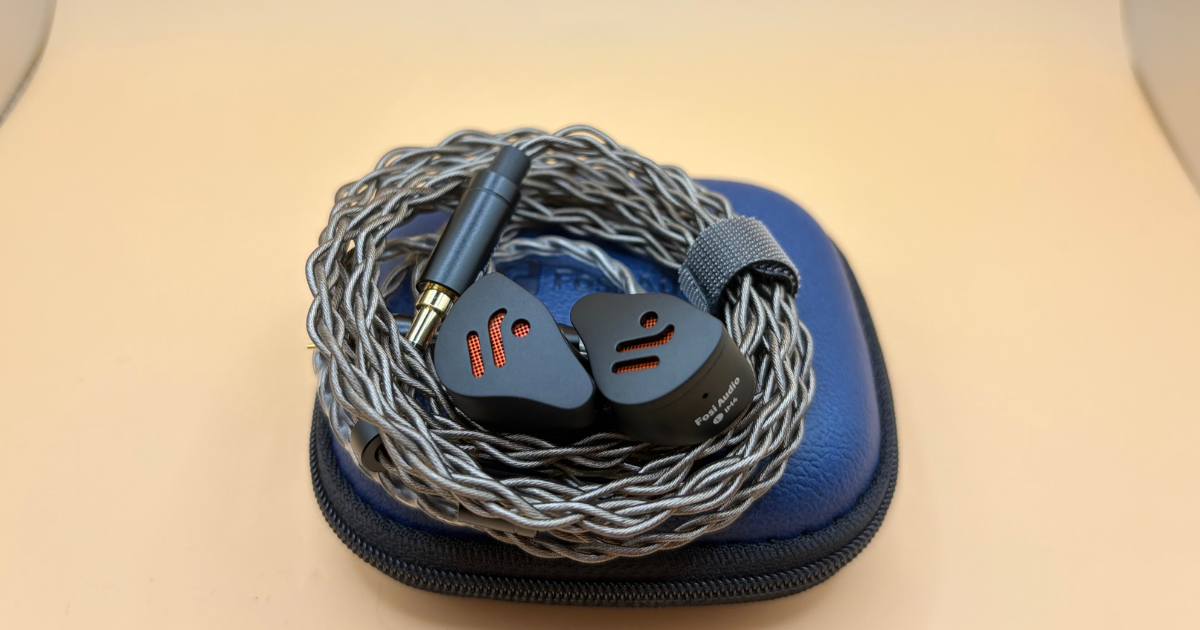
The IM4's aluminum shells are excellent for a $99 IEM. No plastic, no flex, no cheap finish. The "Obsidian" matte black and "Galaxy" silver colorways are both clean and restrained (we have the Obsidian). The detachable 2-pin 0.78mm cable is a four-core, 5N OFC silver-plated copper affair that doesn't tangle and feels quality at both ends.
A fun accessory is the dual-nozzle system. The aluminum nozzle (installed by default) and brass nozzle measurably shift the frequency response. The aluminum nozzle delivers a more full-range, balanced presentation with controlled bass and present-but-not-harsh treble. The brass nozzle shifts emphasis toward the upper midrange and lower treble, adding clarity and bite that works well for certain genres but flirts with sibilance on bright recordings. Most listeners, including myself, will prefer the aluminum for daily use.
The nine included ear tips (balanced, bass, and deep bass, three sizes each) give you real flexibility to dial in both fit and sound character before you even consider swapping a cable or nozzle.
The one gripe: the base configuration ships with a 3.5mm plug only. If you want 4.4mm balanced—and you likely will, especially when pairing with the MD3— you'll need to pay extra for the upgraded cable option or source your own.
The MD3's Chassis and Magnet System
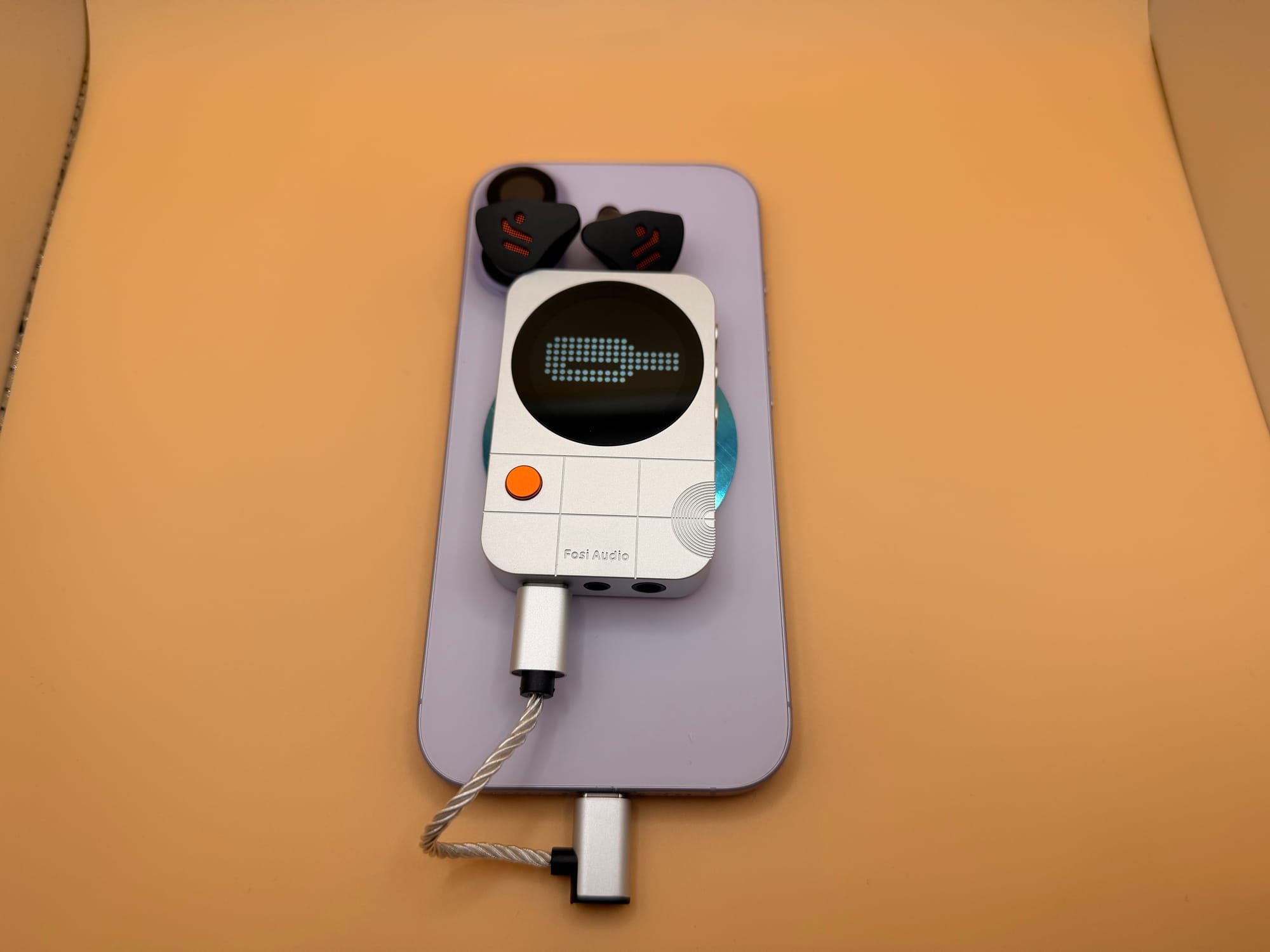
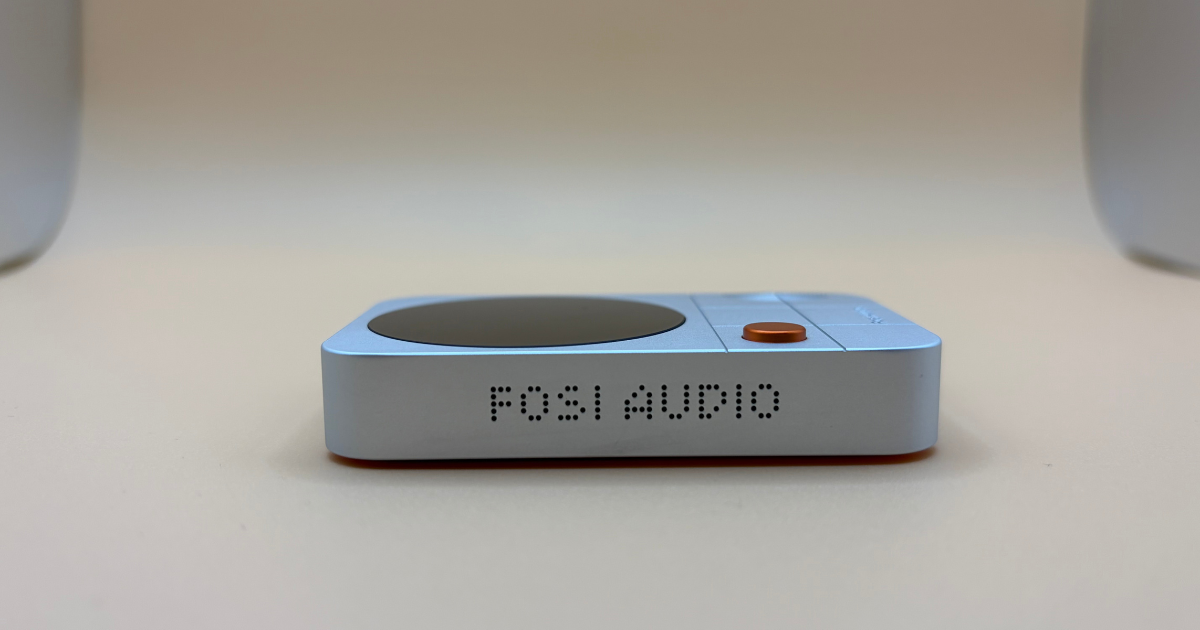
The MD3's build quality is, frankly, impressive for $149. The CNC-milled aluminum body has a sandblasted finish with clean edges and a sense of purpose in every millimeter. Flip it over, and you are greeted by a hand-stitched leather rear pane—a tactile detail that not only looks good but protects your phone's back from scratches when the DAC is mounted.
The magnets create a connection that feels secure during normal daily use. While thick cases can reduce grip strength of the magnet, the included adhesive magnet back effectively solves this problem. Audiophile-grade headphone cables with chunky barrel connectors can physically conflict with the dual USB-C port spacing, so that is a real-world friction point worth knowing about before you buy.
The 1.28-inch circular LCD display shows volume level, sample rate, and whichever animation or custom image you've loaded. Spinning turntables, VU meters, tape reels, and a handful of mini-games (dice roll, spin-the-bottle, rock-paper-scissors) come built in. You can also upload your own images. It's fun and a unique feature.
Physical controls for volume and navigation are on the sides. No app required for basic operation. The 100-step digital volume knob with memory means the device remembers your preferred level every time it powers on. A small thing that matters every single day.
Connectivity and Pairing
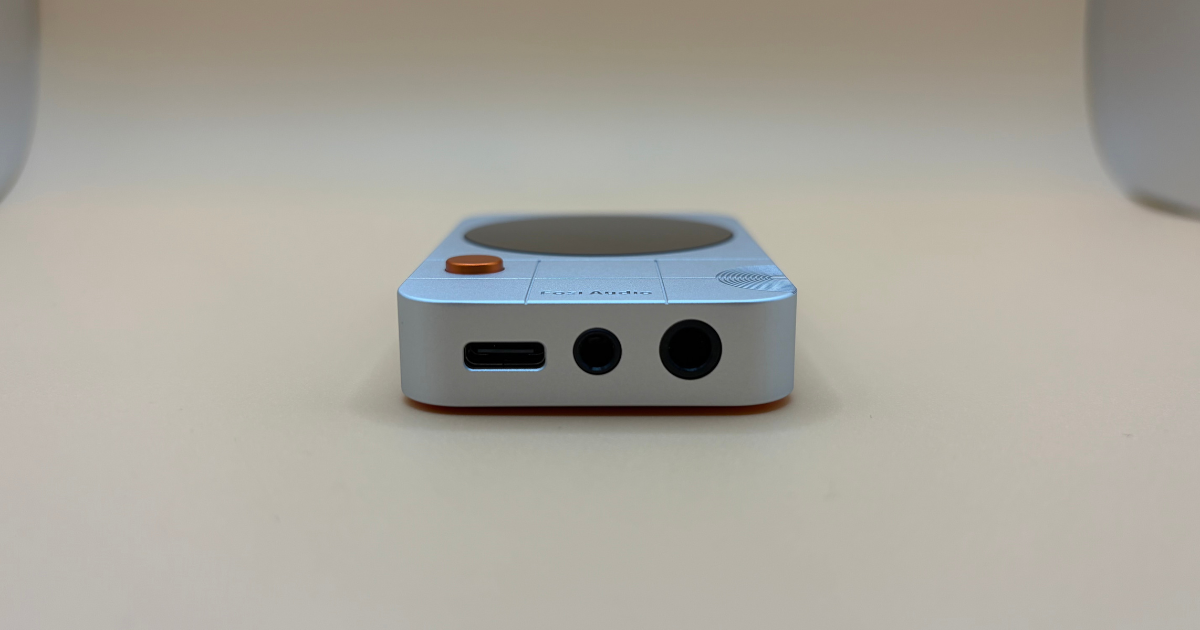
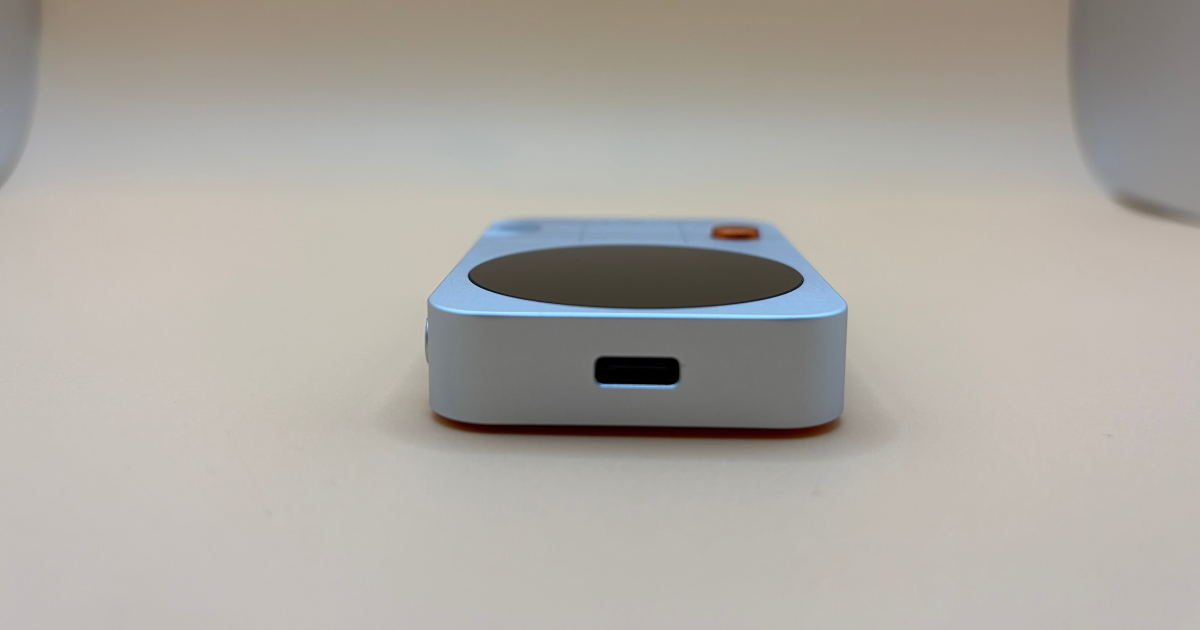
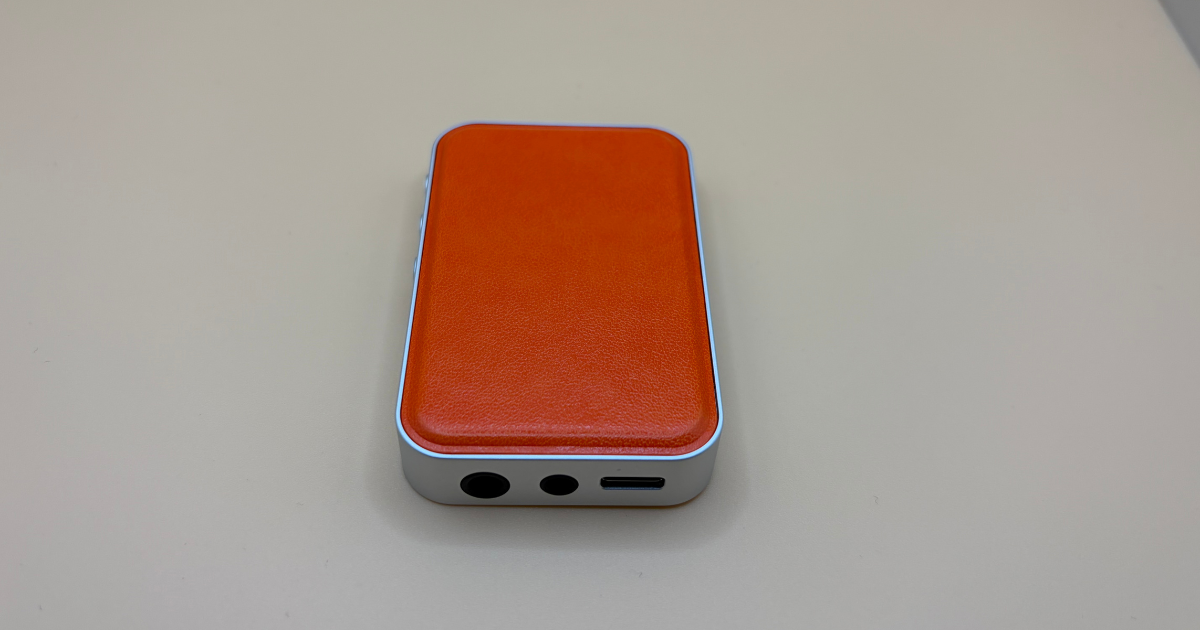
The MD3 offers both a 3.5mm single-ended output (75mW × 2 at 32Ω) and a 4.4mm balanced output (180mW × 2 at 32Ω). The IM4, at 21Ω impedance and 109dB sensitivity, is an easy load that doesn't demand much power—meaning even the 3.5mm output has headroom to spare. But run them balanced and the improvement in control, separation, and dynamics is real and audible, even on an efficient IEM.
The dual USB-C port setup on the MD3 deserves its own mention. The bottom port connects to your phone for audio, meanwhile, the top can use a charging cable so you can listen and charge simultaneously. This is a basic quality-of-life fix that most dongle DACs completely ignore, and it removes the biggest daily-use frustration of the entire category. Full-day listening without choosing between headphones and battery? That should be standard.
The MD3 supports PCM up to 32-bit/384kHz and native DSD256. iOS users should note that Apple's system-level audio routing caps playback at a fixed sample rate regardless of file quality, so the full hi-res advantage lands primarily on Android. The MD3 ships with a short OTG cable purpose-designed for the magnetic use case, plus a USB-A adapter for desktop and laptop use.
Sound Quality
The IM4
The IM4's sound signature is a mild V-shape. It has a slight emphasis on bass and upper midrange/treble, with the midrange sitting back a touch. The open-back design smooths out what could otherwise be an aggressive presentation, and the result is a sound that feels relaxed, spacious, and enjoyable for extended sessions.
Bass on the IM4 is controlled and punchy without ever turning loose or muddy. The 10mm dual-cavity driver and N52 dual-magnet system deliver tight transients and satisfying low-end impact. These aren't in basshead territory, but have enough authority to make bass-forward tracks feel grounded and present. Switch to the bass tips for a slight bit more weight if you want it.
Mids: The lower midrange can feel a touch recessed in denser mixes, meanwhile vocals present clear and natural. There's a slight upper-midrange lift that helps them cut through—but the IM4 isn't the most forward or analytical-sounding IEM at this price. Acoustic guitar, piano, and vocals all sound cohesive and natural; it's only in complex arrangements where things feel slightly less defined compared to more neutrally-tuned competitors.
Treble on the aluminum nozzle is present and well-extended without harshness. Cymbals and percussion have air and detail that stay comfortable over time. The brass nozzle adds energy and bite—useful for certain recordings, but it can push into sibilance on brighter material. For most listeners, the aluminum nozzle is the better long-term choice.
Timbre, soundstage, and imaging: The soundstage is noticeably wider and more relaxed than sealed IEMs—instruments have room to breathe, and the "everything is inside your head" sensation that closed-back designs can create is largely absent. Imaging is decent, and instrument separation holds up well. Timbre has a pleasing organic quality; the beryllium-coated diaphragm avoids the plasticky coloration that cheaper drivers sometimes introduce.
The MD3
The MD3's sound character is neutral and transparent. It doesn't add warmth; it doesn't push any frequency. It gets out of the way of your music and your headphones—which is exactly what a quality DAC should do.
The ESS ES9039Q2M chip at the core is serious silicon. A 116dB signal-to-noise ratio and 0.00075% THD+N translate in practice to a noise floor that stays completely inaudible even on sensitive IEMs, and a level of transparency that lets the IM4 (or whatever you've plugged in) show its true character. Dynamics are punchy and well-controlled. Both the 3.5mm and 4.4mm outputs perform well, with the balanced output delivering noticeably cleaner separation and better control. Four ESS ES9603Q amplifier chips running a true balanced circuit is a real engineering decision that shows up in the output quality.
One area to manage expectations: the MD3 is a mobile audio solution, not a desktop one. At 180mW from the balanced output, it handles the vast majority of portable headphones and IEMs without issue. But power-hungry full-size cans like the Sennheiser HD600 or HiFiMan planar magnetics will run out of headroom before they reach their best—they'll work, but they might not hit the volume you want. If your daily driver is a pair of IEMs or efficient portable headphones, you'll never bump into this ceiling.
The IM4 + MD3 Together: Does the Pairing Work?
Short answer: yes, well.
The MD3's neutral, transparent signature is a natural match for the IM4's character. Nothing comes across artificial or colored at the source end, letting the IM4's open-back presentation come through cleanly. Run balanced, the low end on the IM4 tightens up noticeably, the soundstage gains a bit more definition, and the overall presentation feels more composed without losing its relaxed, musical quality.
At the desktop, this combination—the MD3 connected via USB to a laptop, the IM4 running balanced off the 4.4mm—produces a listening experience that punches well above the combined ~$250–270 price tag.
Comfort and Isolation
The IM4 is ergonomically shaped from aggregate ear geometry data, and in practice, it shows. The shells are light, and these are extremely comfortable during long listening sessions. They're worn cable-over-ear, nozzles pointing down, which contributes to the secure fit.
Unfortunately, one major gripe I have with the IM4 is the angle and shallowness of how it fits in your ear. I find myself regularly needing to adjust how it sits in my ear to provide the optimal sound, and I had to do significantly more tip rolling than normal to find ear tips that worked for me.
The isolation story is what the open-back design demands: essentially zero. Sound leaks in both directions and freely. These are not commuter IEMs, gym IEMs, or travel IEMs. They are suited for home, or quiet use. In the right context, the relaxed, pressure-free presentation they offer is a genuine advantage.
The MD3 sits flush against the back of your phone and largely disappears into the experience. The leather rear panel is comfortable if your hand naturally rests there. Weight is 1.76 oz—you notice it's there, but it doesn't change how you hold the phone. Mounting and removing takes one motion in either direction.
How Each Product Stacks Up Against the Competition
IM4 vs. Truthear Hexa (~$79)
The Truthear Hexa is a hybrid (1DD + 3BA) sitting $20–40 under the IM4 and widely considered one of the most technically precise budget IEMs available. It's more neutral, more analytically detailed, and offers better isolation as a closed-back design. The IM4 wins on soundstage, long-session comfort, and that open-back presentation that has no equivalent in the Hexa's sealed design. If you need isolation or prioritize neutral-analytical tuning, the Hexa is the better buy. If you're listening at a desk and want to avoid the "sealed-in" sensation, the IM4 is the more compelling experience.
IM4 vs. Moondrop Aria 2 (~$79–89)
The Aria 2 is a closed-back single-DD IEM with a warm, Harman-adjacent tuning and Moondrop's reliable build quality. It offers better isolation, a slightly more refined midrange presentation, and strong community support. The IM4 counters with its open-back soundstage, swappable nozzles, and more engaging V-shaped character. Both are solid at their price; the choice is fundamentally about closed vs. open and whether you value the IM4's tuning flexibility.
IM4 vs. Simgot EM6L (~$109)
The EM6L is a hybrid (1DD + 2BA) sitting just at the IM4's price point with excellent imaging and clean treble extension. It's closed-back with meaningfully better isolation. The EM6L is the technical pick for critical listening; the IM4 is the lifestyle pick for relaxed, long-form listening where comfort and soundstage matter more than maximum precision.
MD3 vs. FiiO KA17 (~$149)
The KA17 is the direct price competitor and a genuine powerhouse — up to 300mW SE and 650mW in desktop mode, which can drive full-size headphones that the MD3 can't. If driving demanding over-ear headphones is a priority, the KA17 wins. The MD3 wins on everything else: form factor, MagSafe integration, pass-through charging, and the experience of using it daily.
MD3 vs. Qudelix 5K (~$109)
The Qudelix 5K is a community favorite at $40 less, primarily because of its built-in parametric EQ and Bluetooth functionality. If you want to PEQ your IEMs and don't mind the form factor, it's a strong pick. The MD3 wins on DAC chip quality, build quality, and the MagSafe workflow. It's a flexibility vs. premium experience tradeoff.
MD3 vs. Khadas Tea Pro (~$199)
Step up $50, and you reach the Tea Pro, a highly-regarded dongle DAC with a slight edge in treble precision. But it costs more, weighs nearly twice as much, and doesn't offer pass-through charging. For daily mobile use, the MD3's form factor and usability advantages are real enough that most listeners would be hard-pressed to justify the extra spend — especially since the sonic difference is fairly subtle at typical listening levels.
Final Verdict
Fosi Audio has built credibility over the years of over-delivering on value in the desktop space. The IM4 and MD3 are their most ambitious products to date, and both largely justify the hype.
The IM4 isn't perfect—the lack of isolation limits its use cases, the brass nozzle needs careful pairing, and the shallow fit is slightly awkward for my ears. But for home and desk listening, it delivers an open, musical, fatigue-free experience that feels unique at this price. It's also the rare budget IEM that rewards a bit of tip and nozzle experimentation, which makes it more interesting over time rather than less.
The MD3, to me, was more straightforwardly impressive. It solves a real-world problem elegantly—the dangling dongle ergonomics that everyone in portable audio has just accepted, and it backs up the form factor innovation with legitimate audio hardware. The ESS chipset, the pass-through charging, the balanced output, and the build quality: all of it would be noteworthy at $149 even without the magnetic gimmick. With it, the MD3 stands as the most interesting portable DAC release of 2026.
Together, these products make a clear statement: Fosi Audio isn't content to stay in its lane. That's worth paying attention to.
Technical Specifications
Fosi Audio IM4
- Driver: 10mm N52 Dual-Magnet, Dual-Cavity Dynamic Driver
- Diaphragm: PU Beryllium-coated
- Shell Material: 6063 CNC Aluminum Alloy
- Sensitivity: 109dB
- Impedance: 21Ω
- Frequency Response: 20Hz–20kHz
- Cable: 4-core, 392-strand 5N OFC Silver-plated Copper, detachable 2-PIN 0.78mm
- Audio Jack: 3.5mm gold-plated (4.4mm balanced version available separately)
- Weight per earbud: ~0.25 oz (7g)
- Weight with cable: ~1.34 oz (38g)
- Colors: Obsidian (black), Galaxy (silver)
- Price: $99–$119 depending on configuration
Fosi Audio MD3
- DAC Chip: ESS ES9039Q2M
- Amplifier Chips: ESS ES9603Q × 4 (true balanced circuit)
- Output — 3.5mm single-ended: 75mW × 2 @ 32Ω
- Output — 4.4mm balanced: 180mW × 2 @ 32Ω
- PCM Support: Up to 32-bit/384kHz
- DSD Support: Native DSD256
- Signal-to-Noise Ratio: 116dB
- THD+N: 0.00075%
- Display: 1.28-inch circular LCD, rotatable orientation
- Volume Control: 100-step digital with memory
- Connectivity: Dual USB-C (audio + pass-through charging), USB-A adapter included
- Outputs: 3.5mm SE + 4.4mm balanced
- Magnet System: 16 × N52 neodymium magnets
- Chassis: 6063 CNC aluminum alloy + hand-stitched leather rear panel
- Dimensions: 2.76 × 1.77 × 0.47 in
- Weight: 1.76 oz (50g)
- Price: $149.99
Thanks for reading!
- Read more of the latest rock/metal news here
- Subscribe to our Metal News Email list for weekly updates!
- Support The Metalverse and go ad-free.
- Follow us on Social Media | Instagram | Facebook
- Listen to our metal Spotify Playlists!
- Join our free 5-day music marketing email course!


