

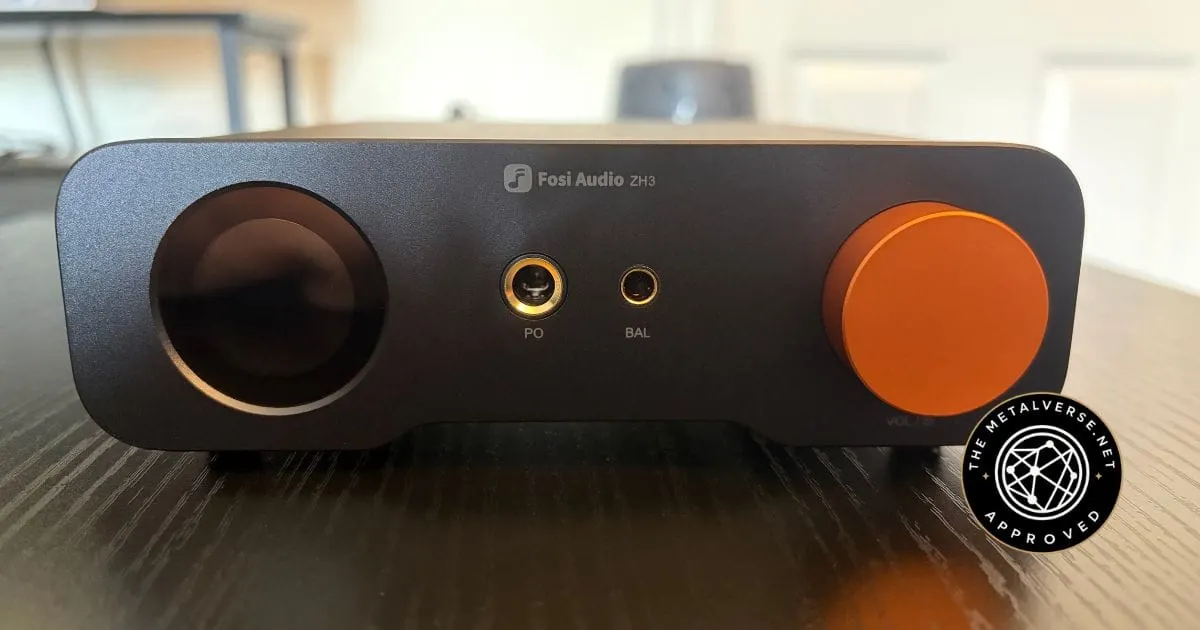
Fosi Audio ZH3 Review: Impressive DAC, Amp, and Preamp for $200
The Fosi Audio ZH3 is a $199 desktop DAC/headphone amp/preamp built around an AKM series chip, balanced circuitry, and a surprisingly deep feature set. With XLR outputs, 2,570mW balanced power, six digital filters, and remote control, this is one of the most complete desktop DAC/amps at its price.

Disclaimer: I received this product in exchange for my honest review. The Metalverse is an independent website, and all opinions expressed are our own. We thank the team at Fosi Audio for giving us this opportunity. When you purchase through a link on our site, we may earn an affiliate commission.
Fosi Audio ZH3
Pros
- Beautifully clean sound signature
- EQ and 6 digital filter options
- 2,570mW output power
- Excellent I/O:USB, Coaxial, Optical, RCA and RCA/XLR out
Cons
- Menu is harder to navigate than the K7
- Lacking subwoofer output
Best picks for you
About Fosi Audio
If you've spent any time in budget audiophile spaces, Fosi Audio needs very little introduction at this point. Founded in 2017, the brand has carved out a serious reputation for building well-engineered gear at prices that genuinely shock people when they hear what they're getting. They started out primarily with speaker amplifiers, but over the past few years, they've been expanding aggressively — DACs, headphone amps, preamps, IEMs, and now fully stacked desktop systems.
What Is the Fosi Audio ZH3?
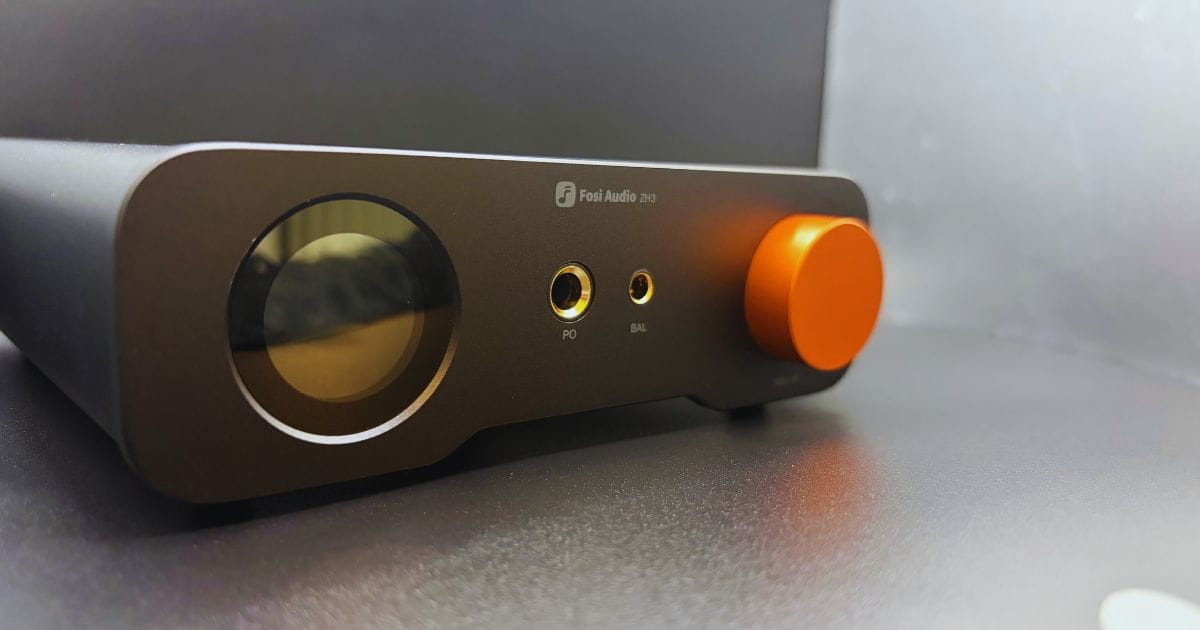
The Fosi Audio ZH3 is a desktop DAC, headphone amplifier, and preamplifier all rolled into a single compact unit, priced at $199 USD. Think of it as the audiophile-focused sibling to the K7 — less about gaming versatility and more about clean, pure audio performance for a dedicated listening setup. Where the K7 targeted gamers and content creators with Bluetooth, a mic input, and a bold DJ-booth aesthetic, the ZH3 is aimed squarely at people who want a capable desk hub for their headphones and powered monitors.
Inside, it's built around an AKM AK4493SEQ 32-bit DAC chip paired with an XMOS XU316 USB processor and four OPA1612 operational amplifiers in a fully balanced, complementary push-pull headphone amp design. The result on paper: ultra-low noise at just 1.9µV, channel separation of around 117dB, and up to 2,570mW of balanced output power at 32Ω. Those are impressive numbers — not just for $199, but frankly for any price. The ZH3 supports PCM up to 768kHz/32-bit and DSD512 over USB, and up to 192kHz/24-bit over optical and coaxial — well beyond what you'll ever actually feed it in daily use, but good to know the headroom is there.
The ZH3 also comes with a feature Fosi hasn't included in most of their previous DAC/amps: a proper infrared remote control. More on that in a bit.
What's in the Box?
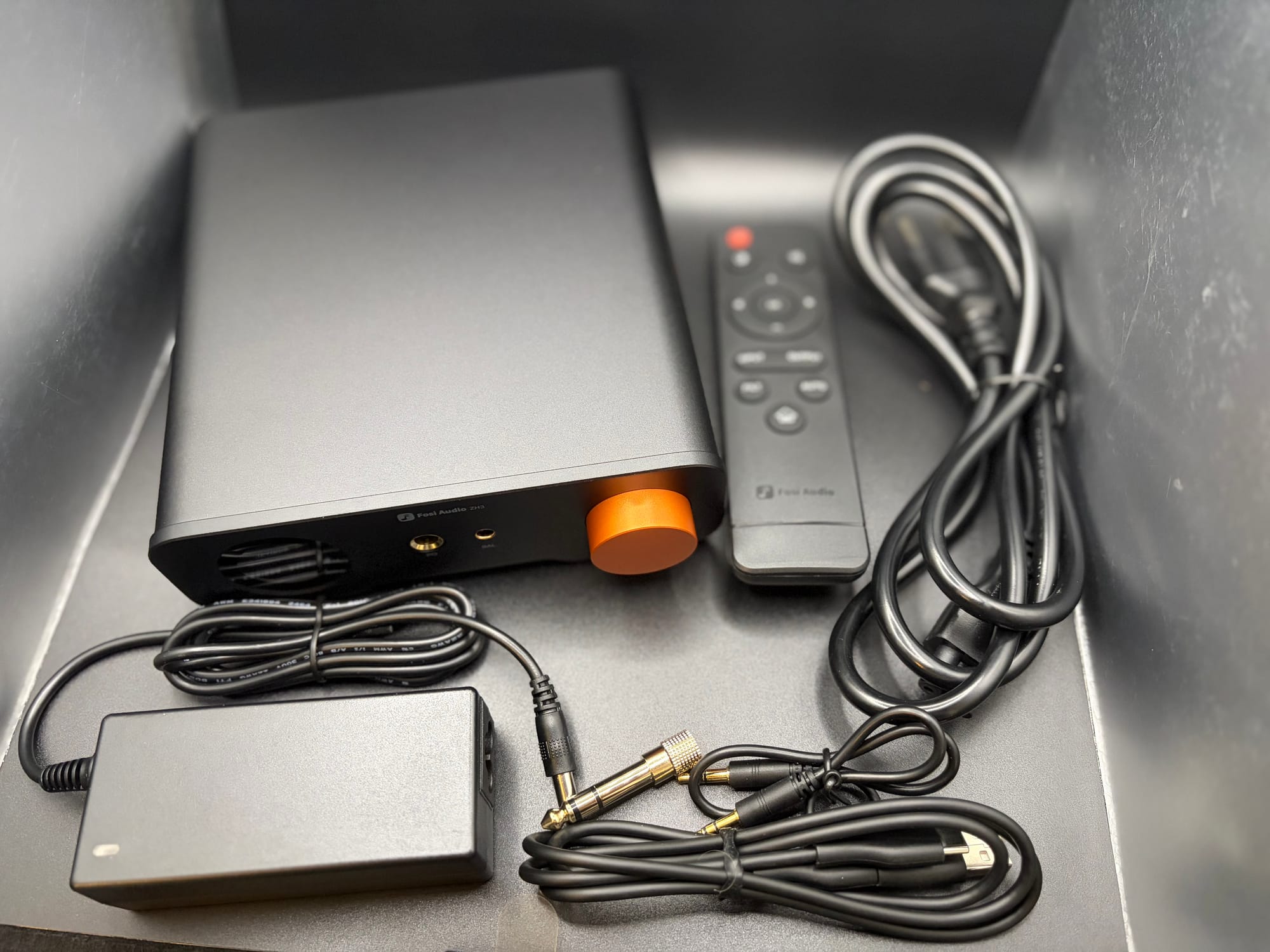
- 1 x ZH3
- 1 x Remote
- 1 x Power Adapter
- 1 x 3.5mm to 1/4' adapter
- 1 x USB to USB-C cable
- 1 x 3.5mm to 3.5mm cable
Build Quality & Design
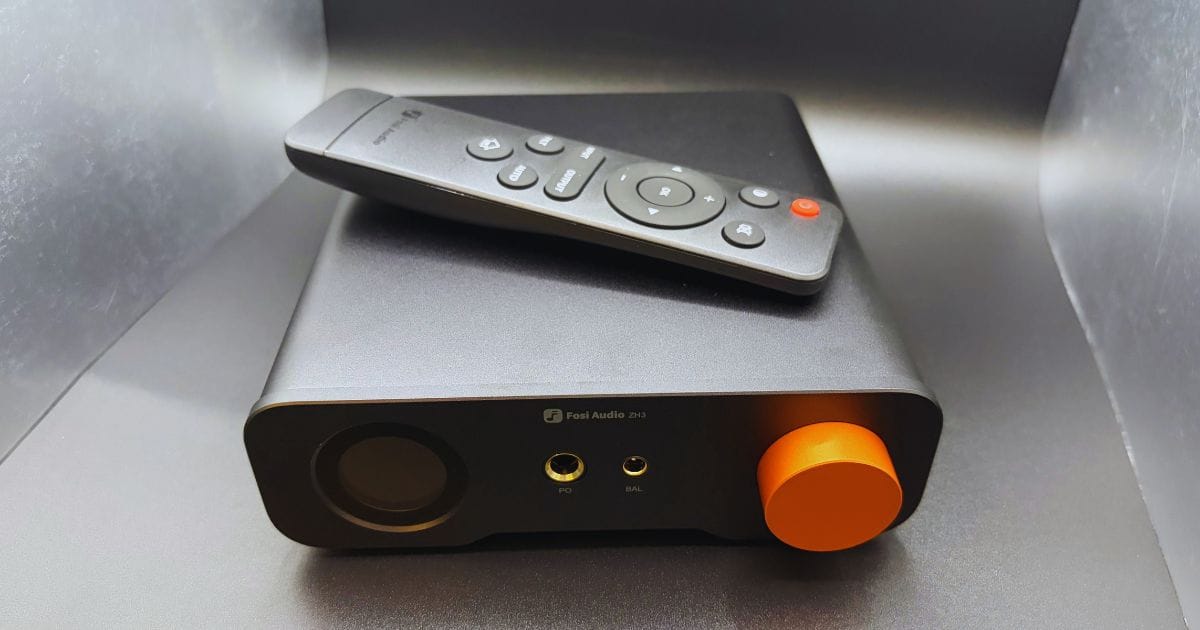
Fosi's Z-Series has a consistent visual identity — clean, minimal, and understated — and the ZH3 fits right in. The chassis is made from a single block of CNC-machined aluminum alloy and finished in matte black coating. Despite measuring about 6" wide × 6" deep × 2" tall, it weighs a reasonable 12 ounces. The rubber feet underneath keep it planted, and the overall feel of the unit is noticeably premium for the price range.
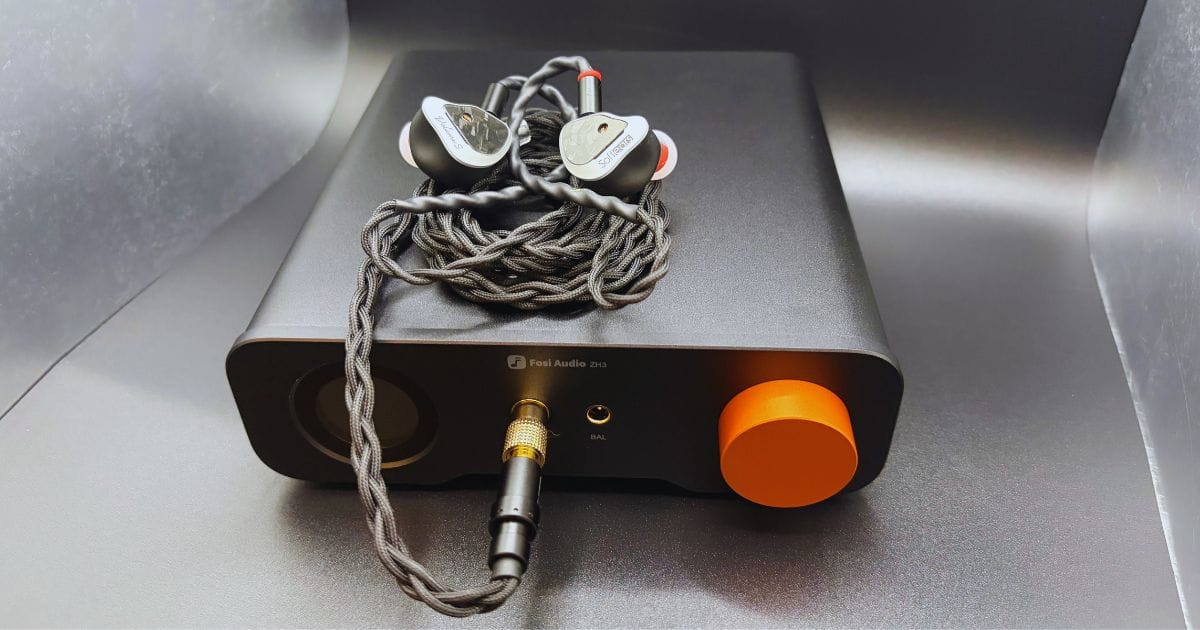
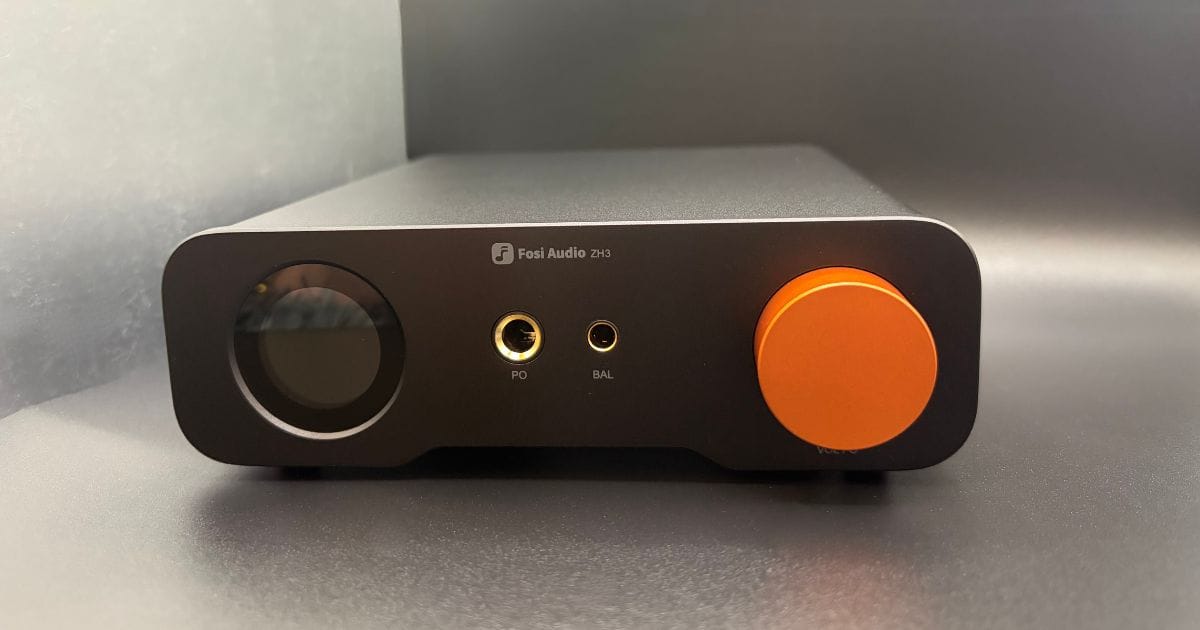
The front panel layout is clean and intentionally symmetrical: a circular 1.5-inch LCD display on the left side, and the large orange volume knob on the right. It's a surprisingly distinctive look — circular screens are uncommon in desktop audio, and Fosi made good use of it. At a glance, the display shows your current volume, input source, sampling rate, filter selection, and output mode. That's a solid amount of information in a small, elegant package.
Below the display, you'll find the 6.35mm single-ended headphone output and 4.4mm balanced headphone output sitting side by side. The volume knob doubles as a menu navigator when clicked, and the five digital filter modes plus bass/treble EQ settings are all accessible directly on the device — no app required.
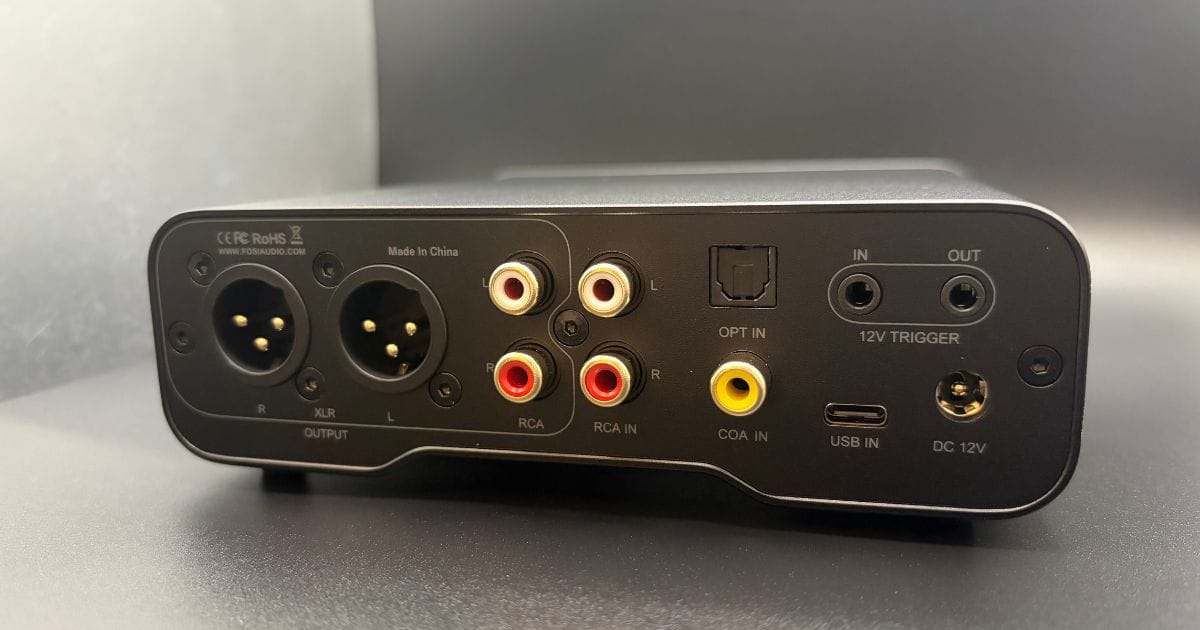
Around the back, things get impressively comprehensive. You get USB-C, optical TOSLINK, coaxial S/PDIF, and RCA analog inputs; balanced XLR and RCA preamp outputs; and 12V trigger in/out ports for system automation with other Z-Series components. That level of I/O connectivity at $199 is genuinely unusual — most competitors at this price either give you XLR or RCA outputs, not both, and trigger connectivity is typically reserved for significantly pricier gear.
The remote control requires AAA batteries that aren't included in the box. For a $199 device, that's a small but easy-to-fix quality-of-life change.
Sound Quality
Sound Quality
The ZH3's sonic character is best described as neutral with a slight organic warmth. It doesn't have that artificially bright feel that some DACs in this price range have, and it doesn't lean into an overly colored warmth either. Instead, it sounds like a well-tuned instrument: accurate, balanced, and tonally honest. Across genres — jazz, electronic, rock, orchestral — the ZH3 maintains a stable, coherent presentation that rewards your listening. It's got a crisp sense of cleanness to its sound reproduction and has a noticeable difference in quality from cheaper DACs or standalone headphones.
The AKM DAC chip contributes to a natural, organic character that makes instruments sound like themselves rather than digital approximations. Soundstage is wide and open for a device at this price point, feeling realistic and spacious. Imaging is accurate and reliable, with good instrument placement across the stereo field. For both music listening and gaming audio (via the preamp outputs to speakers), positioning feels natural and believable. The ZH3 also handles dynamics very well, with a balance between gentler and more impactful sections of music.
EQ and Filters
As far as EQ goes, the ZH3 lets you adjust bass and treble by + or - 12dB as well as having 6 filter choices: Power Dynamics, Neutral Balance, Extended Highs, Well Defined, Natural Smoothness, Precise Analysis, as well as a Bypass mode so you can turn all EQ and filters off and on easily. Between the filters and bass/treble EQ options, you can customize the sound of your headphones quite significantly and dial in a sound that you really like. There is also a Bypass filter which will turn off all EQ and filters. I found this particularly useful for saving your preferred EQ settings and then turning the Bypass filter on/off for when you want to listen with full neutrality without erasing your EQ settings.
Since this is a pre-amp and amp as well as DAC, the ZH3 also has a low, medium, and high gain setting, allowing you to adjust the amount of power output depending on your headphone.
The remote control is the standout quality-of-life feature — being able to switch inputs, adjust volume, and toggle outputs without touching the unit is a feature you quickly wonder how you lived without. The ZH3 also remembers your volume settings independently for each output, so switching between headphones and your speaker preamp outputs doesn't result in a sudden volume jolt. That's a thoughtful design choice that matters in real-world use.
The menu system navigated through the volume knob is logical and intuitive after a short learning curve. The circular display is crisp and readable at a glance. The device is completely plug-and-play on macOS and Linux, and on Windows, it works without a driver in UAC 1.0 mode. For UAC 2.0 (required for DSD playback and the highest PCM rates), a Windows driver install is needed — same as virtually every device in this class.
One specific limitation worth flagging: not all features are accessible in every input/output combination. For example, EQ and bypass mode are only available in certain configurations, and optical/coaxial inputs lose some filter options when routed to specific outputs. This is outlined in the manual, but it's worth knowing so you don't sit there wondering why a setting has greyed out on you.
How Does the ZH3 Stack Up? — Comparisons
Fosi Audio ZH3 vs. Fosi Audio K7 ($199)
This is the most direct comparison since they're the same price from the same brand. These two are siblings, not rivals — they serve genuinely different audiences. The K7 is for gamers and mixed-use setups: it has Bluetooth 5.0, a microphone input, aptX HD wireless, and a more gaming-forward design. The ZH3 is for dedicated audiophile listening: it offers XLR outputs, 12V trigger connectivity, an RCA analog input, a remote control, and meaningfully more balanced output power (2,570mW vs. 2,100mW). Sonically, there is very little difference between the 2 choices (though I slightly prefer the sound of the ZH3). Both are clean, neutral, and highly capable. Your choice between them comes down almost entirely to use case: gaming/streaming = K7, pure listening/speakers = ZH3.
Fosi Audio ZH3 vs. FiiO K7 BT ($249)
The FiiO K7 BT costs $50 more and is a worthy competitor — it's well-built, has solid power output, and carries FiiO's reputation for reliable audio hardware. However, the ZH3 pulls ahead on several fronts: it has more balanced output power, XLR preamp outputs, an RCA analog input, six digital filters, a remote control, and 12V trigger support. The FiiO K7 BT has Bluetooth, which the ZH3 completely lacks. If wireless audio is important to your setup, the FiiO wins that specific battle. For pure wired performance and feature depth, the ZH3 offers more at a lower price.
Fosi Audio ZH3 vs. SMSL C200 Pro (~$199)
The SMSL C200 Pro is a genuine value competitor at a similar price. Both deliver excellent, clean sound with fully balanced output — the sonic differences between them in blind listening tests are minimal to non-existent for most people. The SMSL has its own design language and interface approach, while the ZH3 wins on I/O breadth (particularly the XLR outputs and 12V triggers), the included remote, and the more distinctive design with its circular display. The SMSL C200 Pro has its advocates, but the ZH3 has more overall feature completeness and a premium feel at the same price.
Final Verdict
The Fosi Audio ZH3 is strong by any standard below $300. You get a properly implemented AKM DAC, a fully balanced headphone amp with serious power reserves, XLR preamp outputs, six digital filters, a remote, and 12V trigger automation — all in a compact, premium-feeling aluminum chassis with a clean and natural sound signature.
The missing Bluetooth and mic input will be dealbreakers for some, but if you're building a clean audiophile desk setup and want a single device that can serve as a headphone amp, preamp for powered monitors, and DAC all at once for $200, the ZH3 is truly one of the best options in the market right now.

Technical Specifications
- Price: $199 USD
- DAC Chip: AKM AK4493SEQ (32-bit)
- USB Controller: XMOS XU316
- Op-Amps: 4× Texas Instruments OPA1612 (user-swappable)
- Headphone Amp Design: Fully balanced, complementary push-pull
- USB Max Sampling Rate: PCM 768kHz/32-bit, DSD512
- Optical/Coaxial Max Sampling Rate: PCM 192kHz/24-bit
- Balanced Output Power (4.4mm): 2,570mW × 2 @ 32Ω
- Single-Ended Output Power (6.35mm): 640mW × 2 @ 32Ω
- Output Noise: <1.9µV (ultra-low noise)
- Channel Separation: ~117dB
- Headphone Outputs: 6.35mm TRS (single-ended), 4.4mm Pentaconn (balanced)
- Digital Inputs: USB-C, Optical TOSLINK, Coaxial S/PDIF
- Analog Input: RCA stereo (for use as standalone headphone amp)
- Preamp Outputs: XLR balanced stereo, RCA stereo
- Trigger Ports: 12V trigger in + 12V trigger out
- Display: 1.5-inch circular LCD
- Tone Controls: Bass and Treble (on-device)
- Digital Filters: 6 selectable filters including Bypass, PWR.DYN, NEUT.BAL, WELL DEF., NAT.SMOOT, PRECIS.ANALY
- Power Supply: External DC adapter (included)
- Dimensions: 162mm (W) × 150mm (D) × 50mm (H)
- Weight: ~350g
- OS Compatibility (USB): Windows (driver required for DSD/UAC 2.0), macOS, Linux (no driver required)
Thanks for reading!
- Read more of the latest rock/metal news here
- Subscribe to our Metal News Email list for weekly updates!
- Support The Metalverse and go ad-free.
- Follow us on Social Media | Instagram | Facebook
- Listen to our metal Spotify Playlists!
- Join our free 5-day music marketing email course!


