


Fosi Audio K7 Review: A Gaming DAC That Audiophiles Will Actually Love
The Fosi Audio K7 is a $199 desktop DAC/headphone amplifier that blurs the line between gaming gear and hi-fi audio equipment. Packed with features, the K7 is one of the most versatile DAC/amps at this price point. But is it the best budget desktop DAC you can buy right now? Let's break it all down.

Disclaimer: I received this product in exchange for my honest review. The Metalverse is an independent website, and all opinions expressed are our own. We thank the team at Fosi Audio for giving us this opportunity. When you purchase through a link on our site, we may earn an affiliate commission.
Fosi Audio K7
Pros
- Audiophile-grade AKM AK4493SEQ DAC chip
- 4.4mm balanced headphone output with 2,100mW output
- USB, optical, coaxial, Bluetooth, AND a mic input
- Excellent, clean sound signature
- On-device tone controls (bass/treble) without needing software
Cons
- No LDAC Bluetooth support—stuck with aptX HD as the ceiling
- Occasionally, a faint noise floor is audible with very sensitive IEMs
About Fosi Audio
If you've been watching the budget audiophile communities over the past few years, you've definitely seen the name Fosi Audio pop up. Founded in 2017, Fosi Audio has made a name for itself among the new wave of affordable yet excellent audio brands. Their goal: deliver straightforward, well-built, compact gear at affordable prices. They've been putting out power amps, DACs, and headphone amplifiers that consistently punch above their price tag.
The K7 represents something of a new direction for Fosi—it's their most feature-rich and design-forward product yet, and it's clearly aimed at a wider audience than their usual audiophile crowd. Gamers, streamers, and desktop audio enthusiasts are all on the invite list for this one.
What Is the Fosi Audio K7?
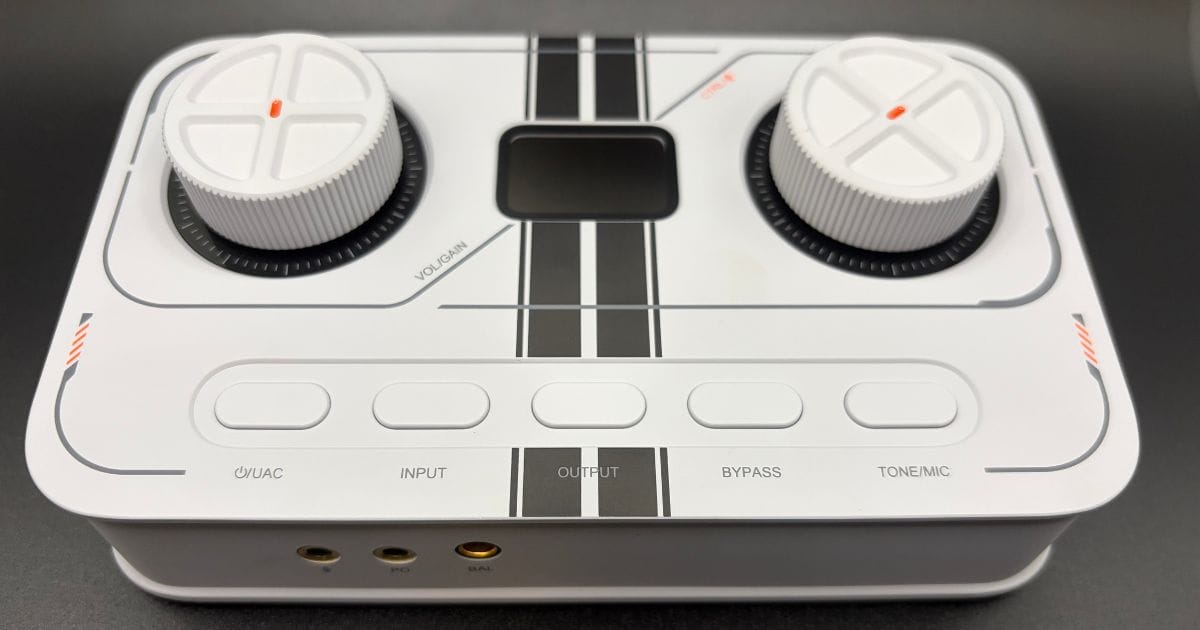
The Fosi Audio K7 is a desktop DAC and headphone amplifier priced at $199. The box says "gaming DAC/amp," but that label barely scratches the surface of what's going on inside this thing.
The internal component list reads more like something you'd expect in a $400 product: XMOS XU208 USB controller, AKM AK4493SEQ 32-bit DAC chip, multiple Texas Instruments OPA1612 op-amps, a NJW1119A 3-band tone control IC, a Texas Instruments TPA6120A2 headphone amp IC, and a Qualcomm QCC3031 Bluetooth module. That is a genuinely impressive parts list for the price.
On the connectivity side, the K7 supports PCM up to 384kHz/32-bit and DSD256 over USB, optical, and coaxial inputs up to 192kHz/24-bit, and Bluetooth 5.0 with aptX HD, aptX LL, AAC, and SBC. For $199, there is a lot going on under the hood.
Build Quality & Design
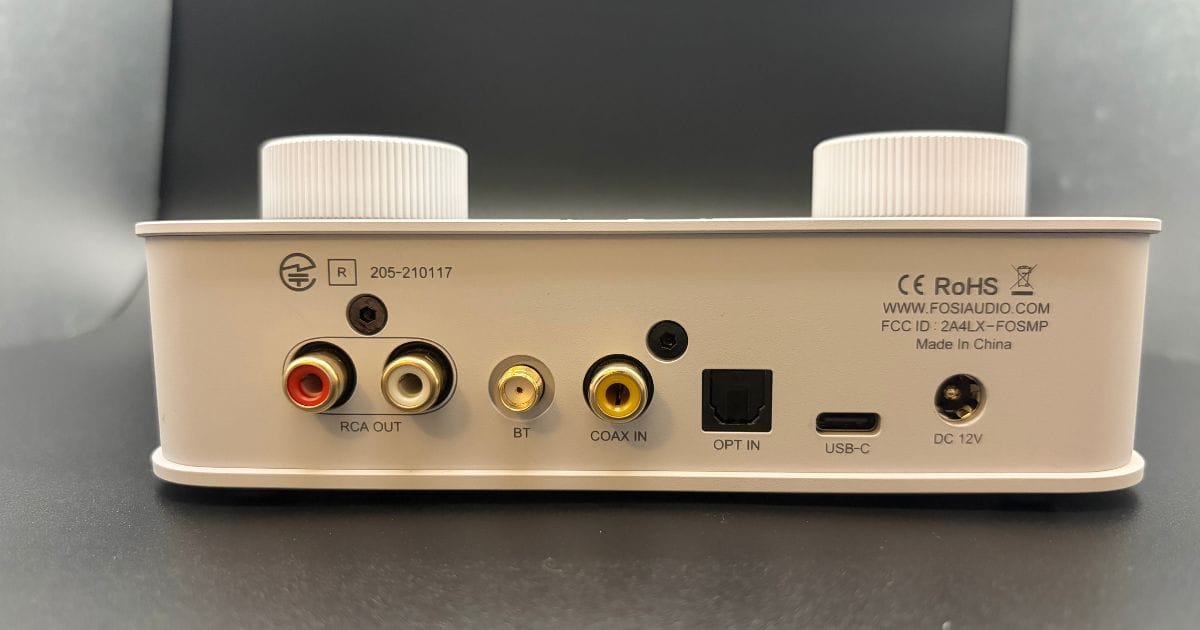
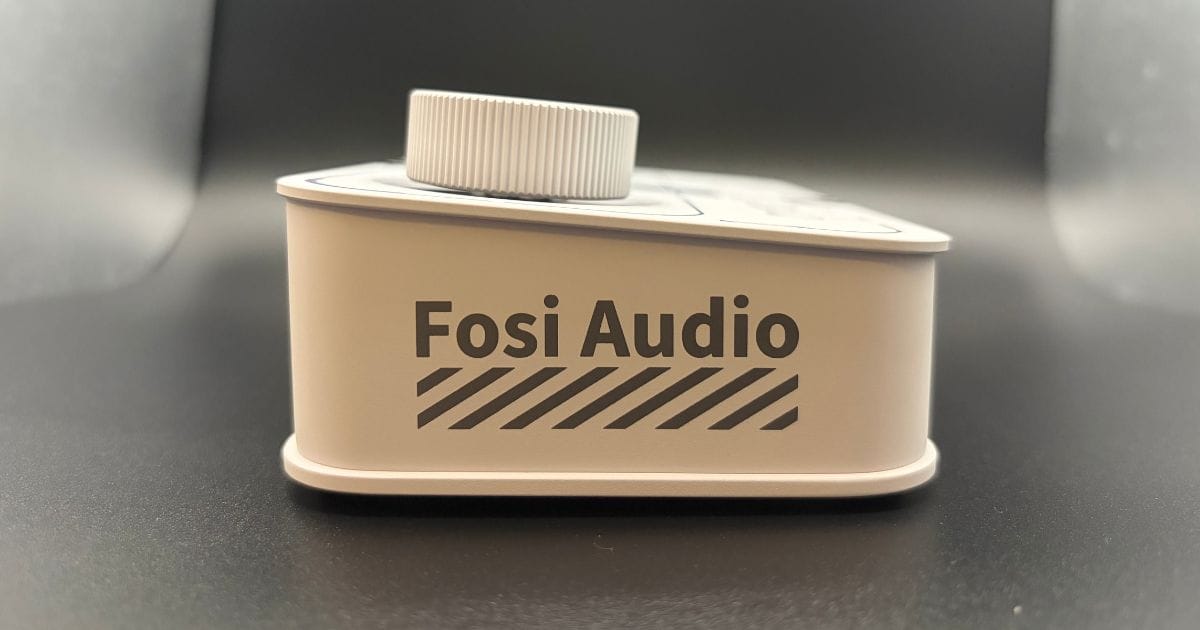
The K7 makes an impression before you even plug it in. The industrial, angular aluminum chassis is one of my favorite designs I've seen in a DAC, particularly in the silver/white colorway. It's bold and actually reminds me of Star Wars with its futuristic aesthetic. Overall, the build quality is quite excellent.
At roughly 1.5 lbs, the unit feels planted and dense. The thick aluminum panels feel genuinely premium compared to the plastic enclosures common in this range. Anti-slip pads on the bottom keep it firmly in place on your desk. The two large knobs on top are satisfying to spin with a tactile click on each turn.
The front panel includes a 3.5mm unbalanced headphone jack, a 4.4mm balanced headphone output, and a 3.5mm microphone input. Around back, you'll find USB-C, optical TOSLINK, coaxial S/PDIF, Bluetooth antenna connector, RCA line outputs, and the DC power input. Three output options and four inputs at $199 is an exceptional connectivity offering for this market.
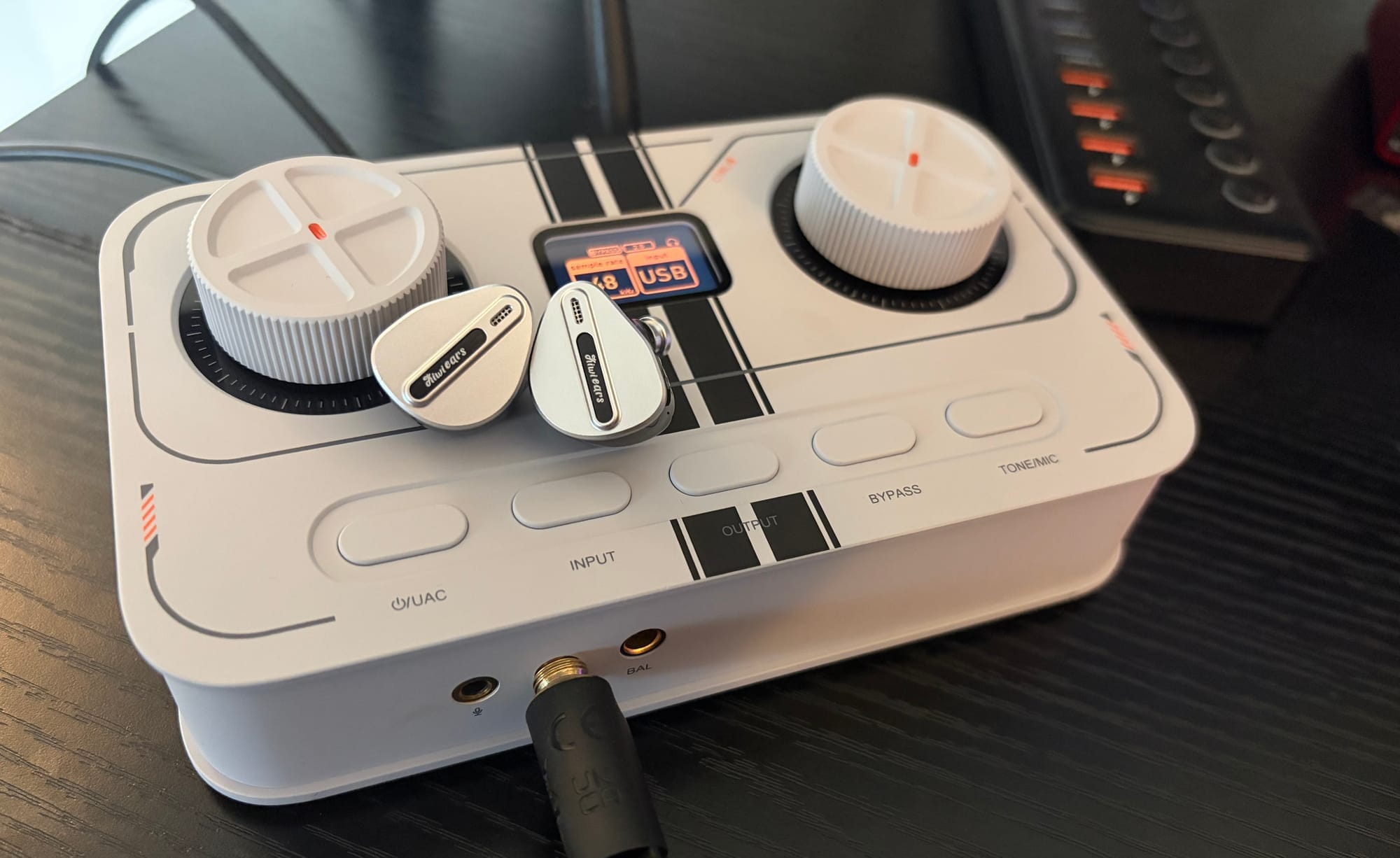
Centered on the top panel, a 1.5-inch LCD shows you input source, current volume, and whatever parameter the right-hand knob is actively controlling, all in real time. It's clean and functional without being cluttered.
A couple of small gripes worth noting: the two large knobs have a slight wobble when you handle them closely—nothing that affects functionality, but it is noticeable.
Sound Quality
Overall Sound
The K7's sound signature lands in clean, neutral, and slightly warm territory— which is a combination that works exceptionally well for both extended listening sessions and gaming. The AKM AK4493SEQ chip is a big reason for this: it tends to contribute a natural musicality that keeps the presentation from feeling sterile or overly analytical. You get impressive detail retrieval without the clinical edge that can make some DAC/amps tiring over time. The on-device bass and treble controls let you tune the character to your preference without opening a single app —a thoughtful and underrated feature at this price. The slight warmth the AKM chip introduces keeps things musical and organic, avoiding the flat, colorless presentation you sometimes get with overly clinical DAC chips.
EQ
The EQ on the K7 is quite easy to adjust and simple to use. By pressing the tone/mic button, you can quickly increase or decrease treble and bass by 12dB and also adjust the microphone volume. There is also a bypass filter button that allows you to turn off all your EQ settings while saving the bass/treble EQ once you turn the bypass filter off again.
Convenience / Usability

Everything you need is accessible directly on the device without diving into software menus or driver panels. Here's how the five front-panel buttons break down: the first powers the unit on and off, the second cycles through input sources, the third toggles between line-out and headphone output, the fourth bypasses the tone controls entirely, and the fifth lets you assign the right-hand knob to bass, treble, or microphone sensitivity adjustment. That's a lot of control packed into a compact interface, and it takes only a few minutes to become completely intuitive.
One thing to flag if you're an IEM user: the K7 has an occasionally audible noise floor with very sensitive in-ear monitors. In quiet passages, you may catch a faint background hiss when running something like ultra-sensitive multi-BA IEMs directly from the output. For full-sized headphones and the vast majority of IEMs in normal use cases, this is not audible—but it's worth knowing before you pair it with something exceptionally sensitive.
How Does the K7 Stack Up? — Comparisons
Fosi Audio K7 vs. Fosi Audio ZH3 (~$199)
Same brand, same price, and even the same AKM AK4493SEQ DAC chip under the hood. But these two units are aimed at genuinely different buyers. The K7 is the more versatile, feature-packed option: it brings Bluetooth 5.0, a microphone input, and a bold, angular design that fits naturally into a gaming or streaming setup. The ZH3 trades all of that for a purer, more audiophile-focused approach—you get XLR balanced preamp outputs, six selectable digital filters, a significantly lower noise floor that plays nicely even with ultra-sensitive IEMs, more output power at 2,570mW vs the K7's 2,100mW, and a remote control for couch-friendly listening. Sound quality on both is excellent and closely matched, but the ZH3 has a slightly cleaner, more refined presentation with better depth layering. If your setup is built around headphones and powered monitors, and you want the best possible audio performance, the ZH3 is the stronger pick (and my favorite of the two). If you want Bluetooth, a mic input, and a unit that handles gaming, music, and streaming from one box without compromise, the K7 will be better in versatility, with a sound quality that is very close.
Fosi Audio K7 vs. FiiO K11 (~$139–$179)
The FiiO K11 is a well-regarded desktop amp with a solid reputation in the audiophile community, and it deserves its spot in this comparison. Both are warm, full-bodied desktop units with good driving power in their range. But the K7 edges ahead with a more open, clear presentation and noticeably better detail layering. On the feature side, the comparison isn't even close—the K7 adds tone controls, a microphone input, and Bluetooth, none of which the K11 offers. The K11's simpler, more subdued aesthetic might appeal if you prefer your setup understated, but for feature breadth and overall sonic openness, the K7 wins.
Fosi Audio K7 vs. FiiO K7 BT (~$249)
Yes, two products called the "K7"—the naming overlap is confusing, and the comparison comes up constantly for that reason. The FiiO K7 BT costs $50 more than the Fosi and, interestingly, drops some features in the process: no microphone input, no on-device tone controls, and no LCD display. The FiiO does add an additional line input and offers a slightly different tuning character. The Fosi K7's output power of 2,100mW at 32Ω is objectively higher, and the overall feature set at $50 less is hard to argue with. Fosi wins clearly on value here.
Final Verdict
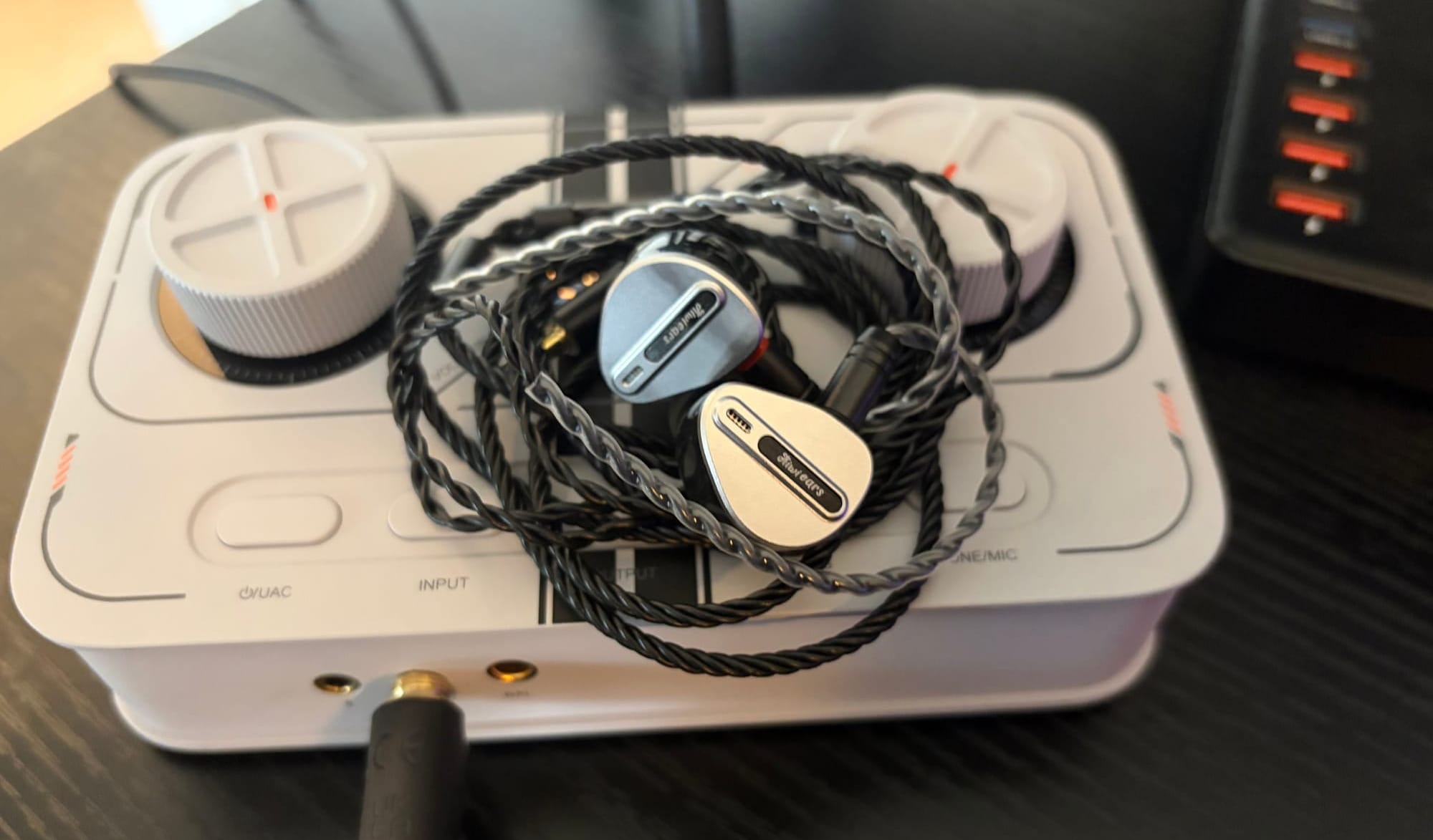
The Fosi Audio K7 is a product that quietly exceeds everything its marketing promises. "Gaming DAC/amp" dramatically undersells what this actually is: a legitimate hi-fi desktop DAC and headphone amplifier that happens to also include a mic input, Bluetooth, and a design you won't mind showing off.
At $199, you're getting an aluminum chassis, AKM AK4493SEQ DAC chip, 4.4mm balanced output, 2,100mW of headphone driving power, multi-format input support, on-device EQ controls, and plug-and-play compatibility with macOS and Linux. The faint noise floor with ultra-sensitive IEMs is worth knowing about, and the lack of LDAC Bluetooth support is noted, but neither is a dealbreaker at this price point.
Whether you're a gamer who wants genuinely better audio without getting lost in an audiophile rabbit hole, or an enthusiast hunting for a capable all-in-one desktop unit under $250, the Fosi K7 belongs on your shortlist. It's one of the best desktop DAC/amps available at this price, and it's not particularly close.
Technical Specifications
- Price: $199 USD
- DAC Chip: AKM AK4493SEQ (32-bit)
- USB Controller: XMOS XU208
- Headphone Amp: Texas Instruments TPA6120A2
- Op-Amps: Texas Instruments OPA1612 (multiple)
- Bluetooth Chip: Qualcomm QCC3031
- Bluetooth Codecs: aptX HD, aptX LL, aptX, AAC, SBC
- Bluetooth Version: 5.0
- USB Max Sampling Rate: PCM 384kHz/32-bit, DSD256 (UAC 2.0)
- Optical/Coaxial Max Sampling Rate: PCM 192kHz/24-bit
- Bluetooth Max Sampling Rate: PCM 48kHz/24-bit
- Headphone Outputs: 3.5mm (unbalanced), 4.4mm Pentaconn (balanced)
- Headphone Output Power (Balanced): 2,100mW @ 32Ω
- Inputs: USB-C, Optical TOSLINK, Coaxial S/PDIF, Bluetooth 5.0
- Outputs: 3.5mm headphone, 4.4mm balanced headphone, RCA line out (preamp)
- Microphone Input: 3.5mm front panel
- Power Supply: External 12V / 2A DC adapter (included)
Thanks for reading!
- Read more of the latest rock/metal news here
- Subscribe to our Metal News Email list for weekly updates!
- Support The Metalverse and go ad-free.
- Follow us on Social Media | Instagram | Facebook
- Listen to our metal Spotify Playlists!
- Join our free 5-day music marketing email course!


