

SimGot Supermix 5 Review: New 5 Driver Hybrid IEM with Bone Conduction


Disclaimer: I received this product in exchange for my honest review. The Metalverse is an independent website, and all opinions expressed are our own with no monetary incentive. We thank the team at SimGot and Linsoul for giving us this opportunity.
SimGot SuperMix 5
Pros
- Very smooth, balanced sound
- Well implemented 5 driver crossover
- Bone Conduction Driver adds slight vibration to certain frequencies
Cons
- Treble may roll off too early for some
- Cable feels a little thin compared to others at the price
SimGot
Founded in 2013 by a team of passionate audio engineers, SimGot started with a simple philosophy embedded in its name: "Simple and elegant." For years, SimGot operated as a smaller company, but that all changed around 2021-2022 when they released the EA500—a budget single dynamic driver IEM that completely redefined what consumers should expect at the sub-$100 price point.
Since then, SimGot has established itself as a cornerstone brand in the Chi-Fi space, earning respect for refusing to flood the market with mediocre products. Every release from the EW200 to the EA1000 "Fermat" has been refined, with each model offering something unique at its respective price point. The company's commitment to technical innovation—from their proprietary DMDC (Dual-Magnet Dual-Cavity) technology to their recent experiments with planar drivers and piezoelectric transducers—shows a brand unafraid to push boundaries while maintaining accessible pricing.
The Supermix series represents SimGot's most ambitious driver configurations, combining multiple transducer types to achieve what single-driver IEMs cannot. With the Supermix 4 earning praise as a $150 quadbrid powerhouse, expectations ran high for the Supermix 5 to deliver the next evolution.
Introducing the Supermix 5
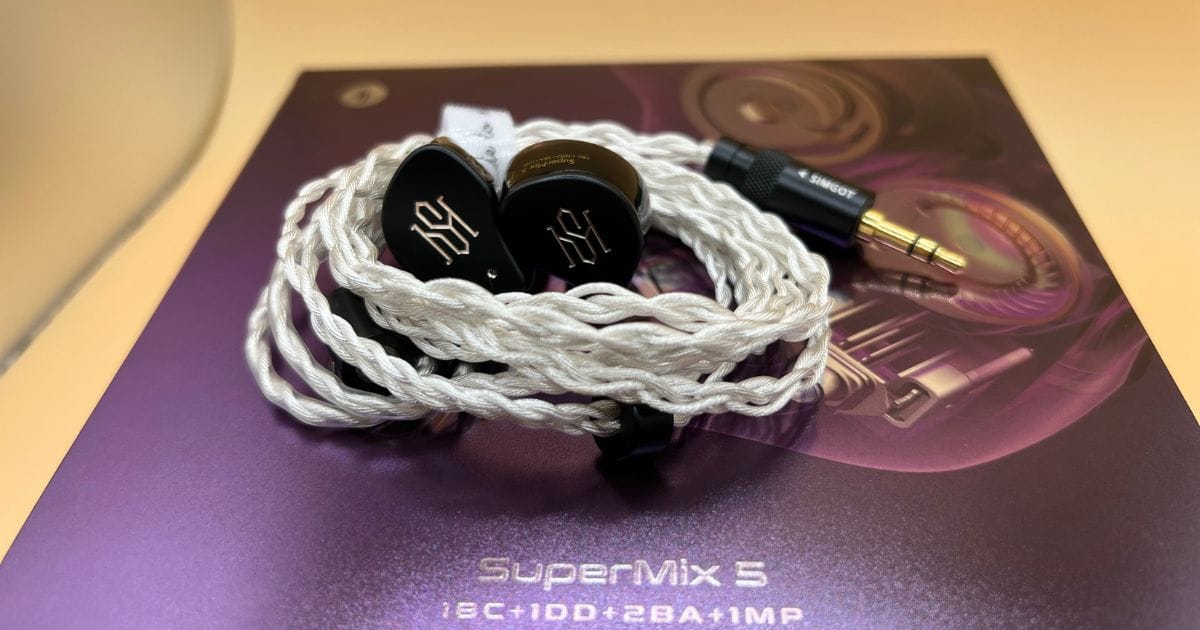
The SimGot Supermix 5 is a five-driver hybrid in-ear monitor that pushes the technical envelope with an unusual driver array: one 8mm DLC (Diamond-Like Carbon) dynamic driver, two balanced armature drivers, one micro planar magnetic driver, and one 10mm bone conduction driver. This 5-driver configuration aims to deliver the impact of dynamic bass, the clarity of balanced armatures, the air and extension of planar technology, and the tactile enhancement that bone conduction offers in theory.
Priced at $220, the Supermix 5 targets the competitive mid-tier IEM market. The Harman 2019-inspired tuning aims for broad appeal—a safe all-rounder that works across genres from classical to EDM, while the bone conduction driver adds a unique feature designed to enhance bass texture and provide micro-detail without dramatically altering the frequency response.
Unboxing
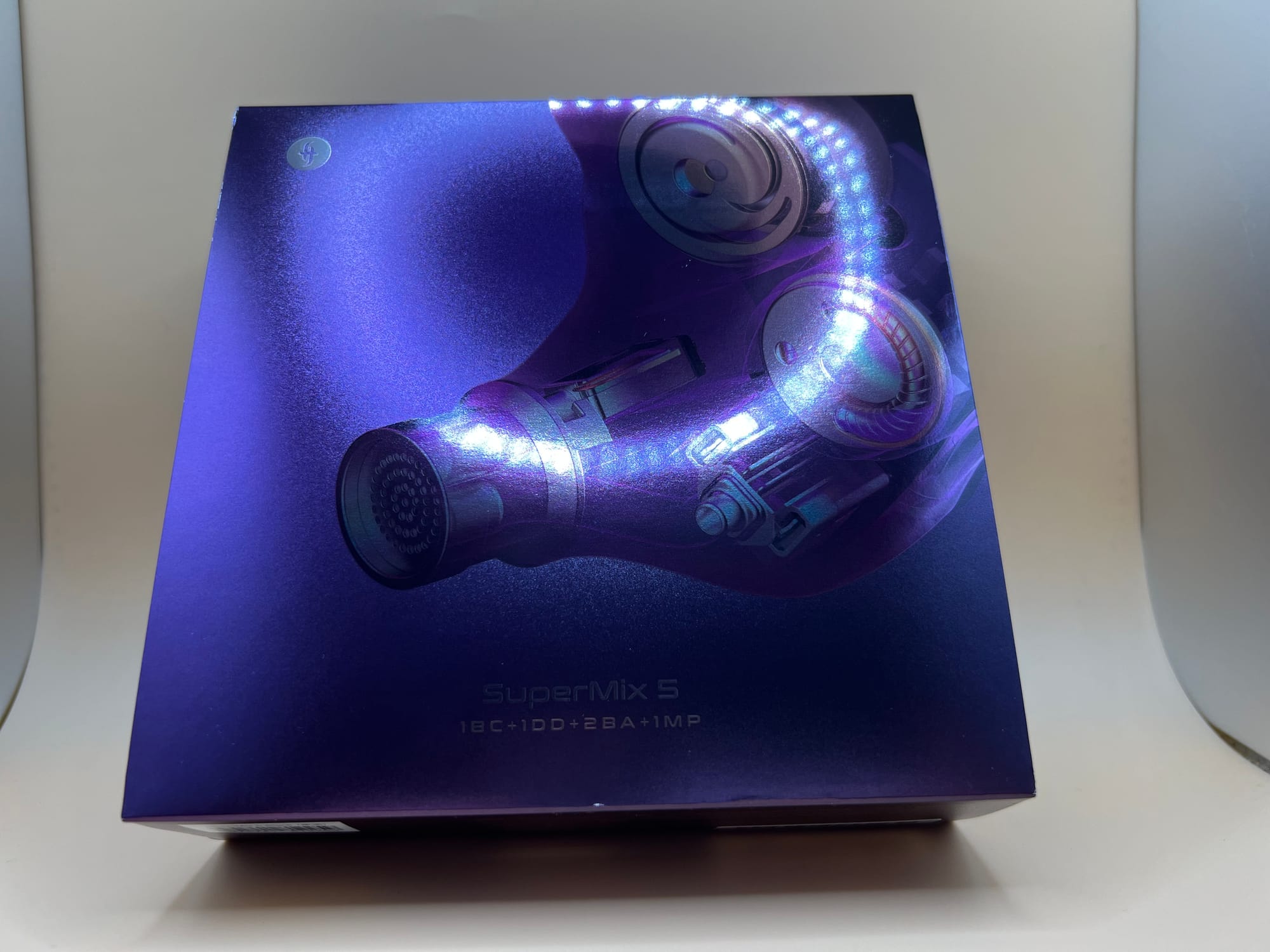

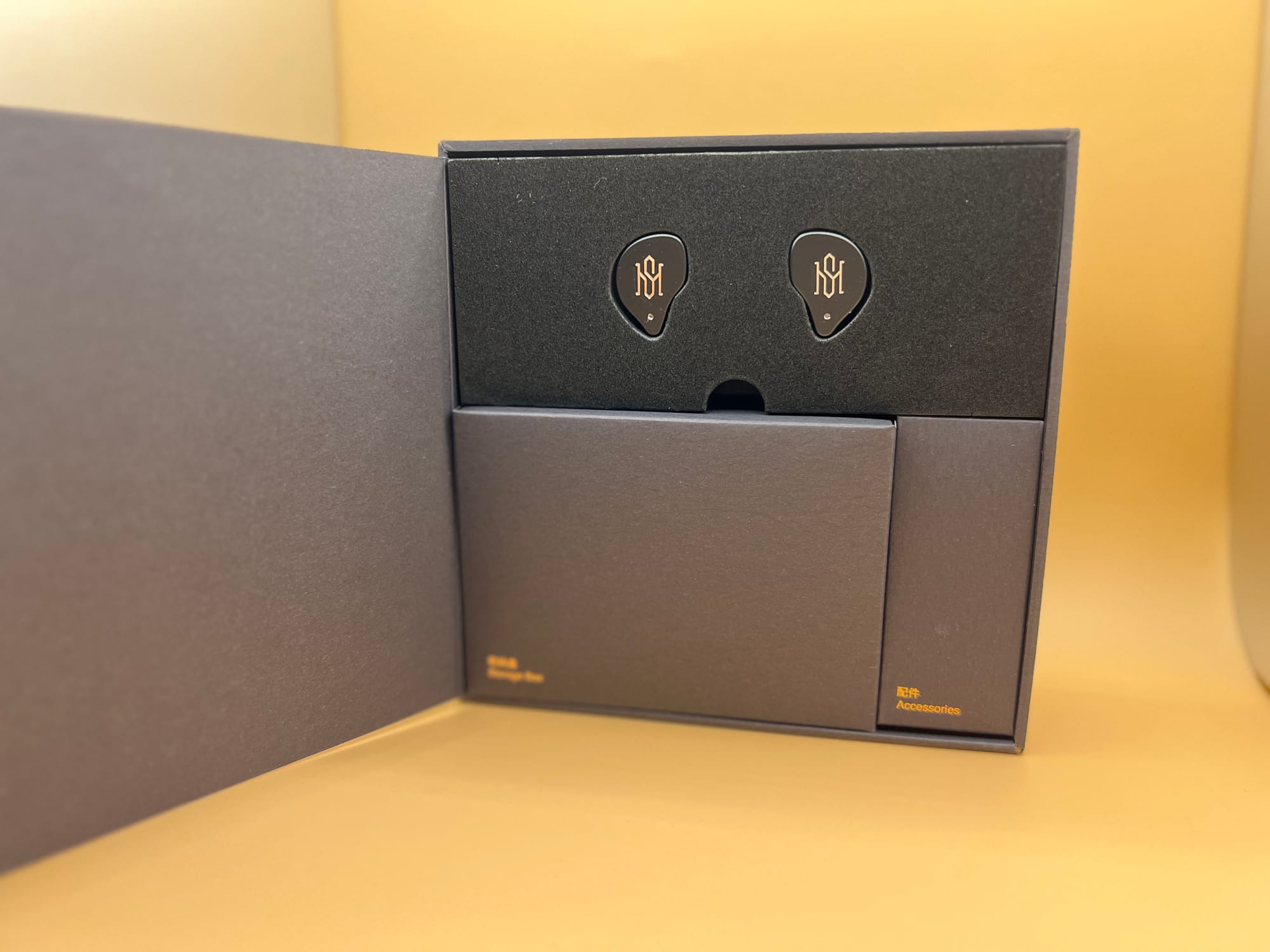
What's in the Box?
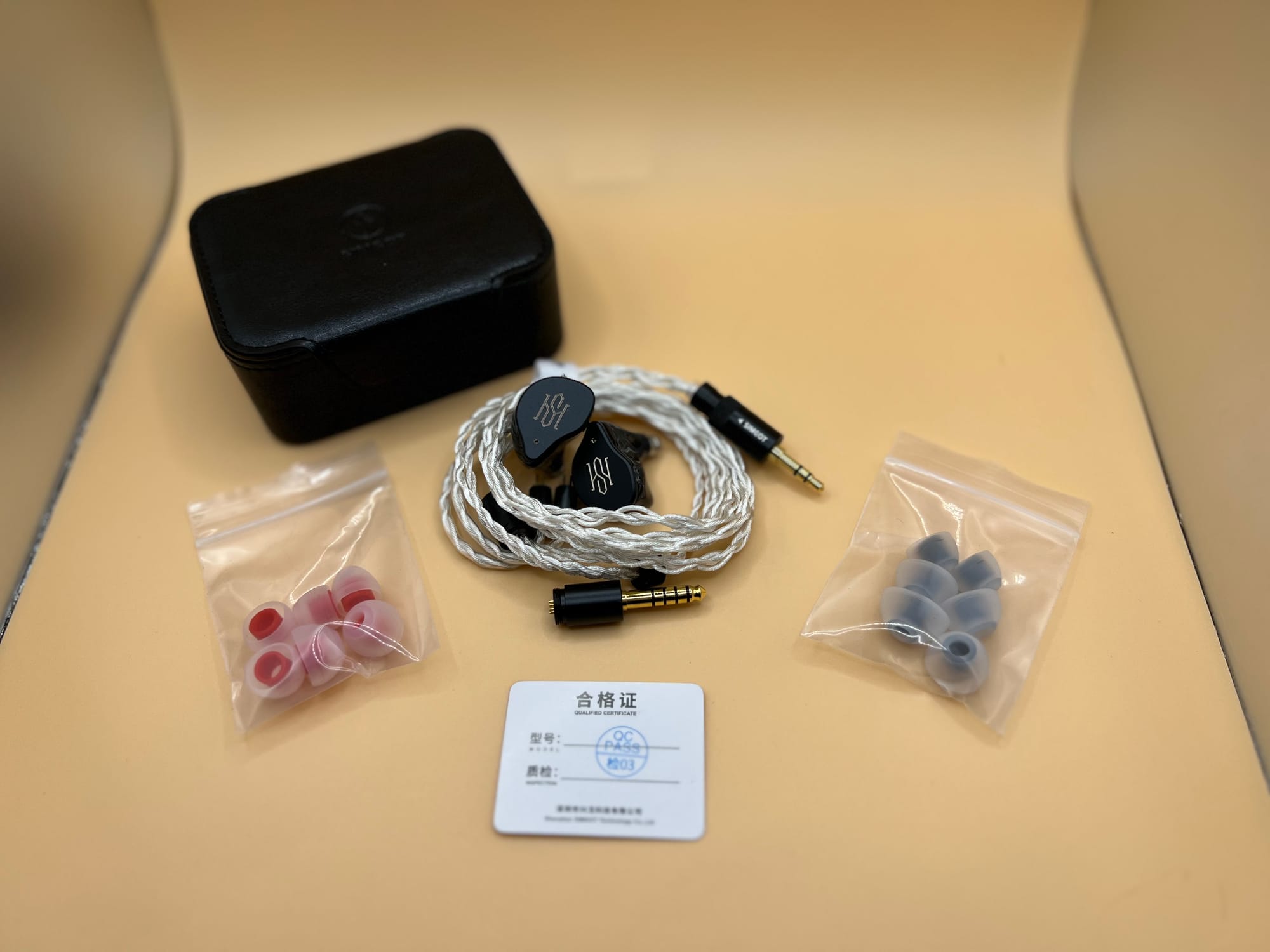
- 1 x SimGot Supermix 5
- Modular 2-pin cable with 3.5mm and 4.4mm swappable terminations
- 6 pairs of silicone ear tips (2S/2M/2L)
- Storage Case
Eartips
There are 6 pairs of included ear tips in small, medium, and large, which provided me with an ideal fit, and I tend to like the SimGot eartips in general. The IEM nozzle is standard size, so if 3rd party ear tips are preferred, they can be swapped out easily.
Cable
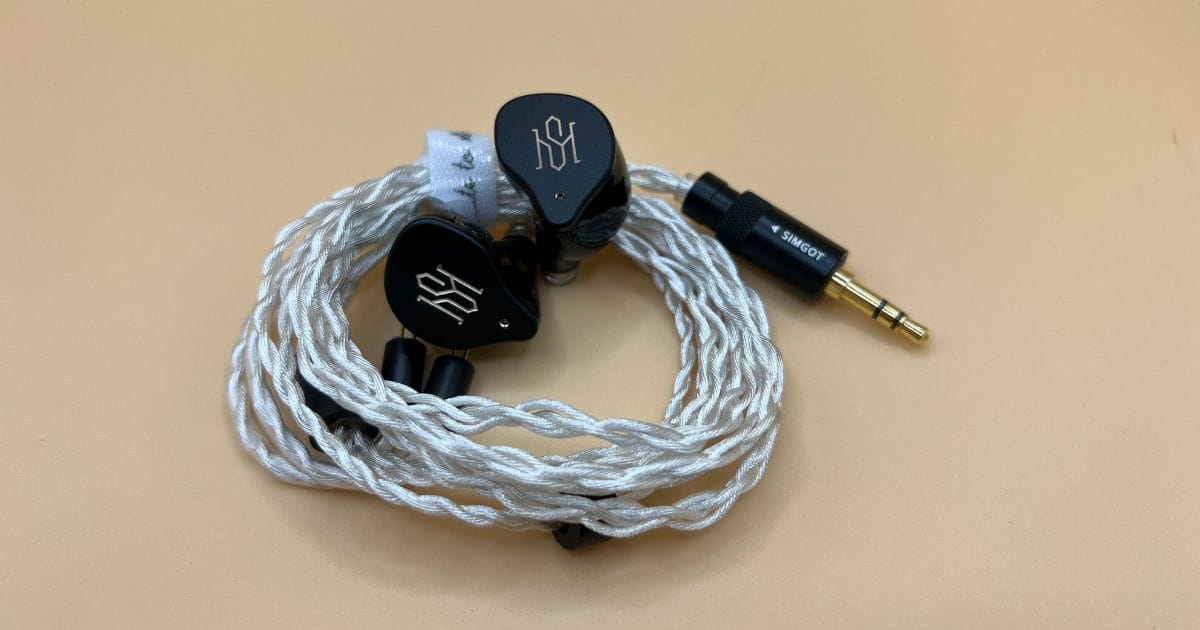
The included silver-plated litz cable offers optimal signal transfer and a sparkly white aesthetic that matches the shells of the IEMs quite nicely. I do find the cable to feel a little thin and have a "plastic" feel to it rather than a smooth, "polished" feel. It seems like it should hold up during use, but it is not one of the more robust cables I've used. On the bright side, I like the white color in contrast to the black shells, and the modular cable system is a great addition, allowing you to swap between 3.5 and 4.4mm terminations when needed.
Case
I really like the case that SimGot included with the Supermix 5. The sleek black pleather feels sturdy and matches the look of the IEMs. There is enough space on the inside to fit the IEMs comfortably while having little slots for accessories. It's compact enough to fit in a pocket or bag without taking up much room.
Build Quality & Design
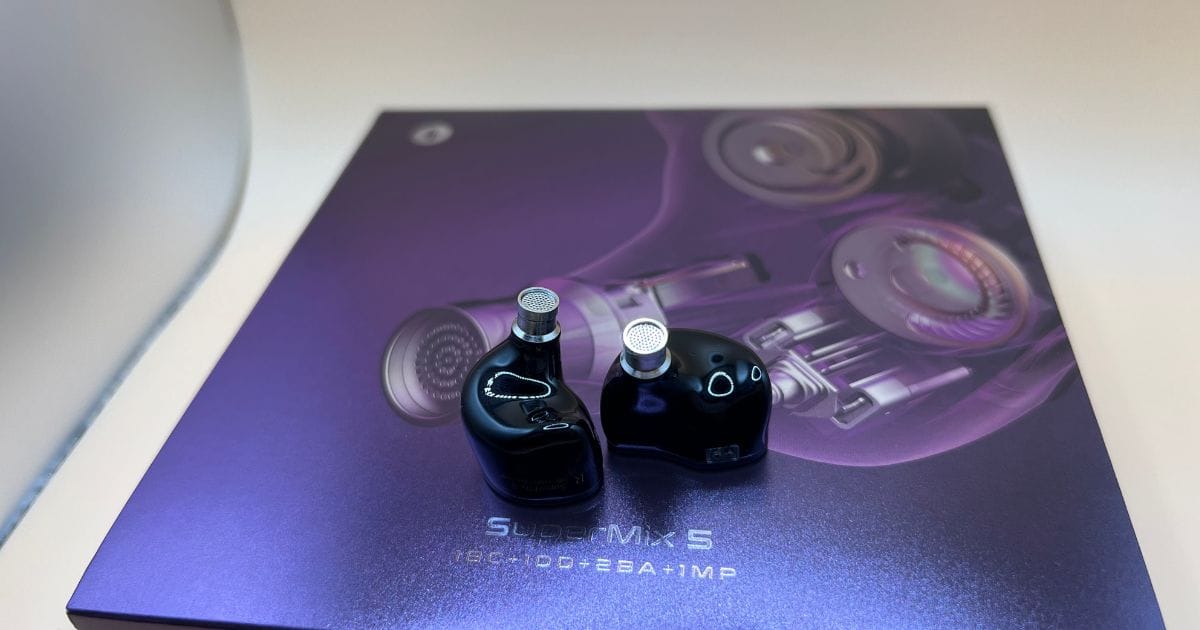
SimGot has crafted the Supermix 5 with an eye toward both aesthetics and acoustic optimization. The shells employ 3D-printed clear resin fused with CNC-machined metal faceplates, creating a translucent black housing with a shiny chrome accent. The resin provides the ideal vibrational properties for the bone conduction driver to transmit mechanical energy directly to your ear structures, while the metal components help suppress standing waves for cleaner sound. The IEM feels sturdy and has a clean aesthetic that I quite like.
The longer nozzle helps with fit stability, and the 0.78mm 2-pin connectors are recessed to prevent accidental disconnection.
Interestingly, due to the bone conduction driver, there's a unique "springiness" to these. If you feel the shells, there is a distinct springy vibration feeling that I haven't encountered with non-bone conduction driver earbuds. This vibration can cause some increased microphonics (noise while moving during wear), although it's not a huge change from standard driver configurations.
Sound Quality

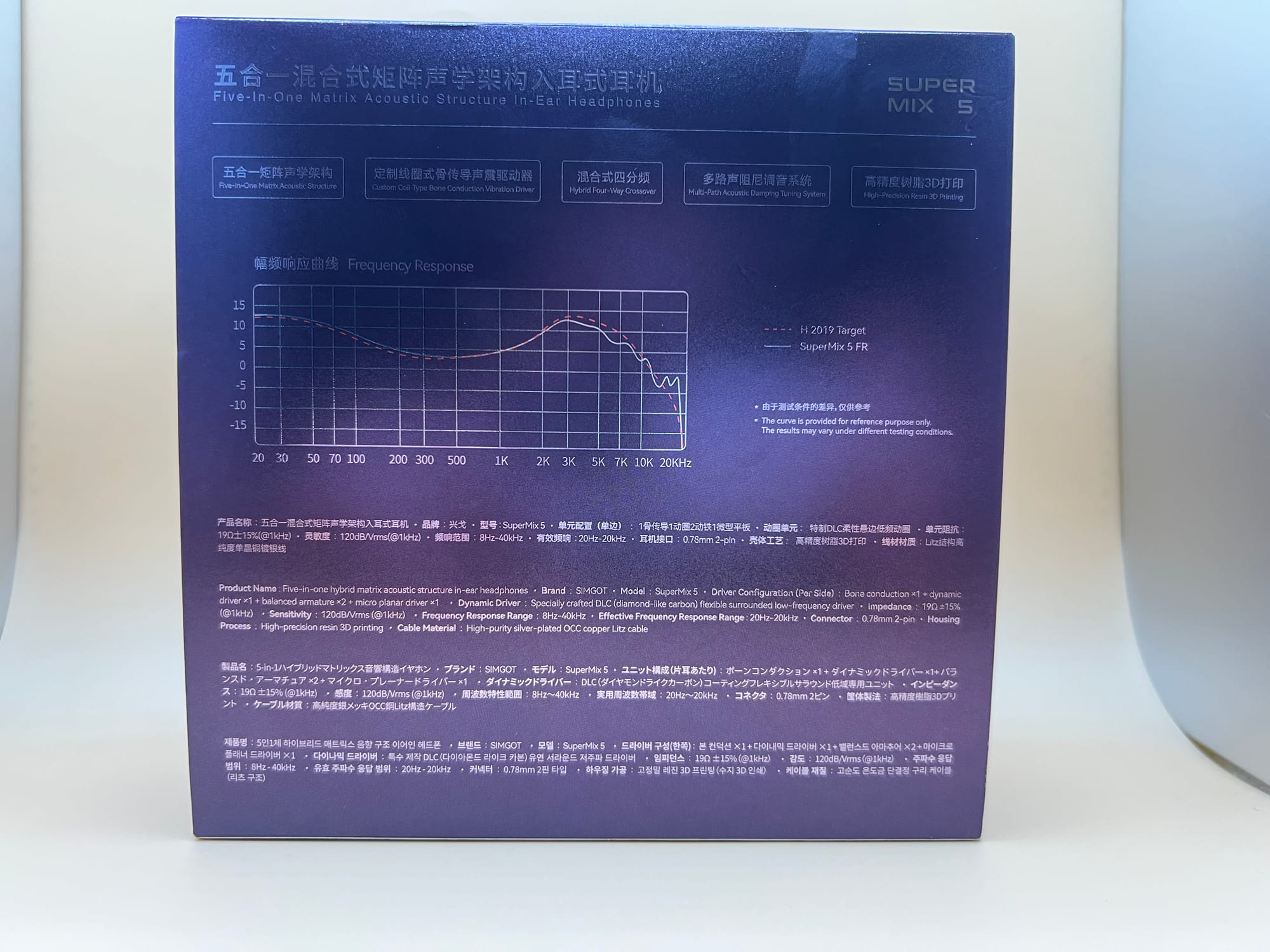
The Supermix 5 follows a Harman 2019-inspired target with subtle adjustments to avoid the "shout" region that can be too harsh on strict Harman implementations. These come across with a clean, balanced presentation that has a sense of smoothness to it while still keeping admirable bass response.
Bass
The 8mm DLC dynamic driver handles the low end with precision and control. Sub-bass extends deep with good reach down to 20Hz, providing satisfying rumble. The bone conduction driver theoretically contributes between 200Hz and 7kHz, with emphasis on mid-to-low frequency reinforcement—in practice, this adds a subtle tactile quality to bass notes, and when listening for this, I could notice a slight added vibration effect to bass notes–although it's not a game-changer and it tends to be hard to tell exactly how much the bone conduction driver is contributing to the overall sound.
Bass decay is notably fast, which suits complex music where bass lines need separation from other instruments. The Supermix 5 delivers a clean, tight thump that doesn't bleed into the midrange. However, compared to the Supermix 4, there's noticeably less slam and physical impact. Where the SM4 had a more visceral, punchy character, the SM5 trades some of that energy for more refinement and control in mid and upper registers.
Mid-bass is present but doesn't dominate—expect accurate kick drums and bass guitars without the colored warmth that some listeners prefer. For bass-heavy genres like hip-hop or dubstep, you might find the Supermix 5 a bit polite, though the quality and texture are quite good.
Mids
The two balanced armature drivers handle midrange duties with competence, delivering fuller lower mids compared to the Supermix 4. Male vocals benefit from improved body and weight. Female vocals sit slightly forward in the mix with tight focus, making them easy to follow even in dense arrangements.
The Supermix 5 avoids the thin, shouty quality that afflicts many Harman-tuned IEMs by pulling back the upper midrange. This creates a smoother, more organic presentation that's kinder to poorly recorded tracks and less fatiguing over long sessions. However, this smoothness comes with a tradeoff—midrange excitement and energy take a backseat to balance. Acoustic guitars and pianos sound natural and well-textured, but they don't leap out of the mix with the vibrancy you'd get from more colored tunings.
Instrument separation in the midrange is good, with clear delineation between guitars, keyboards, and vocals in busy songs. The transition from bass to mids is seamless, with no obvious crossover points—a testament to SimGot's tuning expertise.
Treble
The micro planar driver handles treble reproduction, providing extension and air without the harshness or sibilance that is problematic in poorly implemented hybrid IEMs. High hats, cymbals, and string instruments have appropriate sparkle, though the Supermix 5 does roll off earlier than some other IEMs in the price range.
Treble quality is clean and refined—you won't find piercing peaks or metallic timbre here. The treble extension is admirable and excellent for sensitive listeners, but won't be the farthest-reaching set for trebleheads. Detail retrieval in the upper registers sits at slightly above average for the price range, revealing a good level of microdetails and texture.
For treble-sensitive listeners or those coming from warmer IEMs, the Supermix 5's treble presentation will be a welcome relief—never fatiguing, never harsh. However, detail junkies and those who love bright, extensive highs may find this approach to err on the side of caution.
Technical Performance
Timbre on the Supermix 5 is pretty accurate, with instruments sounding natural and convincing. The bone conduction driver supposedly adds timbral richness, but in practice, it is hard to tell what is coming from the bone conduction driver as opposed to the other 4 driver types.
The soundstage is notably wide with good height—more vertical than the Supermix 4—creating an expansive presentation that works well for most music and atmospheric tracks. Imaging is accurate with good positional cues, making it easy to pinpoint instrument locations in the stereo field. For gaming, the Supermix 5 performs well in tactical shooters where precision matters, earning respectable marks for footstep tracking and directional awareness.
Comfort and Isolation

The Supermix 5's ergonomic design translates to good comfort for extended listening sessions. The lightweight shells distribute pressure evenly, and the smooth resin finish prevents hotspots even after continuous wear. The medium-length nozzle works for most ear canal sizes, and the included silicone tips provide adequate seals without requiring upgrades.
The shell size on the Supermix 5 is of medium-large size, meaning people with small ears may notice these IEMs more in their ears, although they fit in my ears well, and I noticed no discomfort.
Passive noise isolation is good—certainly above average for a vented design. The Supermix 5 blocks approximately 60-70% of ambient noise, making them suitable for commuting on trains or working in moderately noisy coffee shops. They won't match the isolation of fully sealed IEMs, but the venting necessary for the bone conduction driver doesn't compromise isolation as much as you might expect.
The secure fit means these stay put during head movement and light exercise, though, as mentioned earlier, the shell design's optimization for vibration transfer means you'll experience more cable noise during movement than with conventional IEMs.
VS. SimGot Supermix 4 ($150)
The most obvious comparison is SimGot's own Supermix 4, a quadbrid IEM featuring 1DD + 1BA + 1 Planar + 1 PZT configuration. The Supermix 4 delivers a more colored sound with a punchier bass slam. The SM4 also has further extending treble and a more V-shaped sound. The 4 has a slight edge on detail retrieval, although the 5 is very close.
The Supermix 5 instead offers a smoother, more refined tuning with less fatigue, fuller lower mids, and a wider soundstage. It emphasizes vocals more and has a more realistic timbre. Imaging is overall more accurate on the Supermix 5.
The Supermix 4 is certainly not obsolete and will be preferred for audiophiles who enjoy a fun, "V-shaped" sound that has boosted bass and treble. The Supermix 5 will be better for people who enjoy balanced, natural audio that has a more expansive sound stage. Both are great options that suit different kinds of listeners.
Final Verdict
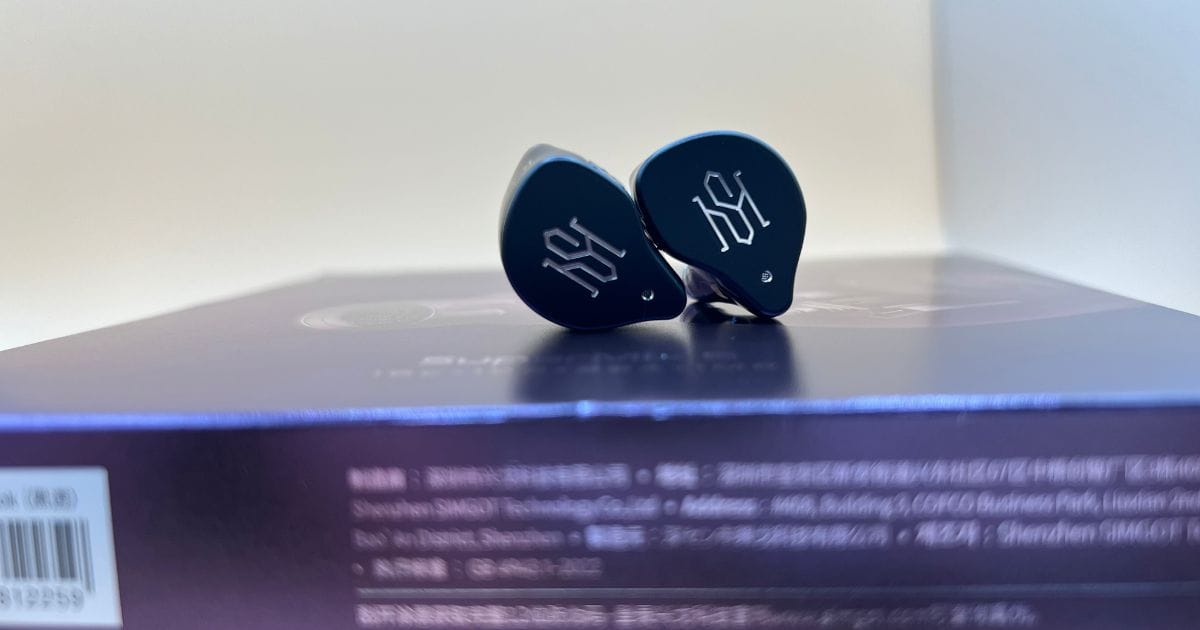
The SimGot Supermix 5 is quite a good IEM that delivers smooth, balanced audio with great technical performance. The five-driver hybrid configuration is well-implemented with excellent crossover management, and the build quality reflects thoughtful engineering and premium materials.
The Supermix 5's different tuning philosophy may surprise people who own the Supermix 4, but I think it's good that SimGot is offering a sense of variety in the Supermix series, even if it doesn't feel like a direct follow-up to the previous iteration.
Overall, the Supermix 5 has a nice sense of balance of quality, technicality, and pricing that makes it a good choice in the $200 range. If you enjoy neutral tunings, satisfying smoothness, and are interested in bone conduction technology, the Supermix 5 is a great buy. If you enjoy more of a V-shaped tuning, maybe stick with the Supermix 4 instead.
Technical Specifications
- Driver Configuration: 5-driver hybrid (1x 8mm DLC Dynamic Driver, 2x Balanced Armature, 1x Micro Planar, 1x 10mm Bone Conduction)
- Frequency Response: 8Hz - 40kHz
- Impedance: 19Ω ±15% (@1kHz)
- Sensitivity: 120dB/Vrms (@1kHz)
- Cable: Detachable 0.78mm 2-pin, Litz-structured silver-plated OCC cable
- Termination: Interchangeable 3.5mm and 4.4mm plugs included


