


Tanchjim Revo Review: A $39 Open-Ear Earbud That Actually Has Bass
Tanchjim brings its Harman-tuned pedigree to open-ear earbuds with the $39 Revo. Here's whether the sound backs up the price tag.

Tanchjim Revo
Pros
- Tunable sound via 9-band PEQ and Harman/JM-1 presets in the app
- LDAC support and a 16Ω dynamic driver are rare at this price
- Long battery life (29 hours combined) and IPX5 sweat resistance
- VERY affordable
Cons
- Open-ear physics means bass will never match a sealed IEM, no matter how good the tuning is
Best picks for you
Who Is Tanchjim?
If you've spent any time in budget-audiophile IEM circles, you know the name. Tanchjim has been building in-ear monitors since 2015, and the brand made its real name with the Oxygen — a wired IEM that leaned hard into Harman target tuning and earned a cult following among people who wanted "correct" sound without spending flagship money. Since then, Tanchjim's catalog has grown into wired IEMs like the Origin, Hana, and One, along with the occasional dip into true wireless with sets like the Mino. The Revo marks something new for the brand, though: it's Tanchjim's first open-ear true wireless earbud, aimed squarely at the "I want music but I also want to hear my life happening" crowd.
What Is the Tanchjim Revo?

The Revo is an ear-hook style open-ear earbud, meaning it clips around your outer ear and sits just outside the ear canal instead of sealing inside it. That's the same general format as the Shokz OpenFit line, Soundcore's AeroFit series, or Baseus's Eli Sport buds—the pitch is all-day wear, situational awareness, and no ear fatigue. Where Tanchjim differentiates is on the audio hardware: an 18x11mm racetrack-shaped dynamic driver with an LCP dome and PU surround, a 16Ω rated impedance, and support for LDAC over Bluetooth 6.0. Those aren't numbers you typically see attached to a $39 open-ear earbud, and it's the main reason this one is worth a look for anyone who's been avoiding open-ear buds because they assumed the sound would be an afterthought.
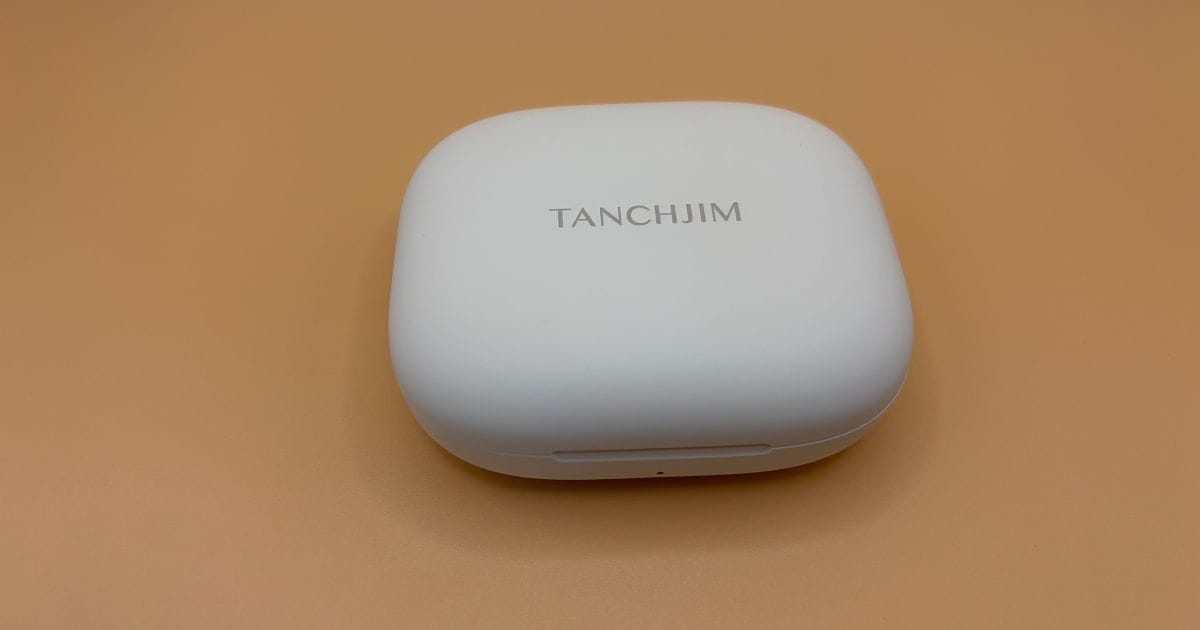
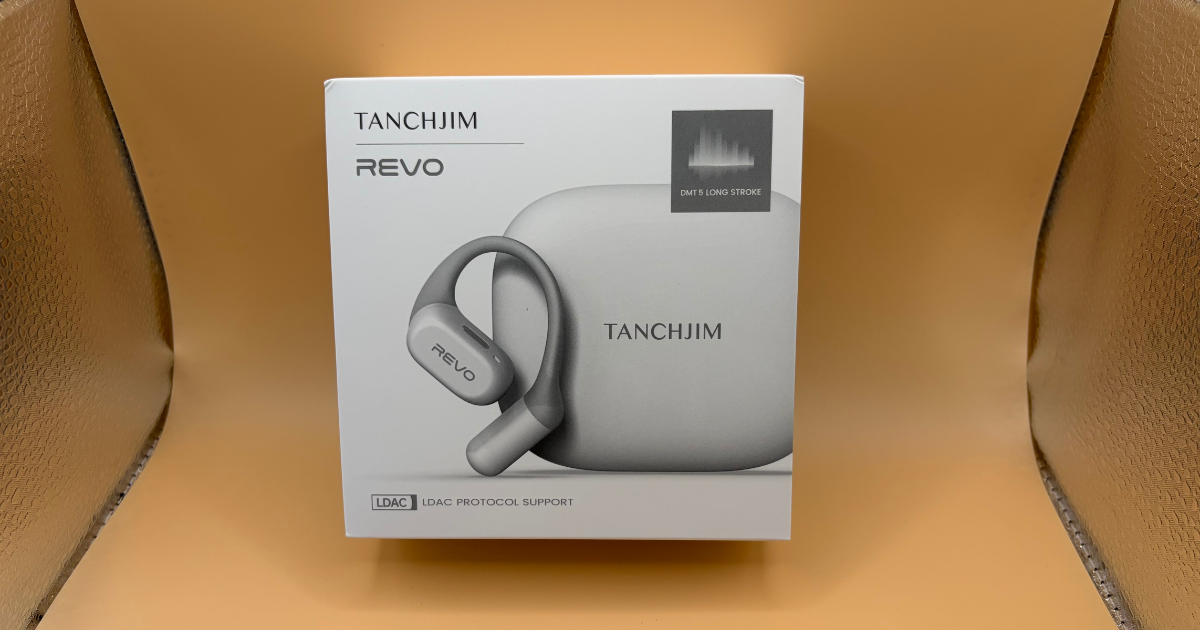
Build Quality and Design

The Revo's shells are lightweight—Tanchjim lists them around 9 grams per side— with liquid silicone ear hooks reinforced by a nickel-titanium alloy wire core. That combination is the current gold standard for open-ear comfort: flexible enough to contour to your ear, but with enough shape memory that the hooks don't go limp after a few weeks of use. The earbuds carry an IPX5 rating, so sweat and light rain are a non-issue, though don't take them into the shower.
Charging is via USB-C, and the case holds roughly three additional full charges, for about 29 hours of total playback against 9.5 hours per bud on a single charge. Tanchjim also lets you pair two devices simultaneously, which is a really useful feature if you're bouncing between two devices. The one omission is wireless charging, which some competitors in this price range are starting to include.
Sound Quality

Overall Sound: For an open-ear design, the Revo leans into a warmer, slightly bass-forward signature out of the box, which tracks with Tanchjim's history of avoiding thin, treble-heavy tunings on its budget gear. The larger racetrack driver is doing real work here—Tanchjim claims it moves roughly double the diaphragm surface area of a standard round 10mm driver, and that extra surface area is the difference between open-ear "bass" that's just a vague suggestion and bass you can actually track a kick drum through.
Bass: This is the Revo's headline feature. Open-ear designs almost always sound bass-light because there's no seal to reinforce low frequencies against your eardrum, but the bigger driver and Tanchjim's EQ are built specifically to compensate. You'll feel double kick and bass melodies more than many other open earbuds—but don't expect sealed-IEM rumble because it currently isn't possible to have the same bass isolation in an open-ear headphone.
Mids: Given Tanchjim's Harman-leaning house sound, the midrange stays relatively present rather than getting scooped out to make room for bass and treble, which matters if you listen to a lot of vocal-forward death growls, cleans, or riff-driven rhythm work that lives in the 500Hz–2kHz range.
Treble: Open-ear designs are prone to a hot, splashy top end because there's nothing physically damping the sound before it hits your ear canal. Tanchjim's PEQ and preset curves (including Harman and their own JM-1 target) give you a way to tame that if cymbals and blast-beat splash start to feel fatiguing on longer sessions.
Timbre, Soundstage, and Imaging: Open-ear earbuds have a natural advantage in perceived soundstage simply because sound isn't being funneled directly into a sealed canal—it arrives with more of the room's natural character intact, which can make instrument separation and a sense of "space" easier to achieve than on comparably priced sealed IEMs. Imaging precision, though, tends to be a weaker point across the whole open-ear category.
Comfort and Awareness

At roughly 9 grams per side with adjustable silicone hooks, this is built for multi-hour wear, and the Revo does exactly that; it manages to stay very comfortable during long use. Because there's no seal, you'll hear outside noise exactly as clearly as you would with no earbuds at all, which is the biggest appeal of open-ear buds.
Final Verdict

The Tanchjim Revo is a smart bet for anyone who's wanted to try open-ear earbuds but wants cutting-edge bass and tuning control. Tanchjim's IEM pedigree shows up in ways that budget open-ear competitors usually don't—a bigger driver, LDAC, and real PEQ software. I think as far as open-ear earbuds go, this is one of the best I've tried. Subbass still feels a little lacking, but to be fair, this is a limitation of current open-ear earbuds since they can't create a physical seal. At just under $40, for someone who wants to listen to music all day long while still being aware of their surroundings, this is one of the best choices on the market.
Technical Specifications
- Driver: 18×11mm racetrack-shaped dynamic driver
- Diaphragm: LCP dome with PU surround
- Driver impedance: 16Ω
- Total harmonic distortion: <0.45% @ 1kHz, -10dBFS
- Frequency response: 20Hz–20,000Hz
- Bluetooth version: 6.0
- Supported codecs: SBC, AAC, LDAC (up to 990kbps)
- EQ: 9-band PEQ with Harman and JM-1 target presets via Tanchjim app
- Battery life: ~9.5 hours per charge, ~29 hours total with case
- Charging port: USB-C
- Charging input: 5V/0.5A
- Water resistance: IPX5
- Weight: ~9g per earbud
- Multipoint: Simultaneous connection to 2 devices
- Wireless working range: ~15m (line of sight)
- Price: Approximately $39


