


Tanchjim Bunny G Review: Is This Sub-$30 Gaming IEM Too Good to Be True?
The Tanchjim Bunny G is a sub-$30 USB-C gaming IEM with a built-in mic, 8-band PEQ, and game EQ profiles. We break down the sound, comfort, and how it compares to the original Bunny and Moondrop's budget DSP sets.

Bunny for Gaming
Pros
- Very low price for what you get (a driver, a USB-C DSP cable, a mic, and an app)
- Plug-and-play USB-C design, so no separate DAC or amp is needed
- 8-band parametric EQ plus game EQ profiles in the Tanchjim app
- Wide stage with accurate left-to-right imaging
Cons
- Laid-back female vocals and subdued air
- USB-C only, so no direct 3.5mm jack
Gaming headsets are big, warm, and sometimes heavy enough to give you a neck workout. In-ear monitors are the opposite: tiny, light, and easy to wear for hours. Tanchjim wants to bring that idea to the budget crowd with the Tanchjim Bunny G, a USB-C gaming IEM that bundles a mic, a built-in DSP "sound card," and game-specific EQ into one cable.
The pitch is simple. Take one of the most talked-about $20 IEMs, tweak the driver, add the gaming extras, and keep it cheap. The question is whether it actually works, or whether it's mostly clever packaging.
A Quick Look at Tanchjim
Tanchjim is a Chinese audio brand best known for dynamic driver IEMs and its in-house DMT driver technology. They are known for their single-driver tuning strength, and the lineup includes models like the Zero, One, and Origin. Its original Bunny made a splash as a very cheap IEM that sounded far better than its price suggested, and the Bunny G builds directly on that success.
What Is the Tanchjim Bunny G?
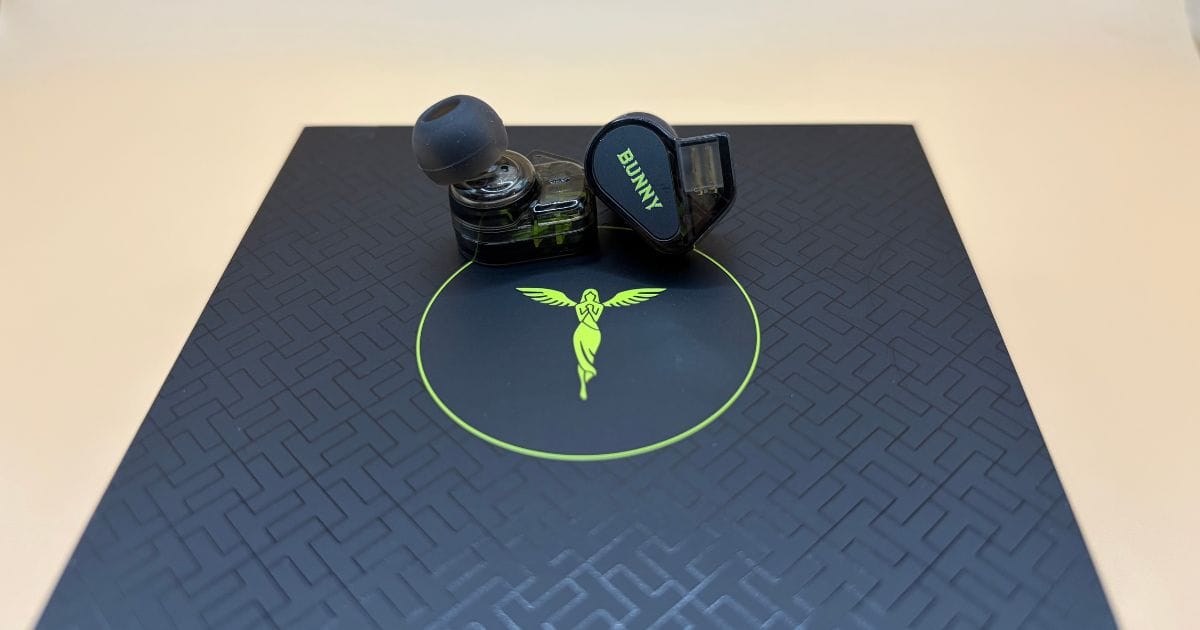
The Bunny G is the gaming version of the original Tanchjim Bunny. Tanchjim kept the comfortable shell shape from the original but gave it a smoked, translucent green look, a revised driver, and a different cable. The Bunny for Gaming is made for mobile or PC gaming.
Here's what's new:
- DMT5 G driver: based on the original Bunny's DMT4 Ultra, with a nanoceramic dome diaphragm. The goal is to improve treble extension and transient response, and the diaphragm travel was also improved to boost bass dynamics.
- USB-C cable with built-in DSP: Tanchjim's own sound processor lives in the cable, which is why there's no 3.5mm plug.
- Mic: a MEMS microphone with noise reduction and (per the app) gain control.
- App support: an 8-band PEQ, preset EQ profiles, game-specific profiles, and sliders for sounds like gunfire and footsteps.
It uses a standard 0.78mm 2-pin connection, so the IEMs themselves work with other cables.
Build Quality and Design
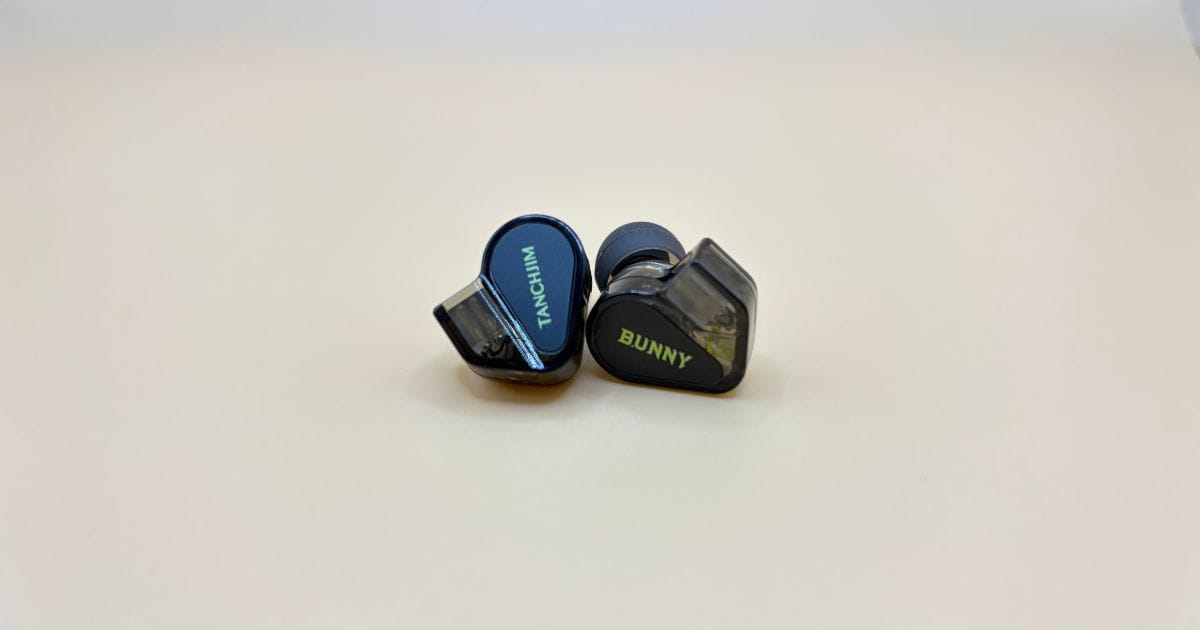
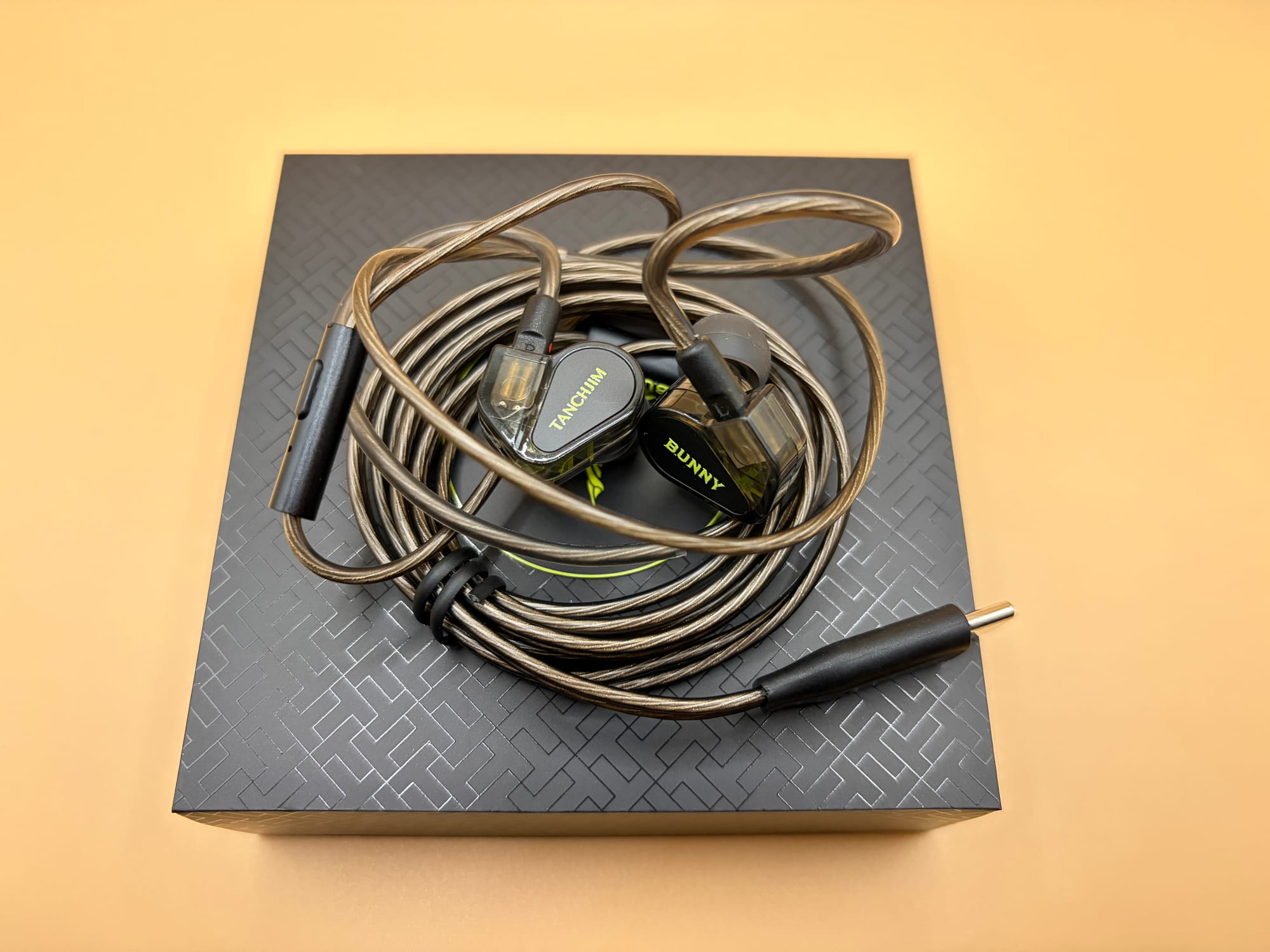
The Bunny G doesn't feel like a cheap IEM thanks to the smoked plastic shell and green accents, and the stock cable is an upgrade as well. In the box, you get the IEMs, the USB-C cable, a small pouch, documentation, and ear tips in two styles ranging from small to large.
The cable is silver-plated OFC copper, which means Tanchjim didn't cut corners on the basics. Durability during the month that we tried these out felt good, they seem like they will hold up during long term use.
Tanchjim Bunny G Sound Quality
Overall Sound
On the default profile, the Bunny G leans into a mild V-shaped sound: a bit of extra low-end energy, a laid-back midrange, and smooth treble. It's a fun but not exaggerated tuning that is meant to be forgiving. There are eight presets in the app, so you can reshape it quickly if the default isn't quite right.
Bass
The bass leans toward the sub-bass region, with a fast, snappy character instead of a big, slow rumble. The bass feels natural and fun, with good punch on kick drums and a tidy, mud-free response. Don't expect earth-shaking sub-bass extension, but explosions and cinematic scores should feel satisfying without drowning out dialogue.
Mids
Mids are neutral and a bit laid-back. Vocals and instruments are well focused, with enough warmth and body to avoid sounding thin. Male vocals come across nicely weighted. Female vocals can sound a touch darker and softer, so if you love airy, breathy vocals, you may want to nudge the EQ.
Treble
Treble is smooth and well controlled, with natural timbre but subdued air. It's smoother and more refined than the original Bunny, though a bit of unevenness can show up at higher volumes.
Timbre, Soundstage, and Imaging
Timbre keeps that classic Tanchjim dynamic driver feel, natural and tonally believable for the price. The soundstage is wide but shallow, leaning more toward width than depth. Imaging is strongest side to side and is accurate with decent sharpness, and instrument separation is solid without feeling cramped.
Is the Tanchjim Bunny G Good for Gaming?
This is the big question, so let's be direct. The Bunny G has the right ingredients for casual and mid-level gaming:
- A built-in mic with noise reduction. Handy for voice chat without carrying a headset.
- Game EQs and 8-band PEQ. You can tailor the sound for different games and share profiles with the community.
- Footstep and gunfire sliders. The app lets you boost or tame these sounds, which is a clever tool for shooters.
- Wide soundstage and accurate left-right imaging. Good news for spotting where sounds are coming from horizontally.
- Light, comfortable fit. Great for long sessions.
Bottom line: Yes, it's a flexible, all-purpose set that's genuinely well suited to PC, phone, and handheld gaming, but it won't outperform much more expensive professional gaming IEMs.
Does the Bunny G Need an Amp?
No. Between the 30 ohm impedance and 123 dB/Vrms sensitivity, the IEMs are easy to drive, and the USB-C cable has its own DSP and DAC built in.
Comfort and Isolation
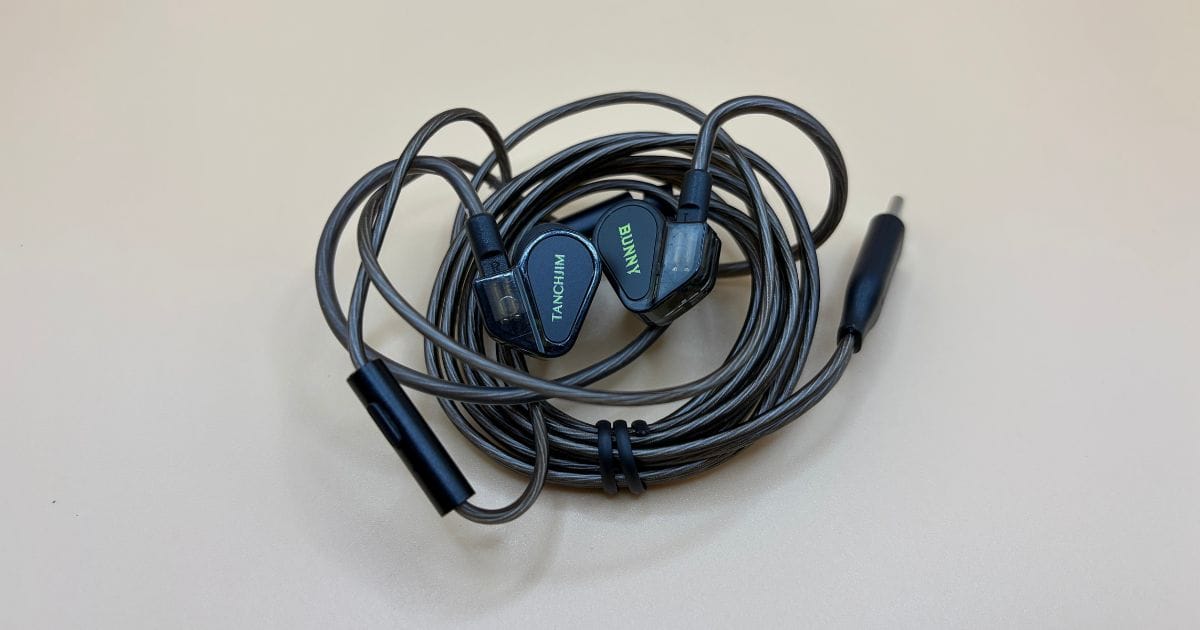
The comfort on the Bunny for Gaming is excellent, these are lightweight and fit in my ears very well, being perfect for long listening (or gaming) sessions. As a vented dynamic driver IEM in a plastic shell, expect moderate passive isolation, enough for gaming at home or commuting, but not a silent bubble in a loud room.
Tanchjim Bunny G vs Similar Budget IEMs
Tanchjim Bunny G vs Original Tanchjim Bunny
The original Bunny comes in a 3.5mm analog version and a USB-C DSP version, with warm-neutral tuning and forward mids that many people loved. The Bunny G adds the mic, game EQ, noise reduction, and a revised driver, with a slightly more V-shaped default sound. If you want a simple music IEM, the original is great. If you want a gaming or all-in-one USB-C set, the G makes more sense.
Final Verdict: Should You Buy the Tanchjim Bunny G?
If you want a cheap, comfortable USB-C IEM that covers music, calls, and gaming, the Tanchjim Bunny G is a very smart buy. The tuning is fun without being extreme, the app features are unusually rich for the price, and the plug-and-play setup keeps things easy.
It isn't perfect. Female vocals can feel a bit soft, and the built-in DAC caps the sound quality. For just 30 bucks, though, that's easy to forgive.
Tanchjim Bunny G Specifications
- Driver: DMT5 G dual-chamber dynamic driver, PU surround with nanoceramic dome diaphragm
- Waveguide: low-distortion waveguide tube
- Impedance: 30 ohms (plus or minus 10%)
- Sensitivity: 123 dB/Vrms
- Frequency response: 8 Hz to 48 kHz
- THD: 0.03% at 1 kHz, 94 dB (manufacturer claim)
- Connector (IEM side): 0.78mm 2-pin, detachable
- Cable: silver-plated OFC copper, USB-C plug
- Microphone: built-in MEMS mic with noise suppression and gain control in the app
- Sound processing: built-in "Jingqiao" DSP sound card, 8-band PEQ, 8 presets, game EQ profiles
- In the box: IEMs, USB-C cable, storage pouch, ear tips, documentation


