


Westone Mach 60 Review: 6 Drivers, $1,210, and a Sound That's Built for Accuracy
Westone's Mach 60 packs 6 balanced armature drivers into a featherweight shell and targets audiophiles who want reference-grade accuracy. But is $1,210 justified? We break it all down.

Westone Mach 60
Pros
- Exceptionally neutral and clear sound
- Lightweight, highly comfortable
- Excellent sound isolation for loud environments
- Lifelike, Accurate timbre that scales well with powerful sources
Cons
- Expensive
- Not a bass or "fun" tuned IEM, ideal for monitoring or fans of neutral tunings
Who Is Westone?
Westone Audio has been in the ear game longer than most of us have been alive. Founded in the 1950s by Dr. John B. West—an audiologist who got frustrated with how poorly conventional hearing aids worked—the company started by hand-crafting custom ear molds. From there, they evolved into the professional audio world, eventually becoming one of the most respected names in in-ear monitor technology.
In 2020, Westone was acquired by Lucid Audio, the same parent company that picked up Etymotic Research. That acquisition kicked off a restructuring period, and the result of that work was the MACH series—eight models launched in 2022, ranging from the single-driver Mach 10 at $300 up to the flagship Mach 80 at $1,599. The model number tells you the driver count. Simple, right? Today we're diving into the Mach 60: six balanced armature drivers, $1,099, and a "Premium Reference" tuning philosophy that's all about accuracy over excitement.
What Is the Westone Mach 60?
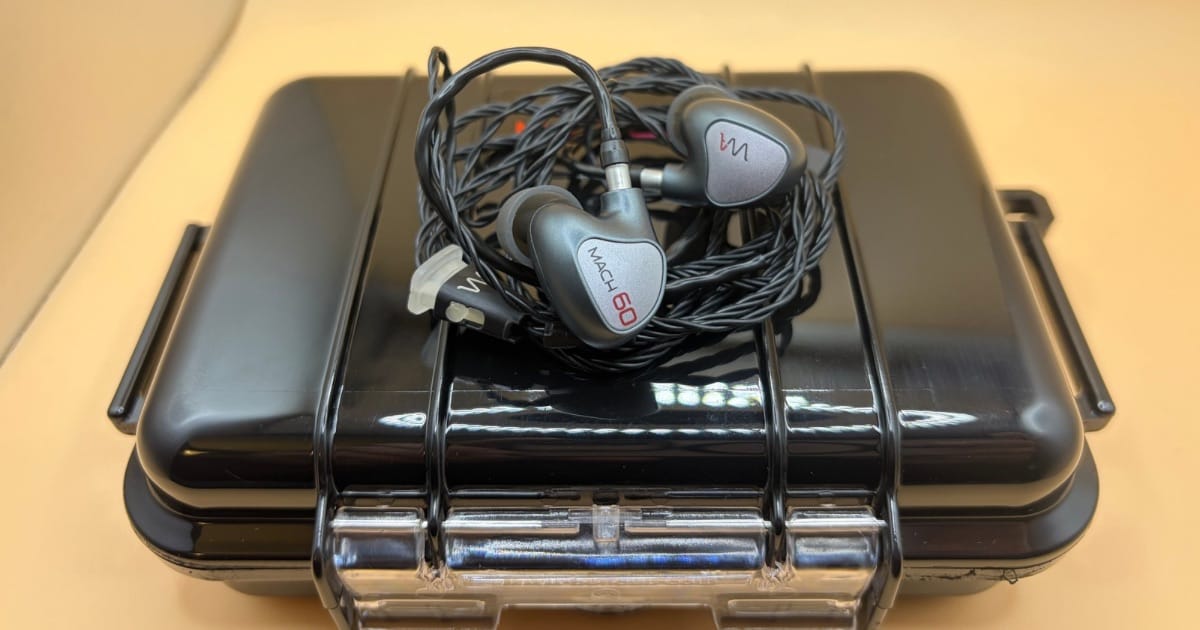
The Mach 60 sits in what Westone calls the "Premium Reference" sub-series of the Mach lineup—that's the even-numbered models (20, 40, 60, 80), which are tuned for accuracy and detail rather than bass emphasis. It's positioned just below the Mach 80 in the Reference line, meaning it trades two of the flagship's tweeter drivers for a slightly more relaxed high-frequency presentation, while keeping the same dual-woofer, dual-midrange configuration. The result is a six-driver, three-way crossover design that Westone engineered as both a stage monitor and an audiophile-grade listening IEM.
Build Quality & Design

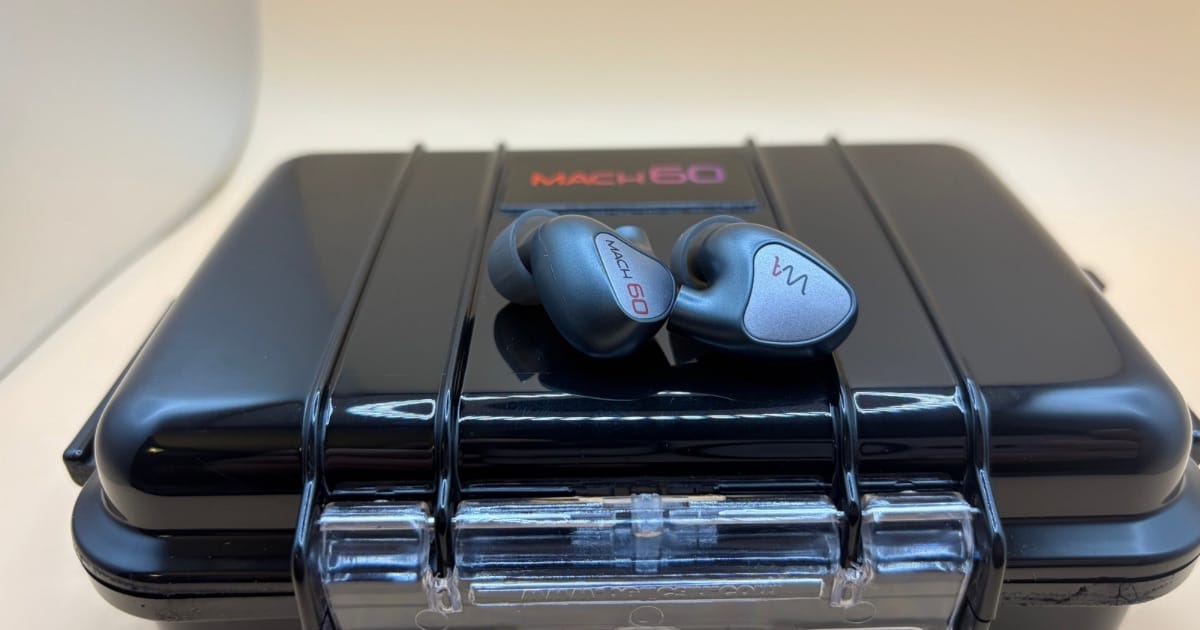
The Mach 60's shell is made of molded polycarbonate plastic, and it is—for all practical purposes, visually identical to every other IEM in the Mach lineup, from the $300 Mach 10 all the way up to the Mach 80 (which we’ve also tested). The only physical differences are the model number printed on the left faceplate and a metal faceplate on the outside with Westone's logo on the right. These certainly aren’t a flashy pair of headphones, but the look is clean and simple, letting the audio quality be the focus, instead of looks.
That said, Westone knows what they're doing with fit and function. The space-gray polycarbonate housing is compact, ergonomic, and light—just 3 grams per side. The shells sit naturally in the concha area of your ear, and the nozzle diameter is a narrow 2mm, which is a trademark Westone design choice that makes insertion easier and tends to work better for people with smaller ear canals.
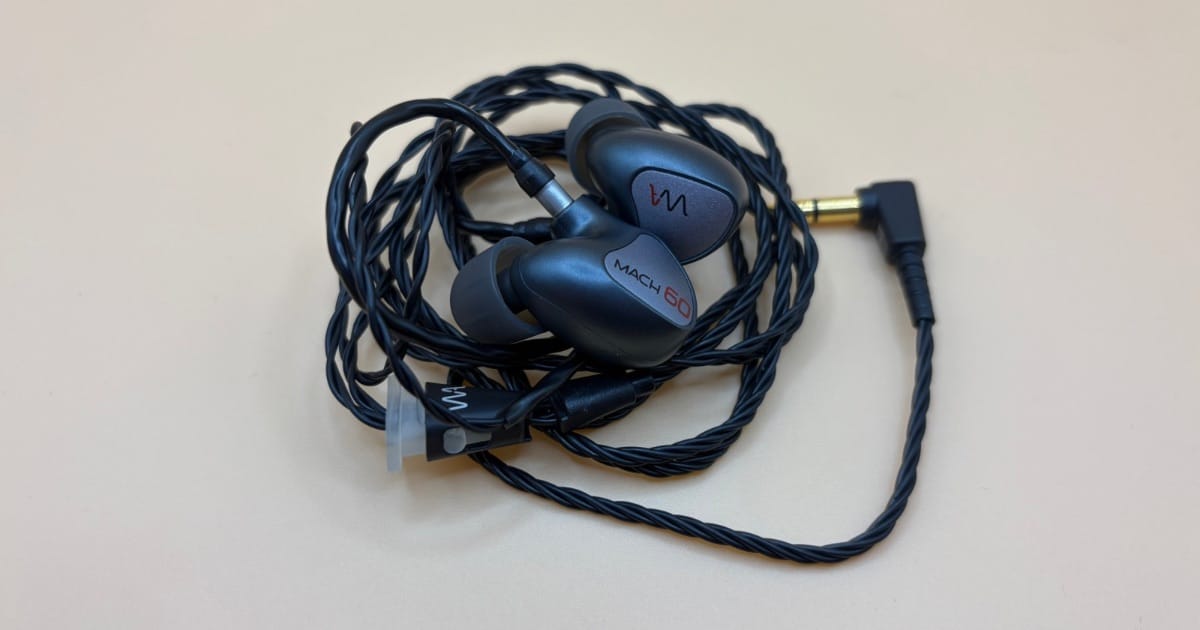
Inside the Pelican case (which, to their credit, is legitimately solid), you get the IEMs, the Linum ESTRON SuperBaX T2 cable, five pairs of silicone tips in varying sizes, five pairs of Westone's True-Fit foam tips, and a cleaning tool. The SuperBaX cable is excellent—168 strands of silver-plated copper with a listed impedance of just 0.75 ohms, meaning it adds minimal coloration to the signal chain. It's thin, lightweight, and barely noticeable when worn. The T2 connector system is more secure than MMCX, but it does mean that any MMCX aftermarket cables won't work without an adapter.
Sound Quality
Overall Sound
The Mach 60 is a natural, smooth, and well-balanced IEM that prioritizes accuracy over flair. This is not a V-shaped, bass-boosted, or hyped-up listen. What you get is a clean window into your music—warm enough to be musical, detailed enough to be revealing, and tuned so that listening fatigue is rarely a concern. It's a sound signature built for long sessions, critical listening, and stage monitoring—and it excels in all three contexts.
Bass
The low end on the Mach 60 won't satisfy bassheads, and that's by design. What's here is tight, defined, and accurate—the dual bass drivers deliver a controlled punch with warmth and texture in the upper bass and lower midrange region. Sub-bass extension is where things get a bit more polite; the Mach 60 rolls off more gently than some competitors at the same price point, meaning genres that rely heavily on deep rumble (EDM, hip-hop, modern pop) may leave you wanting more. That said, for rock, jazz, acoustic, and classical listening, the bass here is clean, well-textured, and never bloated or muddy. There's a satisfying dynamic response when the track calls for it; it just doesn't overdo it.
Mids
This is where Westone always excels. The midrange is open, detailed, and strikingly natural. Vocals sit at the right balance—present and clear without being forward or shouty. The lower mids add a bit of warmth and body to instruments, which makes guitars, piano, and strings feel lifelike rather than sterile. The upper mids are where some of Westone's signature character shows up. There's a beautiful, almost holographic quality to how guitar notes bloom and decay, something longtime Westone fans will recognize as part of the brand's "house sound." For acoustic music and anything with real instruments front and center, the midrange performance here is exceptional.
Treble
The high frequencies on the Mach 60 are controlled, smooth, and well-extended without ever turning harsh or fatiguing. The two tweeter drivers handle the upper register with a refined touch. There's enough air and sparkle to keep things interesting and detailed, but the overall character leans toward smooth rather than bright. If you're treble-sensitive or have spent time with brighter-tuned IEMs like the Mach 80 or certain Campfire Audio models, the Mach 60 will feel more relaxed up top. Cymbal strikes, hi-hats, and string overtones are all rendered with good clarity and natural decay. What's missing is that last bit of ultra-high frequency "sparkle" that the Mach 80's quad tweeter configuration can pull off.
Timbre, Soundstage & Imaging
The Mach 60's biggest strength might be timbre. Instruments sound very organic not processed, not artificially enhanced, just accurate. The way acoustic guitar strings resonate, the way a snare shell sounds, or the way a vocalist's breathiness comes through in a quiet passage—these things all come through with a lifelike quality that speaks to Westone's decades of engineering experience. The soundstage is respectable for a ventless, sealed all-BA IEM—it's not the widest you'll hear at this price, but it has solid depth and a natural sense of space. Imaging is precise and consistent, placing instruments in defined positions across the mix. It's not the most expansive stage you've ever heard, but what's there is credible and musical rather than artificial or exaggerated.
Comfort & Isolation
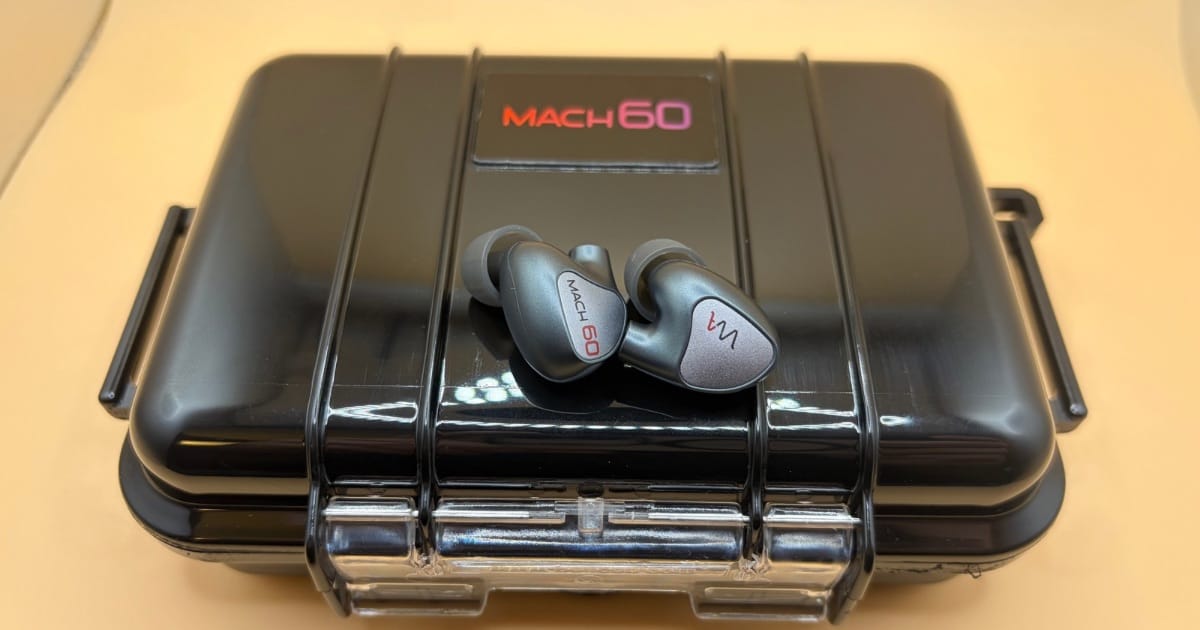
In all Westone products I’ve tested, comfort has always been excellent, and the Mach 60 is no exception. The compact shells and lightweight build make these disappear in your ears; extended listening sessions of three, four, or even five hours aren't uncomfortable. The narrow 2mm nozzle aids insertion without requiring a painful deep fit, and the ergonomic shell shape naturally fills the concha area for a stable, low-profile seal.
Isolation is seriously impressive. Thanks to the fully ventless design, these IEMs block ambient noise at a level that rivals many custom molded monitors. With the True-Fit foam tips installed, the passive noise isolation is incredible. Strong enough for live stage monitoring use, commuting in noisy environments, or just blocking out your surroundings at home. The silicone tips offer a slightly brighter and more balanced sound with a tighter bass response; the foam tips add a bit more low-end weight and deeper isolation. It's worth experimenting to find what works for your ears.
Comparisons
Westone Mach 60 vs. Westone Mach 80 ($1,599)
The most natural comparison in the lineup. The Mach 80 steps things up to eight balanced armature drivers — adding two more tweeters to the high-frequency section—which results in a notably more detailed and airy upper register. The Mach 80 also has a more dynamic presentation overall, with a more articulate bass (thanks to a faster response from its driver configuration) and a crisper, more energetic treble. However, that extra high-frequency energy makes the Mach 80 a brighter, potentially more fatiguing listen for extended sessions. The Mach 60 is warmer, smoother, and arguably a more relaxing long-term listen. The $500 price difference is real—and unless you specifically want that extra treble detail and energy the Mach 80 brings, the Mach 60 makes a very strong case for itself with a very similar level of detail and accuracy for a much more affordable price.
Westone Mach 60 vs. Shure SE846 (~$899)
The SE846 is Shure's long-running flagship universal IEM and one of the most recognized names at this price tier. Shure's design uses four balanced armature drivers with a proprietary low-pass filter system that allows you to swap nozzle filters to tune the bass response from lean to full. The SE846 has a warmer, slightly more bass-forward presentation compared to the more neutral Mach 60, and its replaceable nozzle system gives it a versatility the Mach 60 doesn't have. Where the Mach 60 edges ahead is in midrange transparency and overall naturalness of timbre. Soundstage on the Mach 60 is also slightly more airy and open. At roughly $200 less than the Mach 60's MSRP, the SE846 offers meaningful competition— especially for listeners who prefer a warmer, more bass-present signature and appreciate the customizable tuning system, though the Mach 60 has a more accurate overall sound.
Westone Mach 60 vs. Campfire Audio Andromeda (~$1,099)
The Andromeda is one of the most beloved balanced armature IEMs in the audiophile world at this price range, and it's an interesting contrast to the Mach 60. Where the Mach 60 prioritizes smooth neutrality and reference-grade accuracy, the Andromeda goes for a more lush, energetic, and spacious presentation. It has a notably wider and more expansive soundstage, more present and extended treble, and a warmer low-end emphasis. The Mach 60 counters with better isolation, more accurate timbre, and a tuning that's more appropriate for professional stage monitoring. The Andromeda is a fantastic musical listen that many prefer for pure enjoyment; the Mach 60 is a more accurate reference tool that can also be thoroughly enjoyed as a music listener. Both are strong at the $1,100 price point—it really comes down to whether you want a reference monitor or a more immersive, musical experience.
Final Thoughts
The Westone Mach 60 is a well-tuned, comfortable, and genuinely capable IEM that delivers on its promise of accurate, natural sound. Westone's decades of professional audio expertise show up clearly in the midrange quality, timbral accuracy, and long-session comfort these offer. If you're a musician needing stage monitors, a studio engineer wanting in-ear reference tools, or an audiophile who prefers accuracy over excitement, the Mach 60 will likely impress you.
With that being said, the plastic housing, the identical shell across the entire Mach lineup, and a $1,099 price tag in a market full of strong competition make it hard to call this an effortless recommendation at full price. It competes well on sound and as a professional monitor, but is definitely on the expensive side of the market. If you can find it at a discount—which happens quite often—this is an excellent buy. At full price, go in knowing what you're buying: a precision reference IEM with a no-frills exterior, not a luxury accessory.
Technical Specifications
- Driver Configuration: Six balanced armature drivers per side (2 bass, 2 midrange, 2 treble)
- Crossover: 3-way passive crossover
- Frequency Response: 8 Hz – 20 kHz
- Impedance: 35 Ohms @ 1 kHz
- Sensitivity: 100 dB @ 1 kHz
- Cable: Linum ESTRON SuperBaX T2 (168 strands silver-plated copper, 0.75 Ohm impedance)
- Cable Length: Approximately 4.1 ft (50 inches)
- Connector Type: Estron T2 (IP-67 rated)
- Termination: Right-angle 3.5mm
- Shell Material: Polycarbonate composite with metal faceplate
- Weight: Approximately 3 grams per earpiece
Thanks for reading!
- Read more of the latest rock/metal news here
- Subscribe to our Metal News Email list for weekly updates!
- Support The Metalverse and go ad-free.
- Follow us on Social Media | Instagram | Facebook
- Listen to our metal Spotify Playlists!
- Join our free 5-day music marketing email course!


