


Tanchjim Kasier Review: Soda Drivers at Less Than Half the Price
Tanchjim Kasier review: a $130 1DD+4BA hybrid that borrows the pricier Soda's driver set and delivers smooth, balanced, low-fatigue tuning. Great for vocals and rock; metalheads chasing aggression should look elsewhere.

Tanchjim Kasier
1DD + 4BA Hybrid In-Ear Monitors
It has the same five drivers as the $319 Soda for $130. Smooth, balanced and fatigue-free, it's great for rock and melodic metal but too polite for extreme metal.
Pros
- Same driver set as the $319 Tanchjim Soda
- Effortlessly Smooth, polished mids with very little sibilance
- Deep, clean sub-bass for the price
- Easy to drive from a basic 4.4mm dongle
- Seamless dynamic and balanced armature blending
Cons
- Laid-back sound might not be for everyone
- Cable is fixed to 4.4mm with no 3.5mm option
- Treble rolls off earlier than the Soda's
Quick Take
The Kasier is a refined, close-to-neutral hybrid with smooth vocals, clean sub-bass, and treble that's easy on the ears for hours. It's a strong value at $130 and a safe all-rounder. If you live on bass-driven music and want your IEMs to bite, though, it's on the more polite side of things.
Buy it if…
- You want one IEM for rock, pop, vocals, and jazz that never fatigues
- You already own a 4.4mm balanced dongle or DAP
- You liked Tanchjim's sound but couldn't justify Soda money
Skip it if…
- You only have a 3.5mm phone dongle and don't want to buy an adapter
- You want big, bloomy bass or sparkly, airy treble
The Brand
Tanchjim is a Chinese audio company that built its name on carefully tuned single-dynamic-driver IEMs (the Oxygen, the Zero, the Ola) before moving into hybrids with the Kara in 2023. Its house sound leans natural and vocal-friendly rather than V-shaped, and it's one of the brands that openly tunes against Brüel & Kjær's 5128 measurement rig, which is the current reference standard in the industry. We've covered its more casual side before (see our Tanchjim Revo open-ear review), but the Kasier is squarely aimed at the enthusiast crowd.
What Is the Tanchjim Kasier?
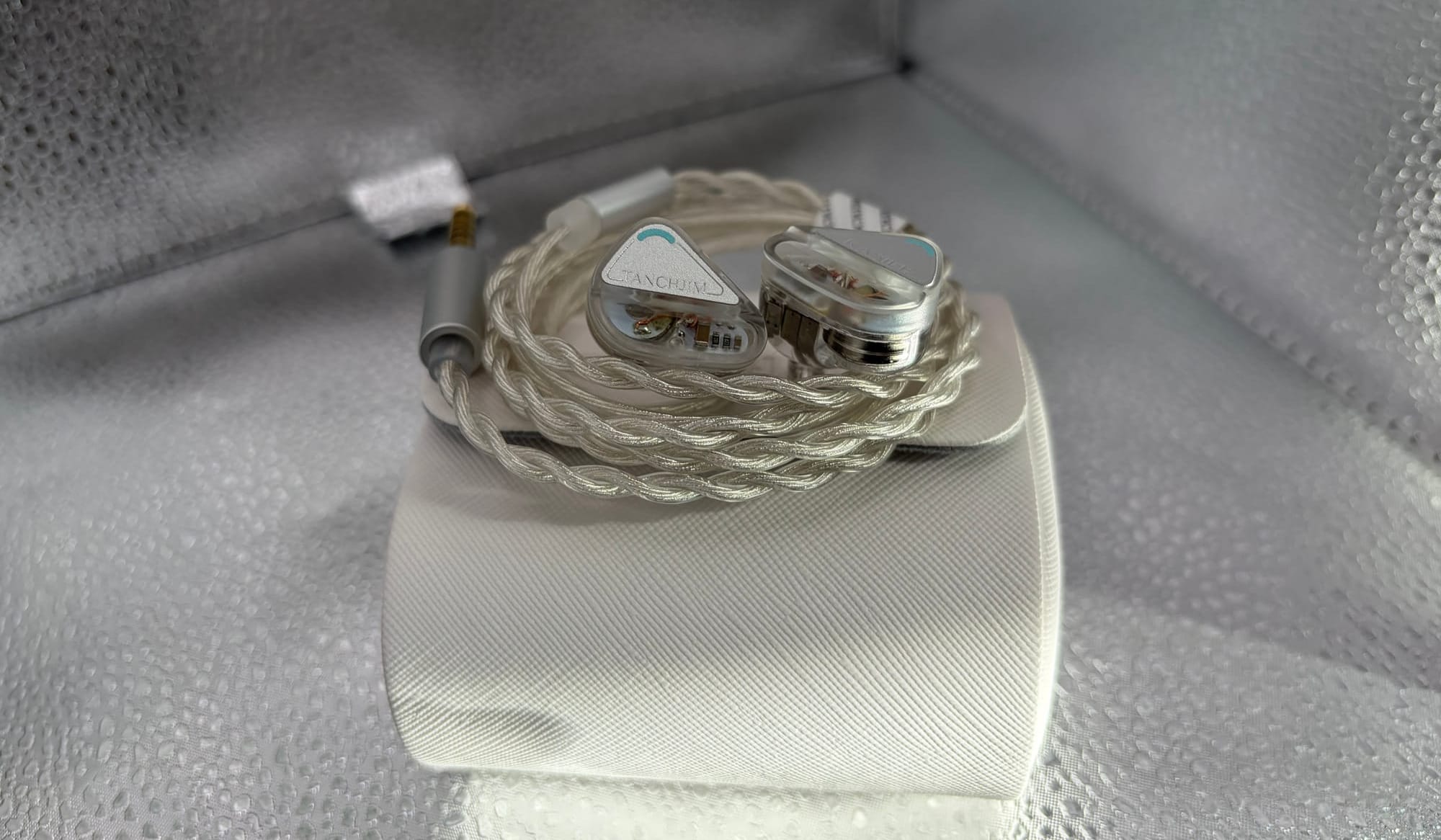
The Kasier is a five-driver hybrid IEM priced at $129.99 at launch. Linsoul shows that price against a struck-through $175.50, so treat $130 as the launch street price rather than a guaranteed long-term figure. It went on sale in late October 2026, and the first wave of orders ships on November 12.
The driver setup:
- Lows: one 10mm DMT5 dual-cavity dynamic driver (Tanchjim's fifth-gen dynamic, with a composite diaphragm)
- Mids: two PURE Mid balanced armatures
- Highs: two PURE Hi balanced armatures
- A three-way crossover splits the signal, and each driver group gets its own sound tube
Similarity to the Soda
This is the most interesting thing about the Kasier. Tanchjim's $319 Soda uses the same DMT5 plus 2× PURE Mid and 2× PURE Hi layout, then adds two passive radiators and a modular cable. So the Kasier isn't a cut-down driver set. It's the same core engine with fewer extras and a different tuning goal. The two share a similar midrange texture, while the Soda reaches further and more cleanly into the top octave (but at a much higher pricepoint)
Versus the Kara
The Kasier is also the spiritual follow-up to the Kara, Tanchjim's first 1DD+4BA hybrid (launched at $179). The shell shape is clearly related, but the drivers are all new: a DMT5 replaces the Kara's older DMT3, and in-house PURE BAs replace the Kara's Sonion units. The newer crossover blends the drivers more smoothly, and the Kasier tunes slightly brighter. It also costs about $50 less.
What's in the Box
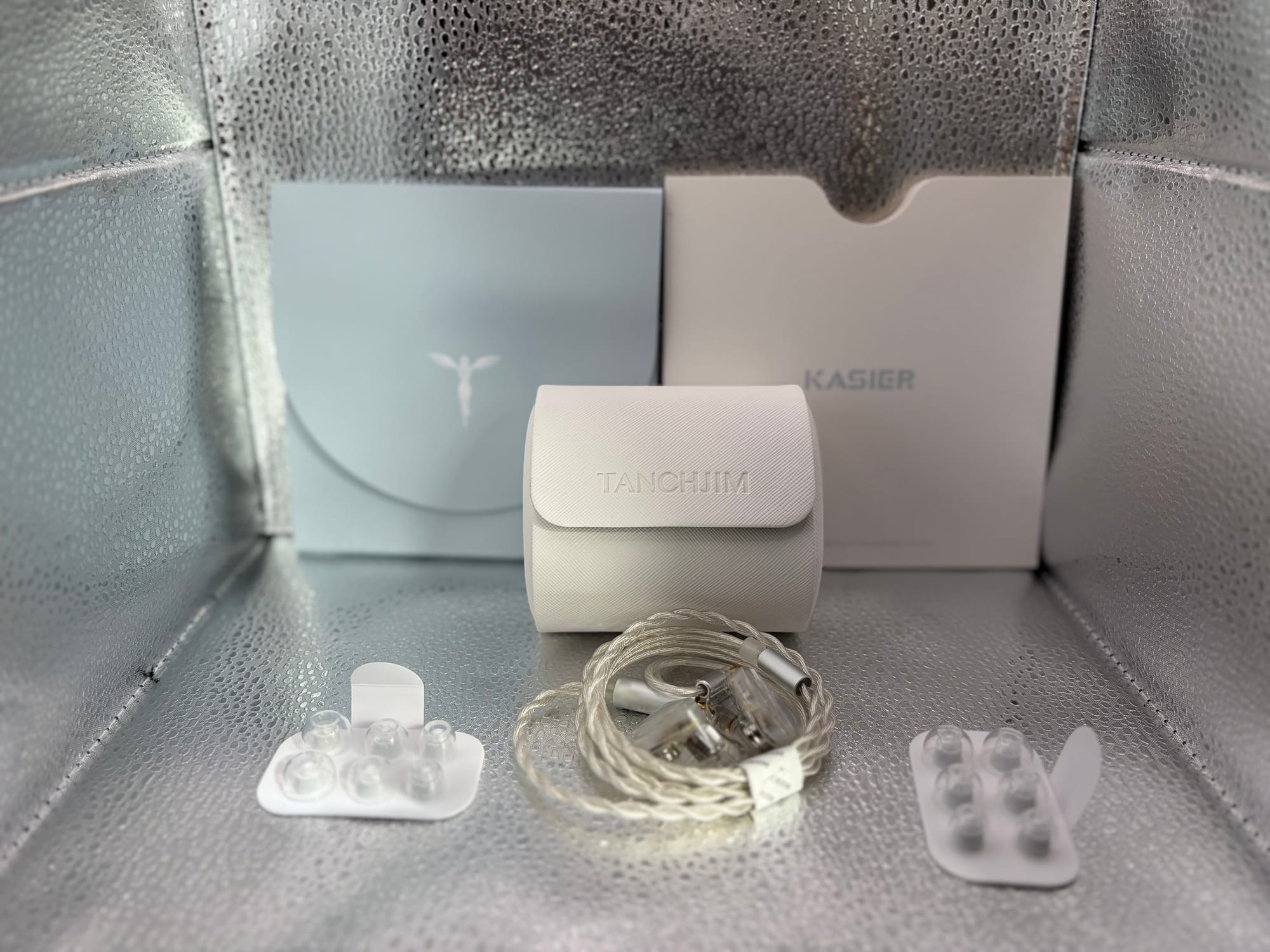
- Tanchjim Kasier earpieces
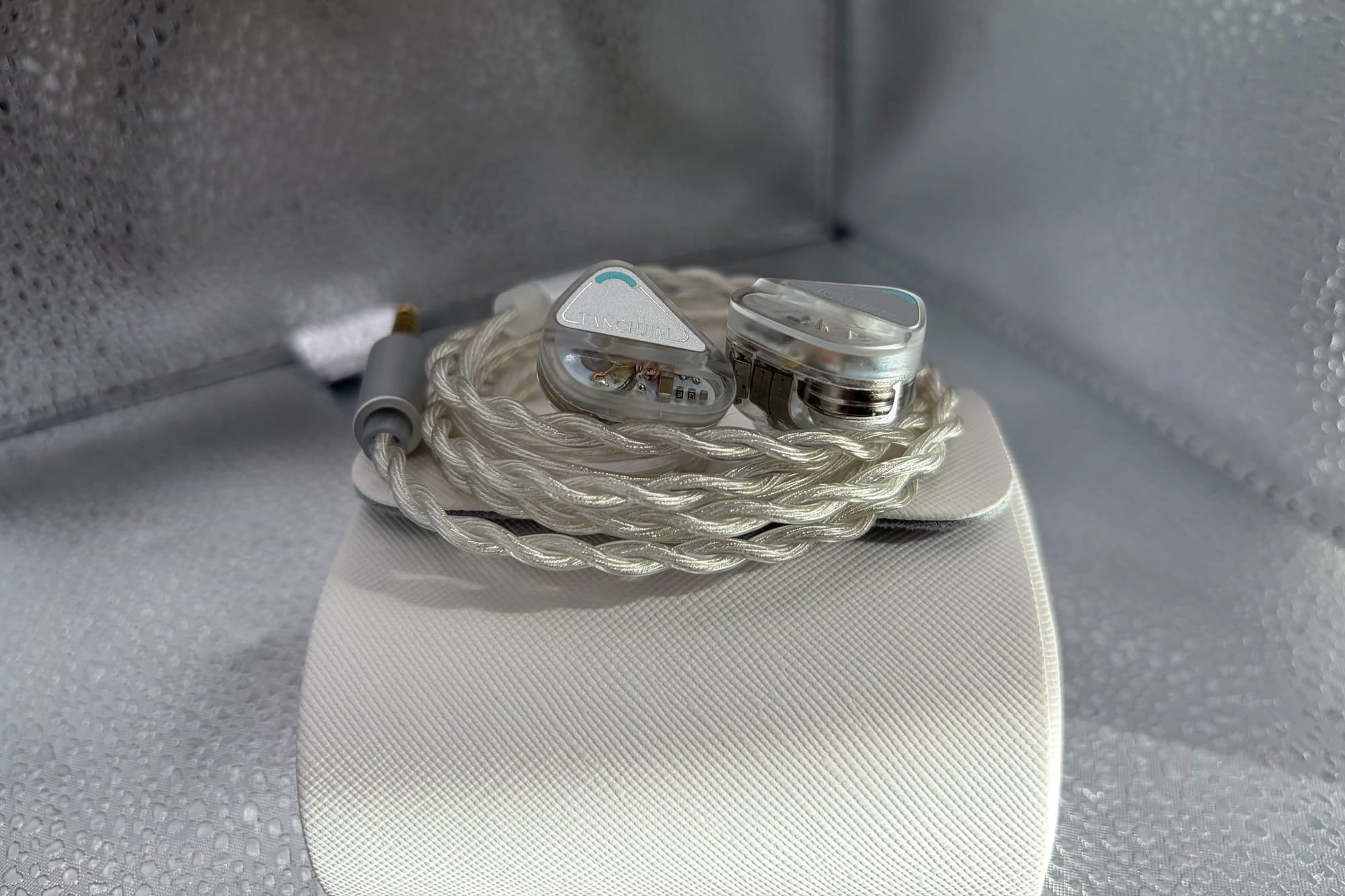
- Silver-plated copper Litz cable, 0.78mm 2-pin, 4.4mm balanced plug
- T500 silicone ear tips (reported as six pairs: three T500A "bass" and three T500B "treble")
- Carrying case (reported as a large white magnetic case with room for a small dongle)
The T500 tips are the highlight. Having bass-leaning and treble-leaning sets in the box gives you a real, free tuning knob. The missing piece is a 3.5mm plug or adapter, which matters at this price because plenty of buyers still use 3.5mm dongles.
Build Quality & Design
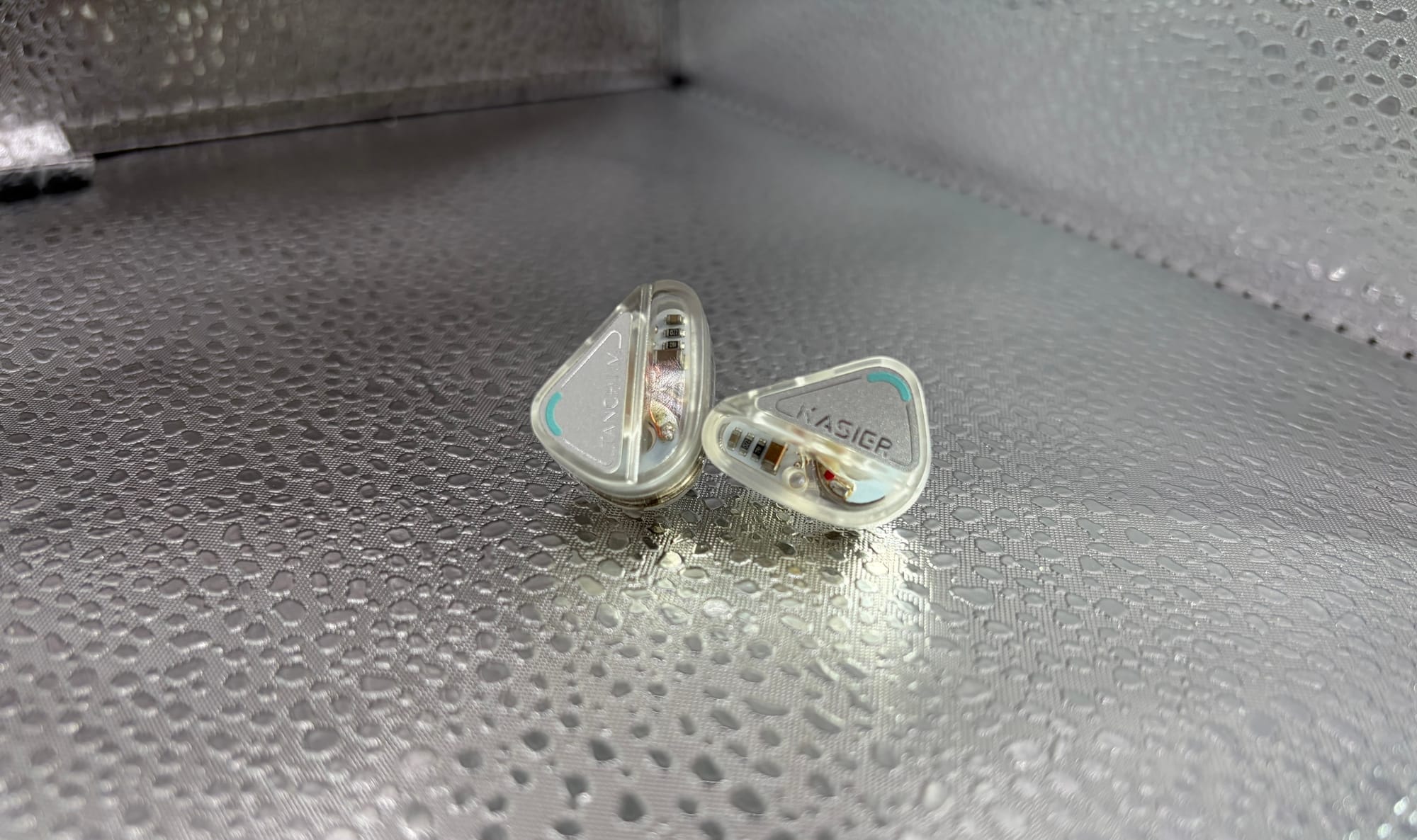
The shells are DLP 3D-printed from medical-grade resin. The inner half is clear, and the outer half is frosted. The faceplate is anodized aluminum with a small transparent window that shows a sliver of the internals. It's a clean look and it ships in a single colorway.
There's one external vent, sitting under the 2-pin socket behind a metal mesh. Internally, the dynamic driver has its own duct to the rear chamber. That extra airflow is part of why the bass sounds deep without getting stuffy, and it's also why pressure build-up isn't an issue. The 2-pin socket is recessed with raised pins, so most aftermarket 0.78mm cables will fit snugly.
The cable is thin, soft, and light on tangling. It's braided below the Y-split and coaxial above it. Our one complaint is the fixed 4.4mm plug. A modular plug system (like the Soda's) would have made this an easy recommendation for phone-dongle users.
Sound Quality
Overall Sound
The Kasier tunes close to neutral, with a gentle sub-bass lift, a slightly forward midrange, and smooth, controlled treble. It's one of Tanchjim's most relaxed, easy-to-listen tunings in recent years, and less warm and thick than some of their higher models. It aims for balance and polish rather than an instant "wow factor".
Bass
Bass is moderate in quantity, with excellent extension. The sub-bass digs low and stays clean, which is where the dual-cavity DMT5 earns its keep. Mid-bass has enough body to keep kick drums and bass guitar grounded, but the Kasier is more boomy than punchy and has more sub emphasis. Decay is natural, with a slight trail on each note rather than an instant cutoff. This isn't a basshead IEM, but anyone who wants bass that's present, accurate, and doesn't bleed into the mids will be happy.
Mids
This is where the Kasier really shines. Vocals sit slightly forward without crowding you, with a smooth, polished texture and very little sibilance. The tuning doesn't favor male or female voices, though lighter, cleaner voices come through a touch better than thick, gravelly ones. Instruments sound natural: guitars and strings have good detail and body, and brass has bite without glare.
Treble
The treble is moderately bright, but somehow with no sibilance. Detail and clarity are there without the sizzle that makes some budget hybrids painful at volume. Cymbals sound properly bright rather than splashy. The trade-off is extension: the very top octave rolls off sooner than the Soda's, so you lose some airy shimmer and that "open window" feeling at the top. With that being said, the smoothness of the Kasier makes listening at high volumes a great experience, with high treble notes that might normally hurt your ears instead, come through with a luscious feel.
Timbre, Soundstage & Imaging
Timbre is a strength. BA-driven mids and highs can sound slightly plasticky in cheaper hybrids, but the Kasier feels natural and smooth, with the DD and BAs blending into one coherent voice.
The soundstage is moderate: a well-organized space with good depth and height rather than a huge, diffuse one. Separation between vocals and instruments is good, and resolution is excellent for the price without tipping into a cold, analytical sound.
Frequency Response
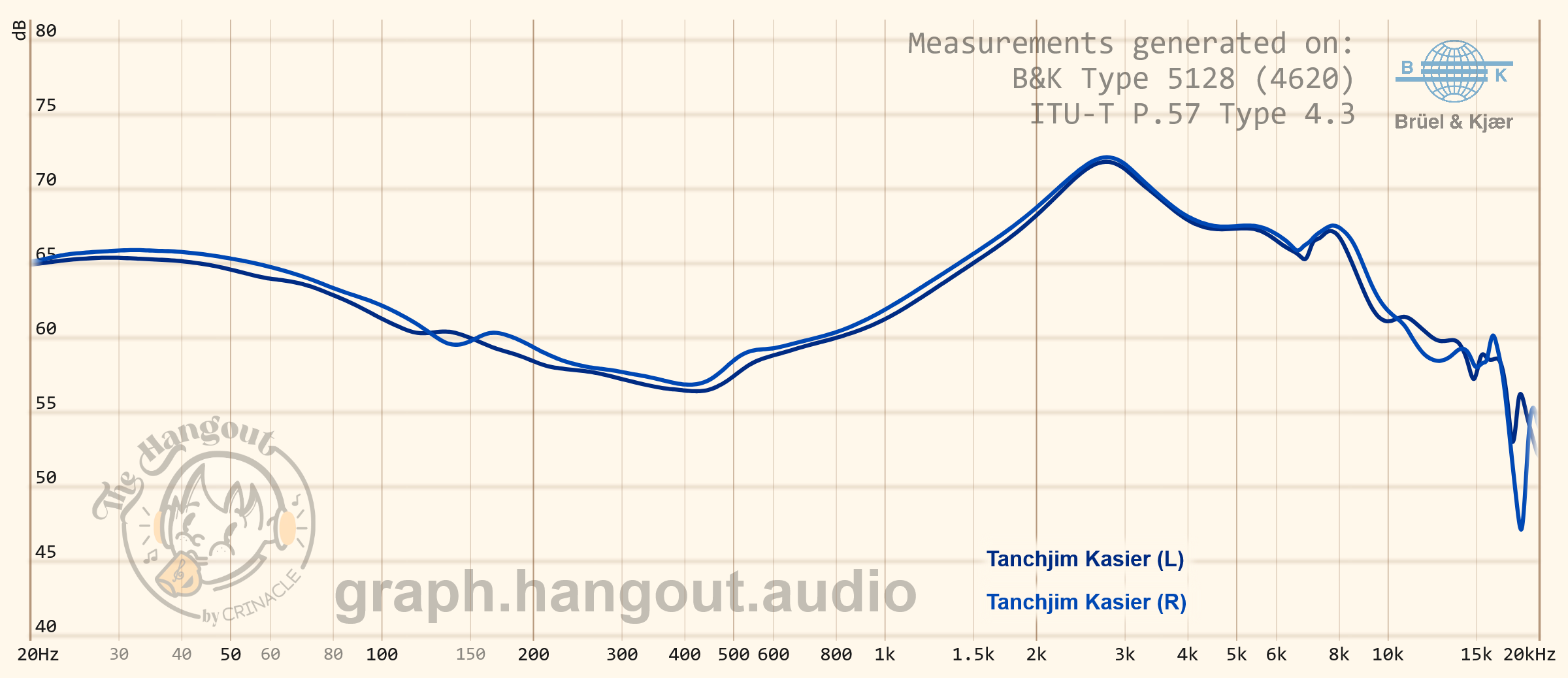
Tanchjim says it tuned the Kasier on a B&K 5128 rig against the B&K "in-room" target. That target slopes gently downward from the bass to the treble, roughly imitating how flat speakers sound in a real room. Put simply: a little extra low end, a natural midrange, and treble that tapers off instead of spiking.
Here's what to expect on the graph:
- A modest sub-bass shelf that holds up well into the lowest octave (deep rumble without boom)
- A clean transition from bass into the lower mids, so male vocals and guitars don't get muddy
- A moderate upper-mid rise that brings vocals slightly forward
- Treble without a single sharp peak, tapering earlier at the top end than the Soda
Drivability & Source Pairing
At 16Ω and 121dB/Vrms, the Kasier is easy to drive. I could easily get plenty of volume from budget 4.4mm dongles, and it isn't especially fussy about the source's sound signature.
The only practical issue is the plug, not power. Out of the box, you need a 4.4mm balanced source. If you only have a 3.5mm dongle or a laptop jack, you will need a 2-pin cable with a 3.5mm plug or a 4.4mm-to-3.5mm adapter.
Good pairings: neutral or slightly warm 4.4mm dongles keep the Kasier's balance intact. A slightly warmer source can add a bit of the mid-bass body some people may want.
Comfort, Fit & Isolation
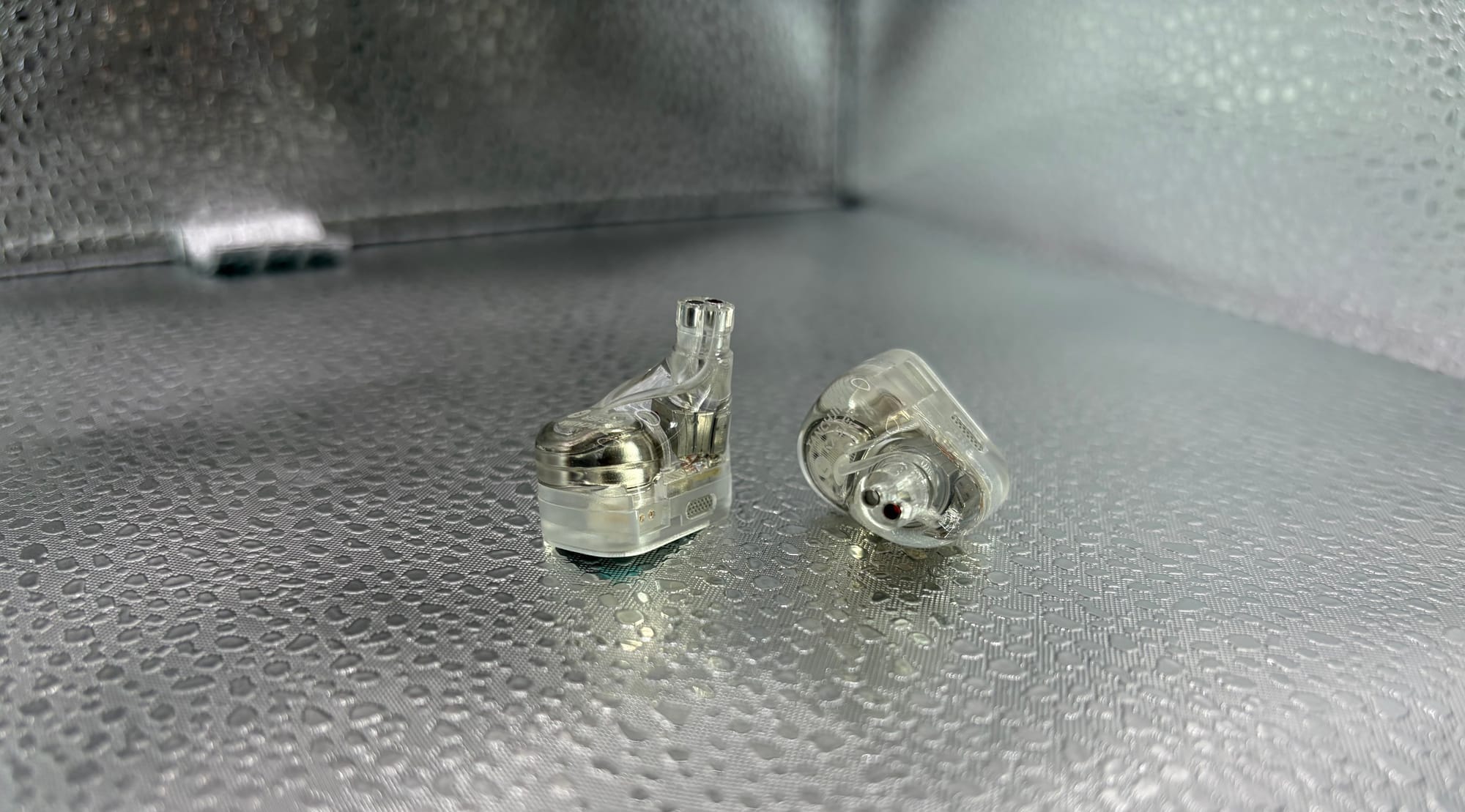
The shell is light and comfortable in my ears, with no rear-heavy pull. The shell is fairly tall, though, so smaller ears may need to adjust a little bit more to get a proper fit.
The nozzle is on the thick side, with a mild lip to hold tips. Isolation is average for a vented resin hybrid and will be fine for traveling or working out at the gym.
Comparisons
Tanchjim Kasier vs. Tanchjim Soda ($319)
Same drivers, very different prices. The Soda adds two passive radiators and a modular cable with 3.5mm and 4.4mm plugs. The two share a similar midrange texture, but the Soda extends further and more cleanly into the treble, while the Kasier is easier to drive and blends the strengths of the Soda and Kara into a slightly livelier, more "fun" presentation. The Soda benefits from a more powerful source, which the Kasier doesn't need.
Pick the Kasier if you want most of the Soda's character for about 40% of the price. Pick the Soda if treble air, extension, and plug flexibility are worth the extra $190 to you.
Tanchjim Kasier vs. Simgot SuperMix 4 ($149)
The SuperMix 4 is a cross-brand rival: a four-driver tribrid (DD, BA, planar, and piezo) about $20 more expensive. It's warmer and more sub-bass-forward than the Kasier, with a richer sound and precise imaging. Its very low 7.2Ω impedance makes it pickier about source quality, and it can sound thick from a weak output. The Kasier is more neutral, cleaner in the mids, and doesn't need as powerful of a source. For heavier music, the SuperMix 4's extra low-end weight may suit some listeners better.
Pick the Kasier for balance, vocal clarity, and plug-and-play simplicity. Pick the SuperMix 4 if you want warmer, fuller bass and already own a good low-impedance source.
Tanchjim Kasier vs. Tanchjim Kara ($179 at launch)
The Kara is the Kasier's direct ancestor, with the same 1DD+4BA idea and a similar triangular shell. The Kasier updates every driver (DMT5 vs. DMT3, in-house PURE BAs vs. Sonion), blends them more smoothly, and tunes a touch brighter. It also costs less than the Kara did at launch.
Generally, you will want to pick the Kasier unless you find a Kara at a steep discount and prefer a slightly warmer, softer top end.
FAQ
Is the Tanchjim Kasier worth it? At $130, yes, for most listeners. It shares the $319 Soda's driver set and offers mature, balanced tuning with excellent vocals. Extreme-bass fans who want aggression may get more from a punchier, V-shaped set.
Does the Tanchjim Kasier need an amp? No. At 16Ω and 121dB/Vrms, any decent 4.4mm dongle drives it fully. You do need a 4.4mm balanced output, or a 3.5mm cable or adapter, because the stock cable has no 3.5mm plug.
What's the difference between the Tanchjim Kasier and the Soda? They share the same five drivers. The Soda adds passive radiators, a modular cable, and better treble extension for $319, while the Kasier is easier to drive and costs $129.99.
Is it "Kasier" or "Kaiser"? Tanchjim's official spelling is "KASIER." Some retailers list it as "Kaiser," but it's the same IEM.
Final Verdict
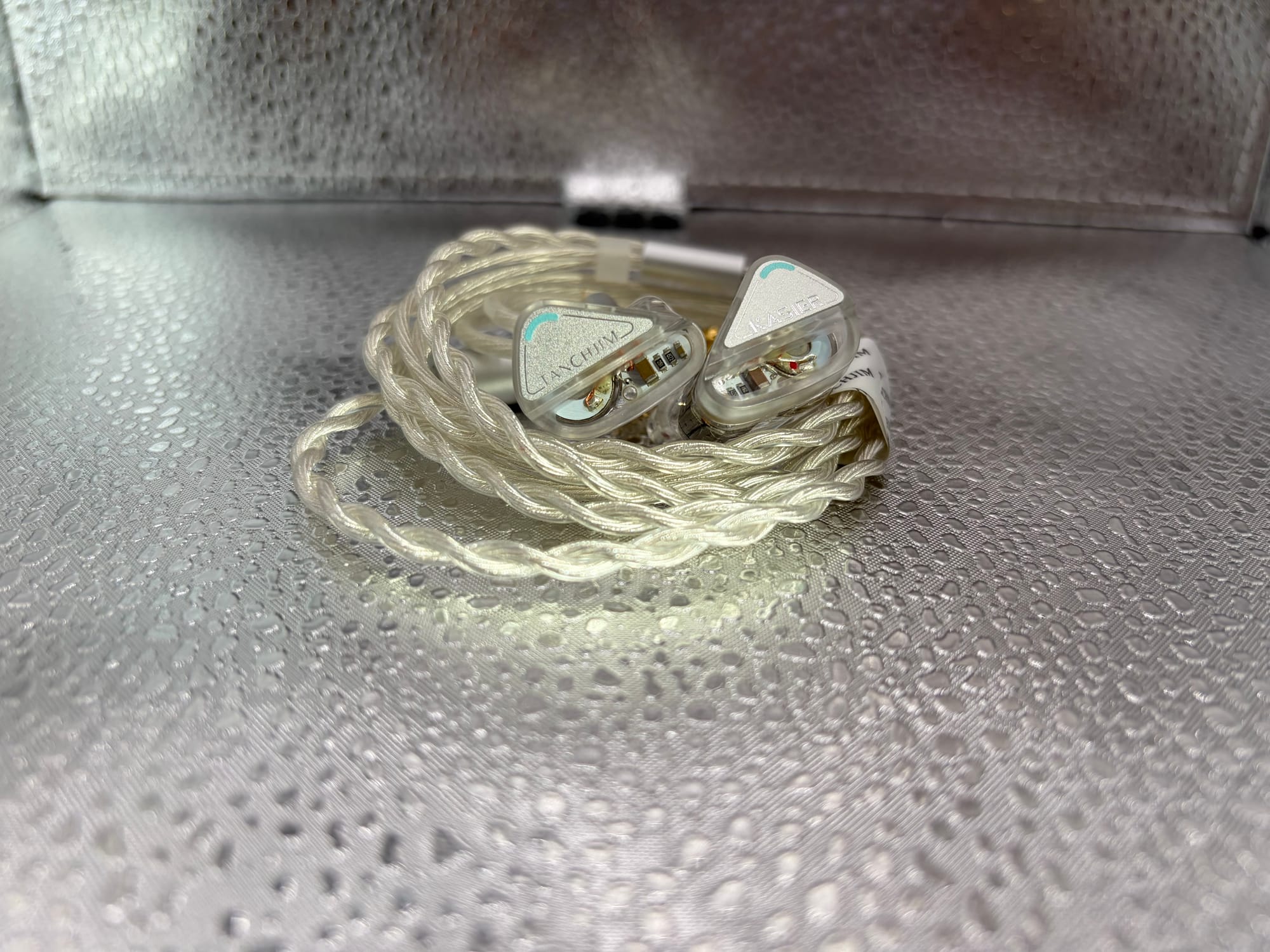
The Tanchjim Kasier is a polished, highly smooth hybrid that puts the Soda's driver set within reach of a $130 budget. Its smooth mids, clean deep bass, and fatigue-free treble make it an easy daily driver for most music genres and it's simple to power. It isn't the IEM for listeners who want their bass to be cranked to the max, and the 4.4mm-only cable is a moderate omission at this price. For balanced, refined sound at a fair price, though, it's one of the most sensible picks under $150. For more options, see our best IEMs guide.
Technical Specifications
- Drivers: 1× 10mm DMT5 dual-cavity dynamic + 2× PURE Mid BA + 2× PURE Hi BA (1DD+4BA per side)
- Crossover: 3-way
- Frequency response: 8Hz–48kHz
- Impedance: 16Ω ±15%
- Sensitivity: 121dB/Vrms
- THD: <0.5% @ 1kHz, 94dB
- Shell: DLP 3D-printed medical-grade resin, anodized aluminum faceplate with transparent window
- Connector: 0.78mm 2-pin
- Cable: high-purity silver-plated copper Litz, 4.4mm balanced plug
- Price: $129.99 (launch street price)


