


Wave Pro Review: Should These Be Your New On-Stage IEMS?
Soundbrenner just released their new Wave Pro In Ear Monitors designed for musicians. At $200 USD do these improve upon the original Wave IEM and how do they perform for professional musicians?

Soundbrenner Wave Pro
Pros
- Clean, neutral sound that's great for musicians
- Improved Bass and overall build quality from Gen 1 Wave
- Great isolation (36dB with foam tips)
Cons
- Some Driver Flex
- Soundstage is rather intimate
The Company Behind the Monitors
Soundbrenner started as the company that reinvented the metronome. Based in Hong Kong, they built their reputation on the Pulse—a wearable vibrating metronome that became a staple for practicing musicians worldwide. Their focus has always been on solving real problems that working musicians face, whether that's keeping time during practice or hearing yourself clearly on stage.
After building their reputation primarily around metronomes and practice tools, Soundbrenner's move into professional audio monitoring represents a natural evolution. They'd spent years listening to musicians complain about overpriced IEMs that either sounded terrible or fell apart after a few gigs. The original Wave launched as their answer to that frustration, and it caught fire among gigging musicians who needed something reliable without liquidating their gear fund.
The Wave Pro represents Soundbrenner's statement piece—a no-compromise design that shows they're serious about competing in the professional audio space.
What Is the Soundbrenner Wave Pro?
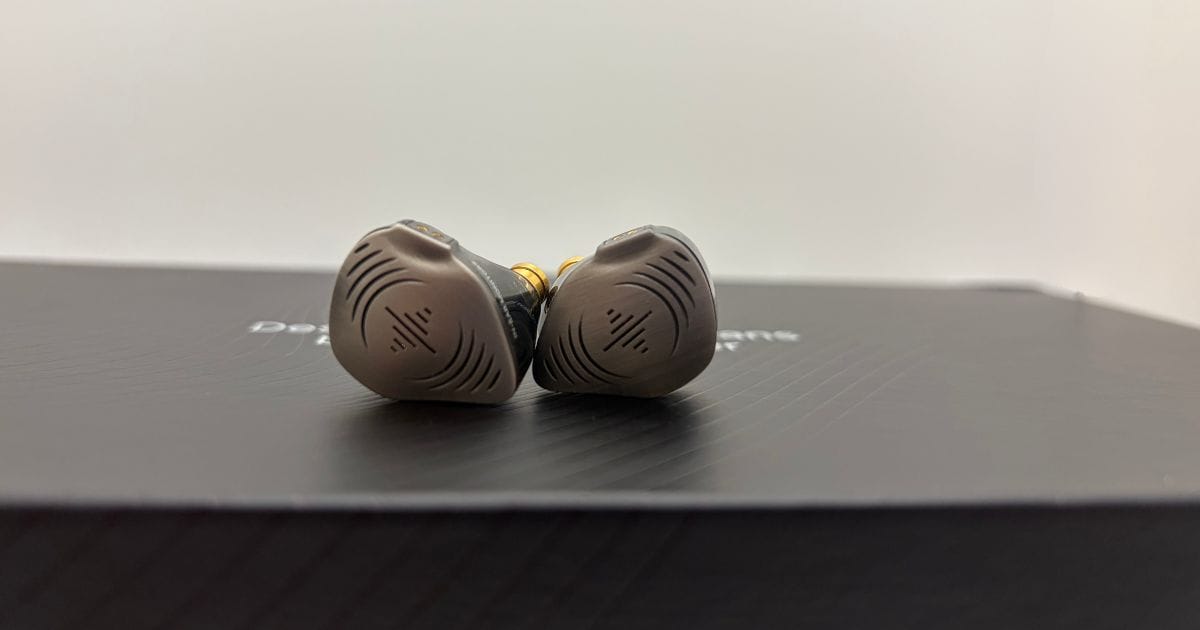
The Wave Pro is Soundbrenner's flagship in-ear monitor featuring a hybrid quad-driver configuration. Unlike the standard Wave's dual-driver setup, the Pro houses three dynamic drivers handling bass and mids with authority, while a specialized 6mm planar magnetic driver delivers ultra-fast, airy treble. The hybrid approach combines the punchy, natural response of dynamic drivers with the speed and detail retrieval that planar magnetic technology brings.
Currently priced at about $200 USD, the Wave Pro sits in an interesting market position. It's not cheap enough to be an impulse buy, but it dramatically undercuts established competitors like the Shure SE846 Gen 2, which retails around $899.
The target audience is clear: working musicians who need professional-grade monitoring but can't justify spending nearly a grand on earphones.
Unboxing
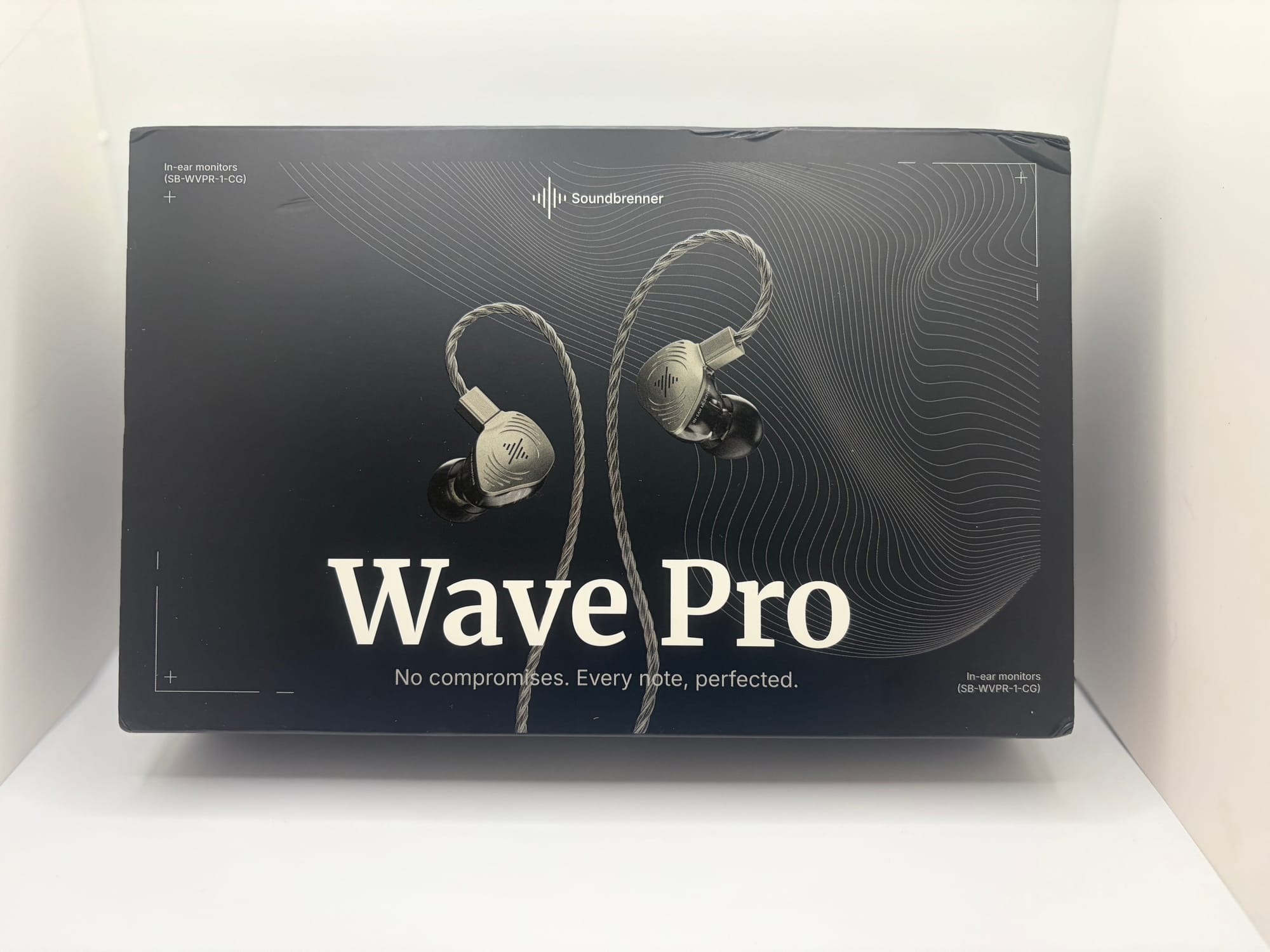
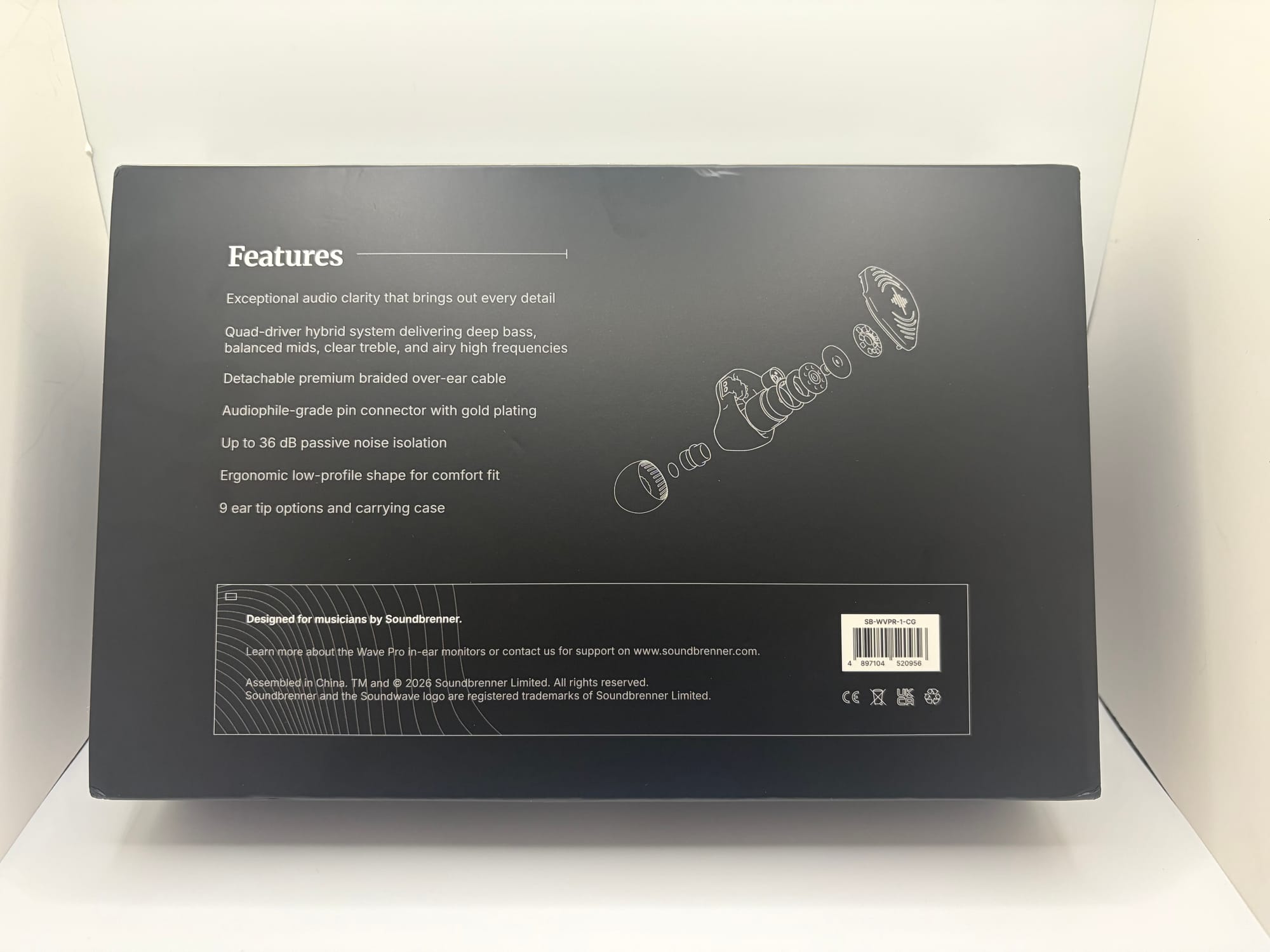
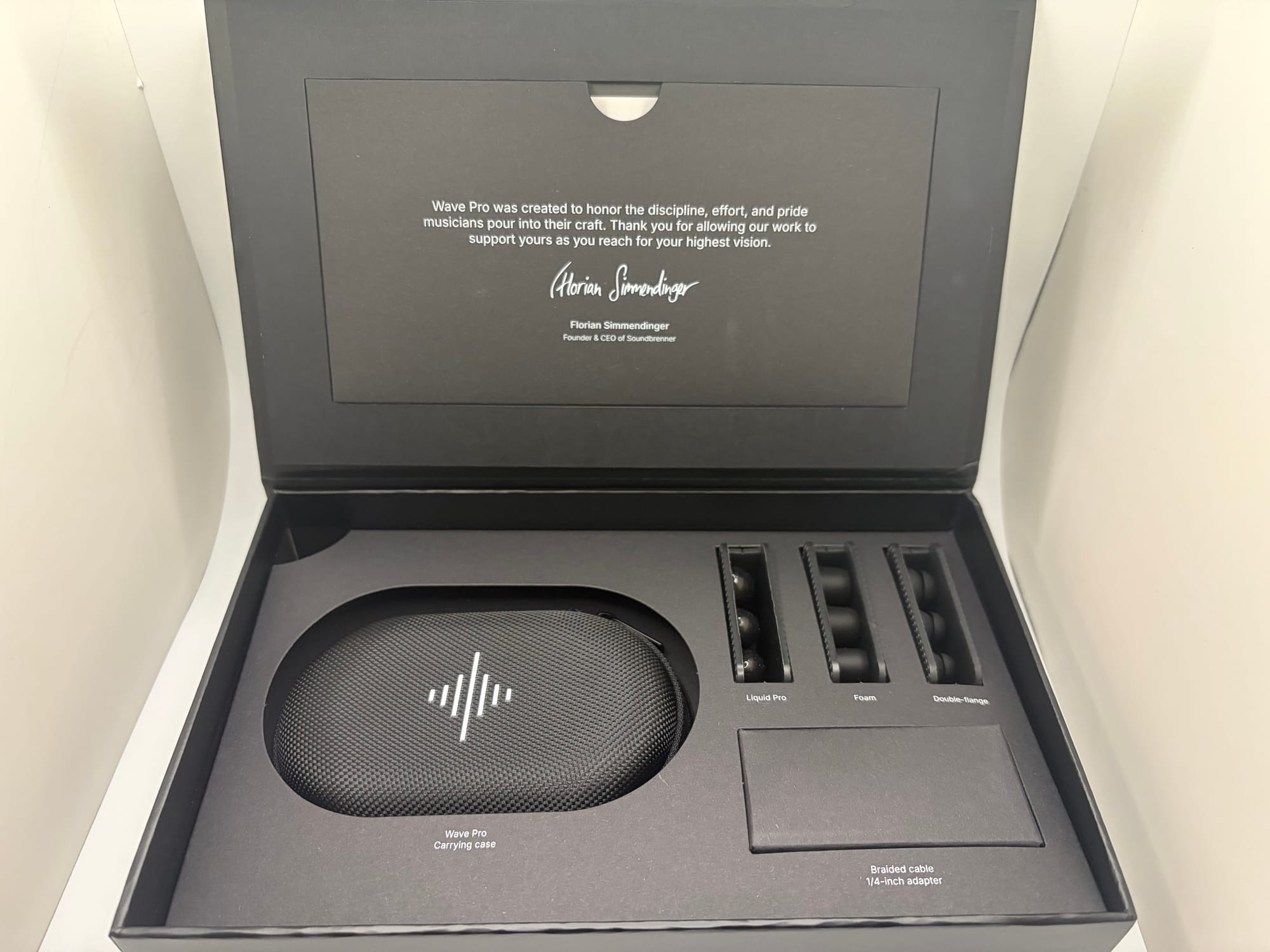
What's In The Box
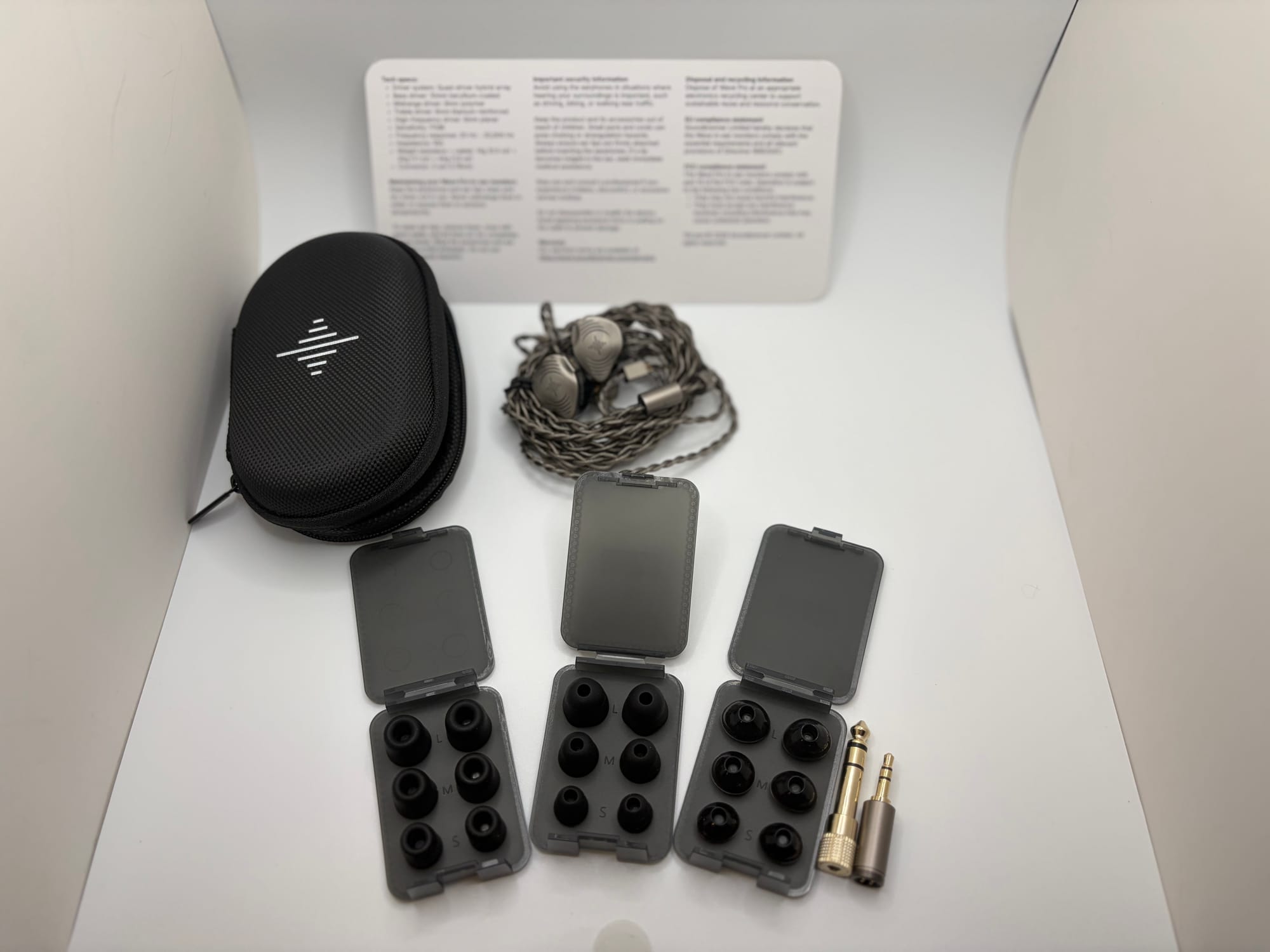
- 1 x Wave Pro
- 1 x 4-strand copper cable
- 3 x Foam eartips (S/M/L)
- 3 x Silicone eartips and 3 x liquid pro eartips (2S/2M/2L)
- 1 x 3.4mm and 4.5mm termination
- 1 x Carrying case
Build Quality and Design
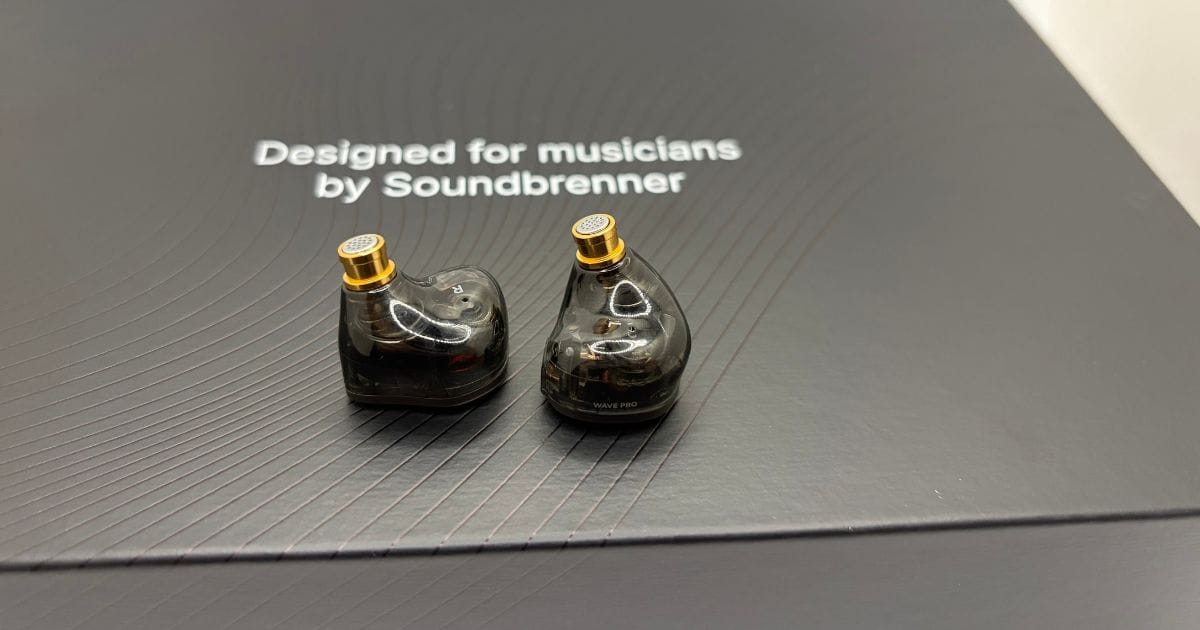
The moment you pick up the Wave Pro, there is a significant difference in quality over the original Wave. The housings combine zinc faceplates with polycarbonate bodies, while the 3.5mm connectors use gold-plated bronze housed in aluminum. This isn't the plastic construction you'll find on most budget IEMs.
The weight tells the story: 14 grams per earpiece plus a 30-gram cable brings the total to 44 grams. That's noticeably heftier than single-driver alternatives, but the ergonomic contouring ensures the weight distributes evenly. After wearing these for longer sessions, I never felt pressure points or that dreaded "when can I take these out" fatigue.
The cable is a 5.0mm braided oxygen-free copper with silver-plating. The braiding resists tangles quite well, and the aluminum cable slider lets you customize the fit on the fly. It's detachable via S-type 2-pin connectors, so when you inevitably yank it too hard loading out after a gig, you're looking at a $39 replacement cable instead of buying new monitors.
Overall, the build quality of the IEM and cable has received a significant overhaul from the original Wave, that makes it a much stronger competitor now with similarly price "chi-fi" brands.
The included accessories show Soundbrenner understands musicians' needs. Eighteen ear tips might sound excessive until you realize they're addressing three different priorities: Liquid Pro tips for maximum clarity with their patented rigid core design, foam tips for noise isolation, and double-flange options for deep insertion and enhanced bass response. The hard carrying case isn't massive, but it's protective enough that you can comfortably throw them into your gig bag without worry.
Sound Quality
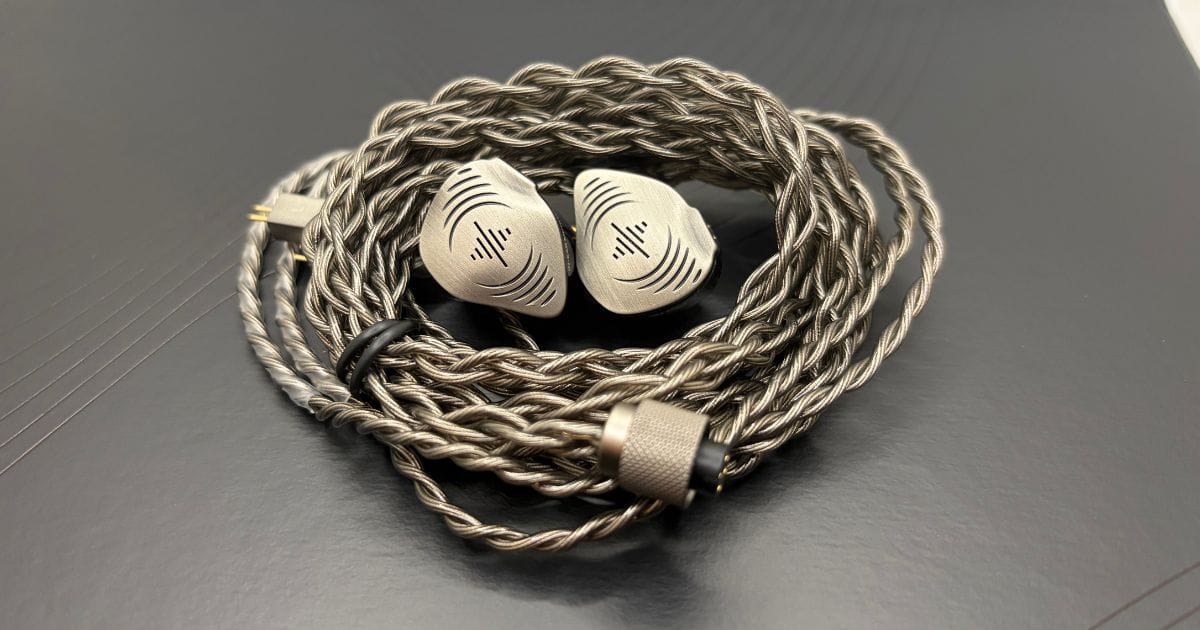
Let's talk drivers. The Wave Pro features a 10mm beryllium-coated dynamic driver, an 8mm polymer dynamic, a 6mm titanium-reinforced dynamic, and a 6mm planar magnetic driver. The overall sound comes across clear and neutral.
Bass Response
The low end hits with authority but stays tight. The beryllium-coated 10mm driver handles sub-bass frequencies with the kind of physical impact you'd expect from a dedicated bass driver. There's no noticeable bloat or muddiness that bleeds into the midrange. Electronic music sounds punchy and controlled, while acoustic double bass retains its woody, organic character.
The mid-bass region sits nicely in the mix. It's present enough to give body to male vocals and rhythm guitars, but never overpowers the midrange. This is the sweet spot that many budget IEMs miss entirely—they either boost the bass to please casual listeners or strip it away trying to sound "neutral."
Mids
The 8mm polymer and 6mm titanium-reinforced drivers work in tandem to create a midrange that's both detailed and musical. Vocals sit forward in the mix without becoming harsh or shouty, even at higher volumes. Female vocalists sound present and intimate, while male voices carry weight and texture.
Guitar players will appreciate the separation here. In a dense mix with multiple guitar tracks, you can actually distinguish between rhythm and lead parts. String resonance comes through clearly—you hear fingers moving on fretboards, picks attacking strings, and even the slight buzzing that makes acoustic instruments sound alive.
Treble Extension
The 6mm planar magnetic driver handles high-frequency duties, and this is where the hybrid configuration pays off. Planar drivers move air differently than dynamic drivers—they're faster, more precise, and extend cleanly into the upper frequencies without hash peaks.
Cymbals shimmer rather than splash. Hi-hats cut through the mix without becoming fatiguing. String instruments have air and sparkle in the upper registers. I didn't have any problems with sibilance or harshness, but I do feel that the bass and mid frequencies are more forward on the Wave Pro. I wouldn't describe it as far-reaching, but it also doesn't feel shallow. I'd say the treble range is about average for the $200 hi-fi bracket.
Technical Performance
Timbre refers to the natural character of instruments—what makes a saxophone sound like a saxophone rather than a trumpet. The Wave Pro does a great job with this. Acoustic instruments sound convincingly real, with the harmonic overtones and textural details that define their character. This matters enormously if you're using these for mixing or tracking. If your monitors lie about timbre, your final mix will sound off on other systems.
The soundstage comes across with a relatively good sense of 3D space when listening, but I would say that, between the imaging, timbre, and soundstage, the latter is probably the weakest area of technical performance. While the Wave Pro doesn't feel particularly spacious or expansive when listening to music, instruments do still occupy distinct positions in three-dimensional space, and the intimate soundstage may be beneficial for live performance scenarios.
Imaging—the precision of instrument placement—is quite good. In complex arrangements with multiple layers, elements don't blur together into mush. You can focus on individual parts without losing awareness of the whole. For live mixing, this means you can actually dial in your personal monitor blend instead of guessing whether you've turned up the right channel.
Comfort and Isolation
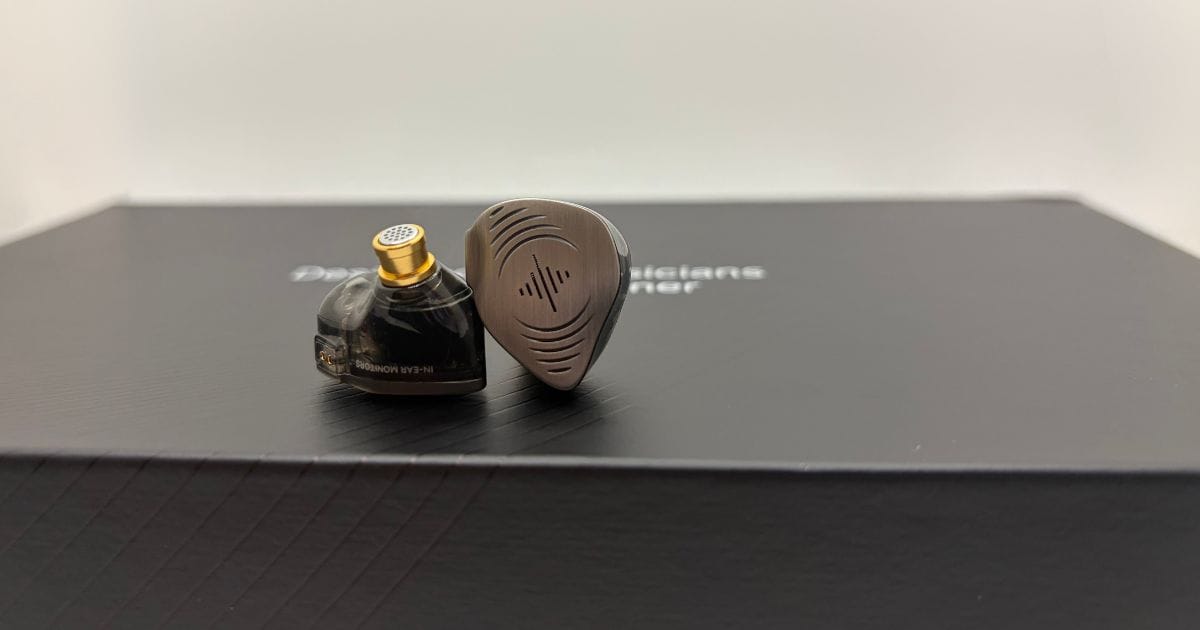
The ergonomic shell design follows the natural contours of your ear canal, and the weight distribution ensures these stay comfortable during marathon sessions. During testing, I never experienced fatigue from the weight of these earphones.
The Liquid Pro ear tips are what I preferred to use, and I found that they gave the best fit and sound quality for strictly music listening. For performing on stage, most people (including myself) will vastly prefer foam eartips as they will provide a significantly improved sound isolation to protect your ears from hearing damage. The new Liquid Pro ear tips feature a patented rigid core that maintains an open sound path for consistent clarity, while the ultra-soft 0.4mm dome molds to your ear for a secure, pressure-free seal. The difference between a proper seal and a mediocre one dramatically affects both sound quality and isolation.
Speaking of isolation: the foam tips block up to 36dB of outside noise. That's not quite as extreme as custom-molded monitors, but it's great for universal in ears and will be enough to practice next to a loud drummer without cranking dangerous volume levels. For live performance, it means you can actually hear your monitor mix instead of fighting against stage bleed from the PA system.
One thing to note is that when adjusting the Wave Pro in my ears, there was a noticeable driver flex "crackle". This isn't harmful at all, but can definitely be heard when moving the earphones around.
Comparisons
Soundbrenner Wave Pro vs. Shure 215 ($109)
The Shure 215 is a classic entry-level musician IEM that is still very popular years after its release. It was the first IEM I ever owned, and it is the same for many other musicians out there. The build quality on both of these feels comparable, and the 215 and Wave Pro should both have no problem lasting the stresses of touring musicians.
The Shure 215 has a little bit more warmth and "thickness" to the overall sound, but the Wave Pro has slightly better imaging overall and a clearer bass response. The 215's bass can be a little lean, where the Wave Pro has plenty for most situations.
Overall, the Shure 215 is a tried and true durable IEM that, for around $100 les,s is still worthwhile if you are on a tight budget, but with that being said, the Wave Pro will have better technical performance with a much more modern design and tuning setup. If you have the budget, the Wave Pro is overall a more complete IEM.
Soundbrenner Wave Pro vs Wave (Original)($99)
The original Soundbrenner Wave comes in at half the price, and when compared to the Wave Pro, you can definitely tell. The build quality on the original Wave compared to the Wave Pro is quite different. The Pro version feels more durable with a sturdier cable, while the original Wave's build quality isn't bad; the Pro definitely improves on it quite a bit.
Soundwise, the Wave Pro certainly outperforms the original Wave with more clarity and an overall more neutral sound. The Gen 1 Wave had a brighter leaning sound that favored higher registers and could feel a little light on bass, where the Wave Pro presents with a more neutral balance of all of the frequency ranges, making it less fatiguing and more accurate. In my opinion, the Wave Pro is a large step up from the Wave.
Final Verdict
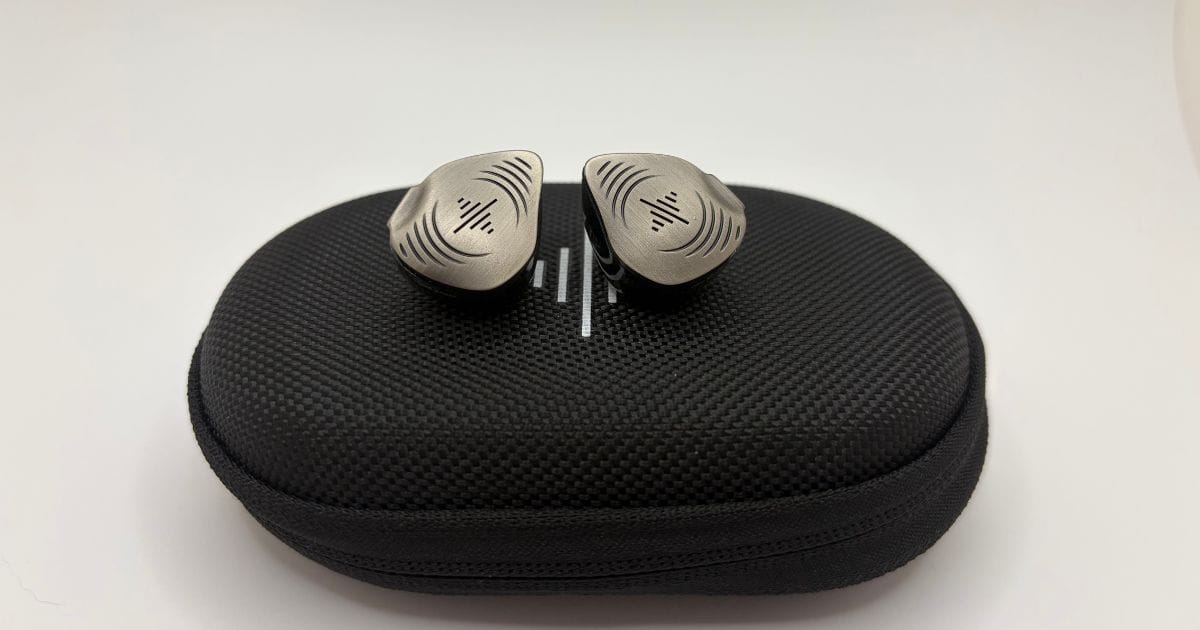
The Soundbrenner Wave Pro represents a new option in the entry-level professional IEM market. The hybrid quad-driver system delivers the clarity and separation required for professional stage and studio performance, wrapped in a build quality that should survive steady use.
At $200, the Wave Pro is relatively affordable, but still not cheap. Compared to flagship models that cost three or four times as much, the Wave Pro delivers great value. The hybrid driver configuration—three dynamics handling bass and mids, planar magnetic handling treble—creates a sound signature that's smooth and clear during music listening and live monitoring use.
The Wave Pro is perfectly suited for working musicians who want a reliable live monitoring solution and will enjoy having a hi-fi headphone on the side. Overall, Soundbrenner took the original Wave and improved it significantly, creating a product that competes with offerings from Shure and other major names in the live audio scene.
Technical Specifications
- Frequency Response: 20Hz - 20,000Hz
- Sensitivity: 111dB
- Impedance: 15Ω
- Noise Isolation: Up to 36dB (with foam tips)
- Total Weight: 44g
- Cable Type: 4-strand braided oxygen-free copper with silver-plating
- Cable Length: 1.5m (4.9ft)
- Connector Type: S-type 2-pin (gold-plated bronze)
- Source Connector: 3.5mm plug (gold-plated bronze)
Thanks for reading! Check out more audio gear reviews and join our community of music enthusiasts.
- Read more of the latest rock/metal news here
- Subscribe to our Metal News Email list for weekly updates!
- Join our free 5-day music marketing email course!
- Support The Metalverse and go ad-free.
- Follow us on Social Media | Instagram | Facebook


